Amado V. Hernandez
Amado V. Hernandez (1903-70) is one of the most famous nationalist writers in the Philippines. His poetry, fiction and plays stoked the flames against US imperialism, the workers' poverty, and a feudal land tenancy system.
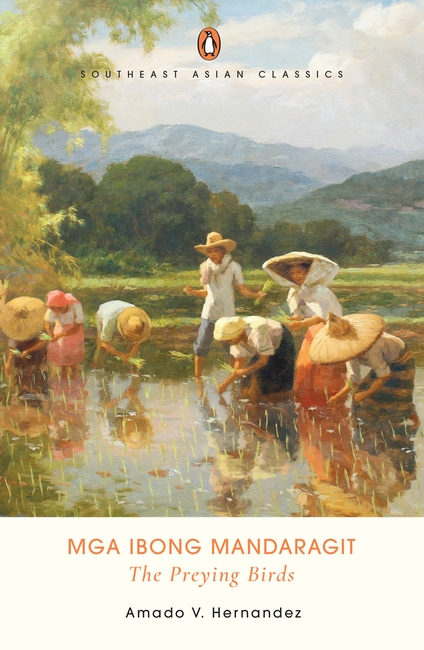
Born in Tondo, Manila, on 13 September 1903, Hernandez began his career in journalism in the 1920s, when the initial massive Filipino resistance against US military rule had declined. He became an editor of the Manila daily Mabuhay (Long Live) from 1932 to 1934. In 1939, he won the Commonwealth Literary Contest for a nationalist historical epic, Pilipinas (Philippines); and in 1940, his collection of mainly traditional poems, Kayumanggi (Brown), won the Commonwealth Award in Literature. During the Japanese occupation of the Philippines (1942-45), Hernandez served as an intelligence officer for the underground guerilla resistance, an experience reflected in his major novel, Mga Ibong Mandaragit, which is translated here as The Preying Birds.
After the war, Hernandez assumed the role of a public intellectual: he organized the Philippine Newspaper Guild in 1945; and he spoke out on national issues as an appointed councillor of Manila from 1945-46 and again, from 1948-51. It was during his presidency of the Congress of Labour Organizations (1947), the largest federation of militant trade unions in the country, that he moved from the romantic reformism of his early years to militancy.
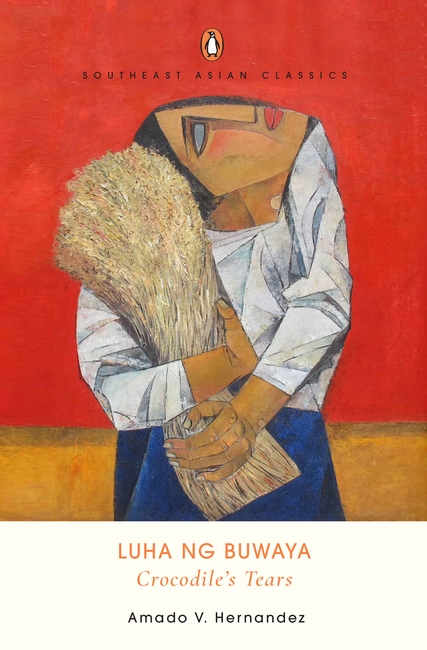
An allegorical representation of the sociopolitical crisis of the country from the 1930s up to the 1950s can be found in Hernandez's realistic novel, Luha ng Buwaya (Crocodile Tears). and the epic poem of class struggle, Bayang Malaya (Free Country), for which he received the prestigious Balagtas Memorial Award.
Tarred and feathered during the Cold War, which also reached the Philippines, Hernandez was arrested on 26 January 1951 and accused of complicity with the Communist-led uprising. While in jail in various military camps for five years and six months, he wrote the satirical poem, Isang Dipang Langit (An Arm's Stretch of Sky) and the play, Muntinlupa.
After his release from prison, Hernandez wrote countless stories under various pseudonyms for the leading weekly magazine, Liwayway (Dawn). He also wrote columns for the daily newspaper, Taliba (News), and edited the radical newspapers Ang Makabayan (The Nationalist) from 1956-58 and Ang Masa (The Masses), from 1967-70. He participated in the Afro-Asian Writers' Emergency Conference in Beijing, China, in June-July 1966, and at the International War Crimes Tribunal, where he joined the likes of Simone De Beauvoir, Bertrand Russell, and Jean Paul Sartre in November 1966, and became an outspoken voice for freedom of expression and human rights worldwide.
His numerous honours culminated in the Republic Cultural Heritage Award (1962) and National Artist Award, given by a grateful nation in 1973. Up to the day (24 March 1970) he died, Hernandez was still writing a column and giving advice to the leaders of the massive rallies that were rocking the Philippines at that time.