From death to life, hope is reborn.
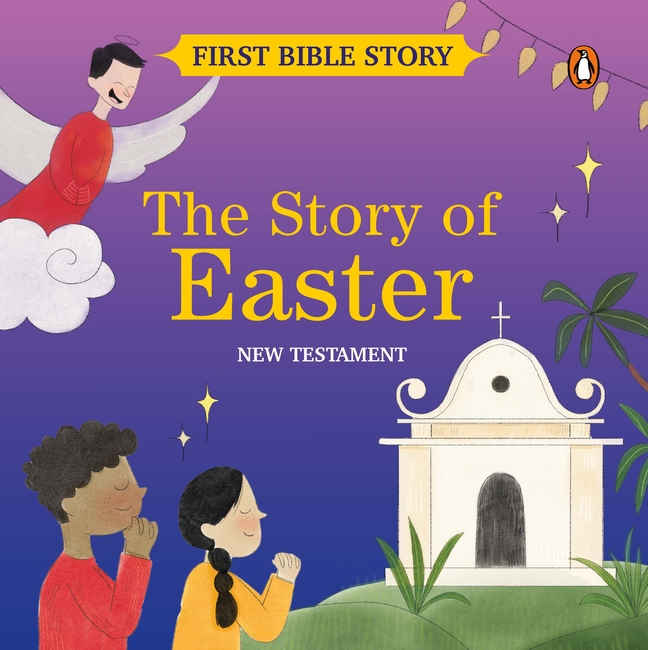
After being crucified, Jesus rose from the dead on the third day. This miraculous event shows that even in the darkest times, there is hope.
Jesus’ resurrection reminds us of God’s endless love and the power of forgiveness.
Unique Features:
- Engaging, Age-Appropriate Language
- Beautiful, Colorful Illustrations
- Perfect Introduction to Bible Themes
- Family Bonding Opportunity
- Each Story has Character-Building Lessons
- Perfect Gift for Special Occasions
This book is part of the First Bible Stories series, a collection designed to introduce young readers to the timeless stories and teachings of the Bible.

Timeless Stories from the Bible
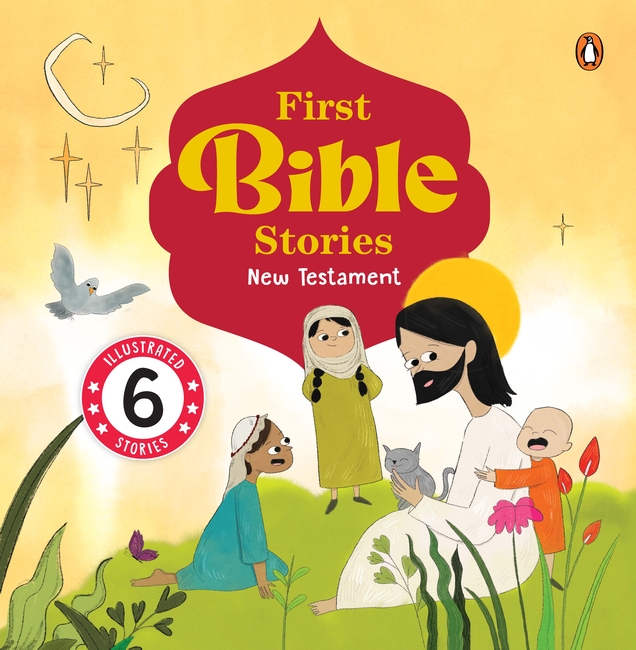
A collection of 6 beautifully illustrated Bible stories, each bringing to life a classic tale from the New Testament.
Crafted to inspire young readers, this book brings to life key moments from the New Testament, like the birth of Jesus, Jesus feeding the people, His miraculous walk on water, the powerful message of the Last Supper, the wonder of Easter, and the parable of the sower.
Each story is packed with timeless lessons that make learning about Jesus’ life and teachings both exciting and unforgettable.
Titles in the series:
1. The Birth of Jesus
2. The Sower and the Seeds
3. Jesus Feeds the People
4. Jesus Walks on Water
5. The Last Supper
6. The Easter Story
Unique Features:
- Engaging, Age-Appropriate Language
- Beautiful, Colorful Illustrations
- Perfect Introduction to Bible Themes
- Family Bonding Opportunity
- Each Story has Character-Building Lessons
- Perfect Gift for Special Occasions
Strong roots of faith grow in good soil.
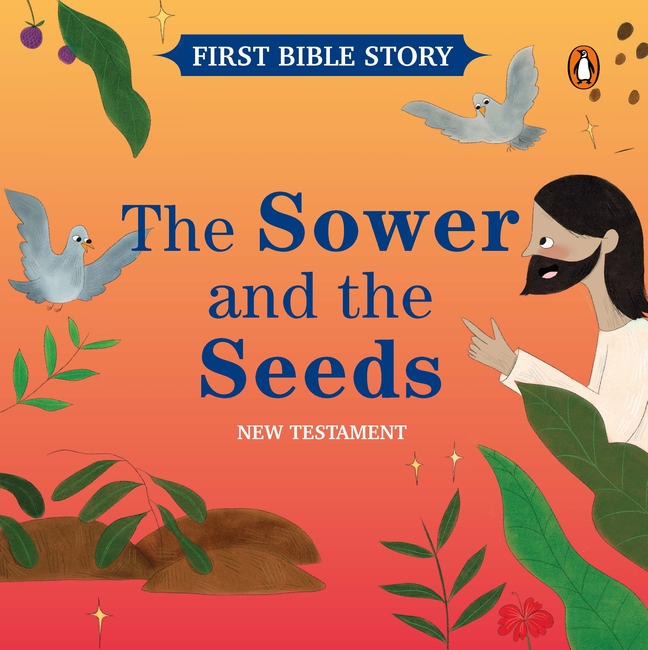
Jesus told a story about a sower who scattered seeds on different types of ground. He explained that
God’s words are like those seeds—they grow in hearts that are ready to listen.
This story reminds us to nurture faith, listen carefully, and let God’s teachings grow in our hearts.
Unique Features:
- Engaging, Age-Appropriate Language
- Beautiful, Colorful Illustrations
- Perfect Introduction to Bible Themes
- Family Bonding Opportunity
- Each Story has Character-Building Lessons
- Perfect Gift for Special Occasions
This book is part of the First Bible Stories series, a collection designed to introduce young readers to the timeless stories and teachings of the Bible.

Keep your faith steady, even in the storm.
In the midst of a storm, Jesus walked on water to meet His disciples. Peter followed but began to sink when his faith wavered. Jesus saved him and reminded him to keep his faith strong.
This story teaches us to trust Jesus, even when life feels uncertain, and to have courage in challenging times.
Unique Features:
- Engaging, Age-Appropriate Language
- Beautiful, Colorful Illustrations
- Perfect Introduction to Bible Themes
- Family Bonding Opportunity
- Each Story has Character-Building Lessons
- Perfect Gift for Special Occasions
This book is part of the First Bible Stories series, a collection designed to introduce young readers to the timeless stories and teachings of the Bible.
Faith turns little into plenty.
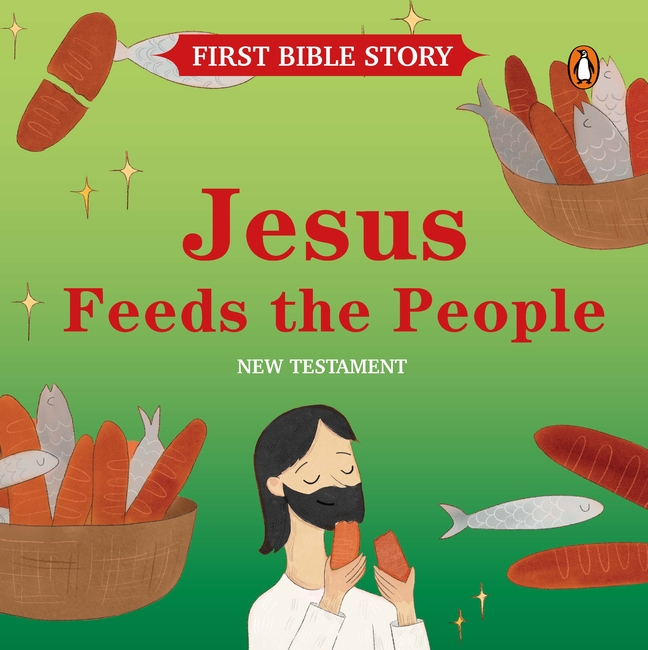
When a crowd of over 5,000 gathered to listen to Jesus, there was not enough food to share. But Jesus
miraculously multiplied five loaves and two fish to feed everyone.
This story shows the importance of trusting in God and reminds us that God can provide for all
our needs, no matter how big.
Unique Features:
- Engaging, Age-Appropriate Language
- Beautiful, Colorful Illustrations
- Perfect Introduction to Bible Themes
- Family Bonding Opportunity
- Each Story has Character-Building Lessons
- Perfect Gift for Special Occasions
This book is part of the First Bible Stories series, a collection designed to introduce young readers to the timeless stories and teachings of the Bible.
A Savior born to bring light to the world.
Mary and Joseph traveled to Bethlehem, where baby Jesus was born in a stable. Angels announced His birth to shepherds, and wise men followed a bright star, bringing gifts to honor the baby.
This miraculous event marked the arrival of the Savior and teaches us the values of kindness, humility, and the true meaning of Christmas.
Unique Features:
- Engaging, Age-Appropriate Language
- Beautiful, Colorful Illustrations
- Perfect Introduction to Bible Themes
- Family Bonding Opportunity
- Each Story has Character-Building Lessons
- Perfect Gift for Special Occasions
This book is part of the First Bible Stories series, a collection designed to introduce young readers to the timeless stories and teachings of the Bible.

This collection of short stories celebrates the Merdeka Generation. These are the baby boomers born a little after the Second World War, following the heels of the Pioneer Generation. These Seniors experienced the development and growth of modern Singapore. They were the people who lived through four National Anthems: ‘God Save the King’, ‘God Save the Queen’, ‘Negara-Ku’, and ‘Majulah Singapura’. The majority of them had helped built this nation.
During the colonial period and pre-independent days, many Singaporeans were poor and were living in adverse conditions, without running water, electricity, and amenities. Before HDB flats were built, they had been living in kampungs. These shaped their mindset. Most of them struggled to work hard so that their children would not suffer as they had suffered.
In the 21st Century, this band of the population is in their seventies. New problems surfaced for them as their children became smarter than them, or some moved abroad. There are many MG Seniors without their children and grandchildren in this country. This collection attempts to highlight some of the issues facing this group who had to cope with such emotional issues, modern technology, and the fast pace of life in modern Singapore. They are an admirable group as they had the resilience to progress as this nation had progressed.
This book also celebrates the music industry of the 1960s and 70s, both locally and internationally.
In a world that often favours the alpha—those comfortable in the spotlight—Shh . . . Give Me A Moment offers a refreshing perspective for those who find strength in silence. This personal development guide empowers introverts to embrace their unique traits and become imperfectly acceptable in a noisy, distracted society.
Join Aaron Pang, best-selling author and host of Asia’s No. 1 Purpose Podcast, on a transformative journey to unlock your hidden strengths: productivity, perspective, patience, and people skills. But first, you’ll need to face four formidable foes—the Dream Gobbler, Attention Gobbler, Priority Gobbler, and Identity Gobbler—that threaten to derail your growth.
Packed with practical tools and insightful frameworks, this book will help you reflect, strengthen your relationships, and thrive amid distraction and overwhelm.
Whether you identify as an introvert or simply seek deeper focus, meaningful connections, and purpose, Shh . . . Give Me a Moment is your guide to finding peace and power in stillness.

Destiny Chen had her eyes set on working in the mental health field for as long as she could remember. @DestinyIzzaLeo, however, stumbles right into the accidental spotlight as a content creator. While she tries to juggle her life as a streamer alongside being a university student, she finds herself torn between passion and opportunity. However, she may not need to make that choice, as her online career is at risk of being short-lived due to her reputation becoming shrouded in controversy.
As the unofficial leader of the ‘Triple D’s’, one of the most well-known content creator groups in the space, @DawnGames is no stranger to the highs and lows of being in the public eye. He has been betrayed, disrespected, hunted, spoken ill of, and doubted by his peers and audience. While @DawnGames takes it in stride, Donovan Cider is left to pick up the pieces of his shattered heart each time.
Destiny and Dawn have never once crossed paths, but Dawn seems repelled by her charm.
Their best friends believe that they are made for each other. But Dawn is harboring a secret that could destroy and change everything they know about each other.
Will his friends be proven wrong, or is there more to Dawn and Destiny’s shared connection?
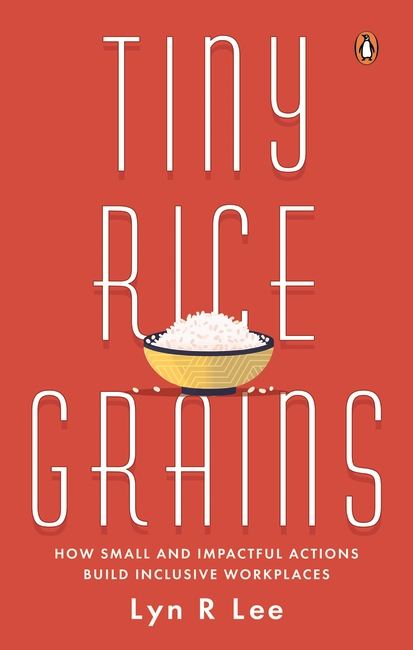
Tiny Rice Grains explores the human side of Diversity, Equity and Inclusion (DEI).
Given the business case that diverse and inclusive organizations thrive and drive better performance, the question begs to be asked: why are so many organizations still struggling to implement and embed DEI in the workplace?
The book explores this question and tackles how DEI strategies are often approached. as standalone initiatives rather than being woven into the fabric of the organization. Too many people are still afraid to have brave conversations and confront uncomfortable truths in the realm of DEI.
What strikes me as I work in this area is the impact that small actions can have. Like dropping a single rice grain into water creates ripples, small acts of kindness and inclusion can have ripple effects, inspiring others to do the same and creating a cascading impact for those around us.
Each of our small actions adds up to a greater whole. DEI doesn’t need one passionate person leading the charge. It needs all of us to do our part, in whatever small ways we can, to make our workplaces more inclusive.
I have found the three principles of courage, curiosity, and care to be useful when approaching DEI, and I share my learnings in this area throughout my book. I also bring in other people’s stories and perspectives, widening the conversation and giving readers a chance to learn from a collective wisdom far greater than mine alone.