



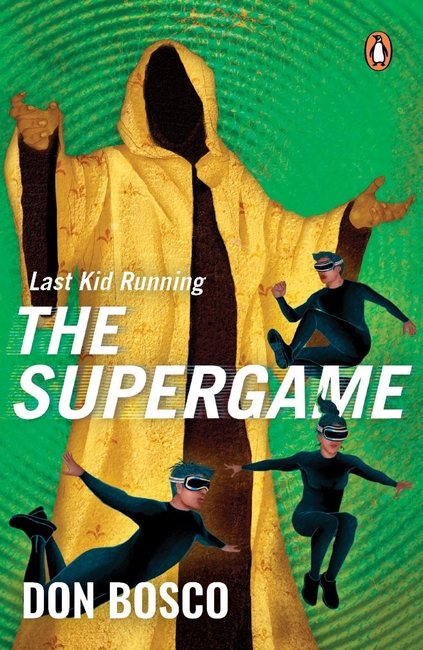
This is Book 3 of the thrilling LAST KID RUNNING gamebook series for 10 to 12 year olds. YOU decide how the story unfolds.
You are Runner X, one of six contestants in the final round of Last Kid Running, the craziest game show streaming on the mobile web.
You’ve been waiting eagerly for this. But the pandemic strikes, and the ingenious Dr Yamato creates a home-based VR version of this event instead, to keep the fans entertained.
It turns out to be a wild and futuristic adventure, with five levels full of twists, thrills and tricky challenges. Plus, you’ll need to solve the Riddlemaster’s Remarkable Riddle, which is the most baffling brain-teaser you’ve ever encountered.
Do you have what it takes to be the LAST KID RUNNING?
Read and find out!
Archives: Books
Finding the Freedom to Get Unstuck and Be Happier
Everyone gets stuck in habitual patterns, including emotional, behavioral, and relational habits. We have the same arguments repeatedly with our parents, partners, and children despite wanting to stop. Often by the time we realize we’re stuck, we no longer know how to get unstuck. The secret to finding freedom is to understand karma and free will.
Why is it useful to understand karma and free will correctly? If you misunderstand karma, you’re more likely to get stuck. And if you misunderstand free will, you’re more likely to stay stuck.
Joining Western psychological science and traditional Buddhism, experimental psychologist and Zen monk Ven. Dr. Douglas Cheolsoeng Gentile describes how our minds can be simultaneously our greatest weakness and greatest asset. We are controlled by both external forces and internal habits of mind, while simultaneously believing ourselves to be ‘free’. This conundrum can be solved by seeing where our biases begin, how our natural ability to learn traps us, and how we unintentionally undermine the progress we intend to make. This book can help you find freedom from negative habits, relationship patterns, and feelings.
You don’t need to be Buddhist to be able to use these ideas to be happier, just as you don’t need to be a mathematician to be able to add. You just need to have an accurate understanding of the processes to make them work for you.
Rejection
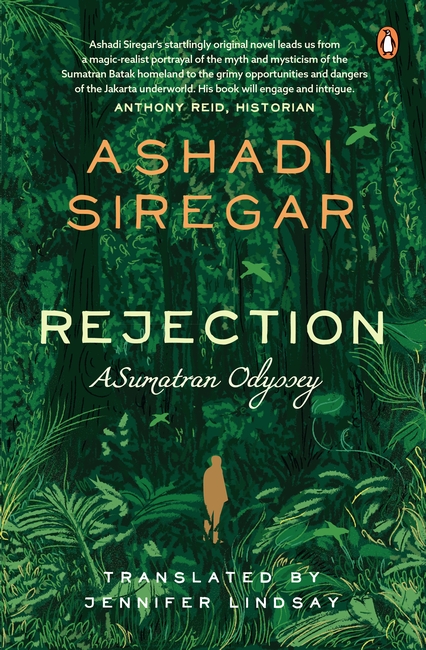
Rejection: A Sumatran Odyssey is an epic family drama by Ashadi Siregar set against the turbulent years following Indonesia’s independence.
The story follows Tondi who as a young man joins the separatist rebellion of the late 1950s and early 1960s in North Sumatra. Later he moves to Java and finds his way in the murky Jakarta underworld. Tondi’s story is interwoven with the magical world of his paternal grandfather, a shaman traditional priest living in the old pre-Islam, pre-Christian world of Batak belief. Tondi’s father deserts the family when Tondi is a child, moves to Jakarta, and joins the Indonesian national army. Tondi’s mother stays in Sumatra and forges a life of her own, for a while working at a hospital with Dutch personnel who return to the former Dutch colony after Indonesian independence.
A central section of the novel describes Tondi’s journey alone through the primeval jungle of North Sumatra, on a mission for the rebel army. His grandfather has given him directions to pass through this rarely-traversed realm where his ancestors used to roam.
In rich and poetic storytelling, Ashadi Siregar portrays the Batak culture of North Sumatra: its language, beliefs, ceremonies, and intricate kinship system. He also vividly depicts a critical period in history when Indonesia was struggling to find its place internationally against the backdrop of the Cold War, while fighting internally to keep the new nation together.
The main characters all have choices to make in this time of love and war and conflicts between the old ways and the new. All reject something, just as the time itself is one of rejection; rejection of past ways; rejection of nationalist ideals; and the Sumatran rebels’ rejection of the centralist Indonesian government.
This English translation of Ashadi Siregar’s ground-breaking historical novel brings a non-Indonesian readership into a fascinating, vast and little known part of Indonesia’s history.
Joy
Ariston Letrero is a renaissance man: audio producer, insurance salesman, musician, composer, part-time fast food mascot, and a philanderer who quickly and quietly abandons his wife and son, Lucas, at the peak of his mottled career, for a new life in America with his lover Odette.
Years and years later, he sends an email to his son, Lucas Letrero, an advertising man who has been brought up on super robot cartoons, Catholic school truisms, and a diet of fast food and loneliness, and who has reconnected with his childhood sweetheart Dedes, who has made a post-annulment life for herself in America.
In the 30-odd years in between is a story that sings songs and anthems of identity, relations, loneliness, and loss, and how they figure in the lives of contemporary Filipinos who are not scattered across space and time, but who are also connected and separated at the same time.
Joy is a story of joy-lived forward, backward, sideways, and upside down, in lives and loves that are fragmented, separated, gathered, made virtual, and made real.
Only Connect

As the good ship McCarthy wends its way from the UK to China across troubled waters, Susan and Howard – two employees in a shipping and logistics company – establish an extraordinary friendship in cyberspace. Entrusted with ensuring the timely delivery of a valuable cargo, they discuss everything under the sun (and then some) as their relationship develops with each passing port of call.
Only Connect examines the very nature of human interaction and the desperate need for connection in an increasingly fraught world in which things are not always what they might seem. The Asian leg of the ship’s journey leads to a potentially catastrophic geopolitical flashpoint, as revelations are made that result in dramatic and fascinating consequences.
All Our Brave, Earthly Scars

Lee Yang searches desperately for Snow amid the carnage of the 2002 Bali bombings. From Singapore’s worst fire in 1961, their lives, and later their love, have woven through years of struggle and separation. When a secret that has lain hidden for over 30 years comes to light and the truth unfolds, they are pulled apart. Now, in the face of Indonesia’s worst terror attack in its history, they risk losing one another yet again.
In this novel spanning over four decades, the five elements of fire, water, earth, air and spirit display their power in the lives of Yang, Snow and those around them-an intimate and heart-rending exploration of love and loss, loneliness and courage, scarring and healing.
The House of Little Sisters
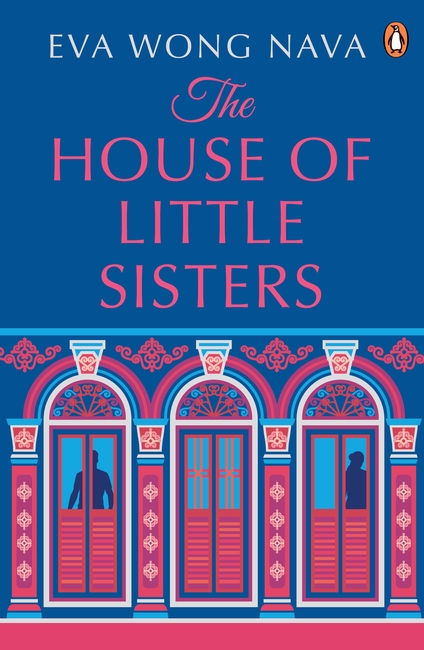
It’s August of 1931 in Singapore, sixteen-year-old Lim Mei Mei (Ah Mei) arrives at the home of Eminent Mister Lee on the eve of the Hungry Ghost Month. She has been sold to the family as a mui tsai, an indentured servant girl. At the Lee household, Lim Mei Mei’s life education begins. There she encounters the spirit of Ah Lian, a mui tsai, who paid the ultimate price for her mistake. Through Ah Lian, Ah Mei discovers the plight of mui tsai, who are both helpless and powerful, and uncovers a shameful secret lurking in the shadows in the Lee house. Ah Mei also meets and falls in love with Hassan Mohamed, an Indian-Muslim and an aspiring poet, breaking every clause in the rule book of love in 1930s British Malaya. She becomes Hassan’s Polar Star, and the young lovers must find a way to stay together. Through a twist of fate, Ah Mei finds a solution that will keep her and Hassan together, at the same time gaining agency that will secure her own future as an uneducated servant girl in British Malaya.
The Widening of Tolo Highway
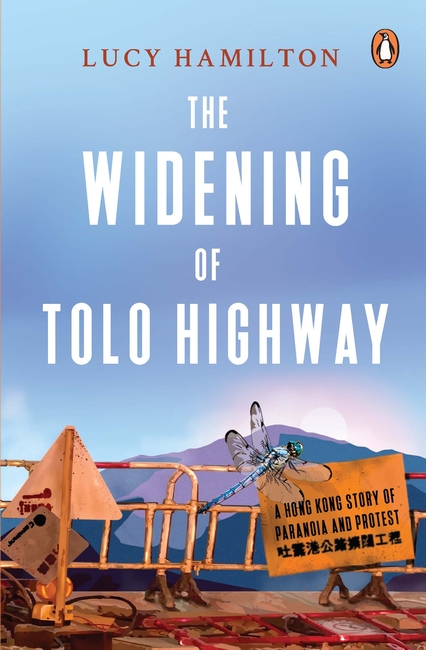
ANNA RETURNS TO FACE A PAST
SHE NEVER TRULY LEFT BEHIND
It wasn’t the middle but the very edge of nowhere.
It was always just a little too still.
It is 2017. Typhoon Hato has ripped through the streets of Hong Kong. National Day is looming. The momentum of the 2014 Umbrella Revolution has faded. British woman, Anna, has returned to her old village in the New Territories to search for Kallum, a disillusioned local activist, from whom she has heard nothing since her departure two years ago.
Suspecting he was targeted for his involvement in the protests, Anna widens her search, scouring the streets of Kowloon and the Island for signs he is alive. Alone in her tiny, rented room in the notorious Chungking Mansions, gruesome flashbacks disturb her sleep. Paranoia swells. Memory, delusion, and reality begin to blur.
Against a backdrop of construction works, storm damage and scaffolding, Anna is confronted by a daunting panorama. She may know more about the past than she’s let herself believe.
Emman, Time Traveller
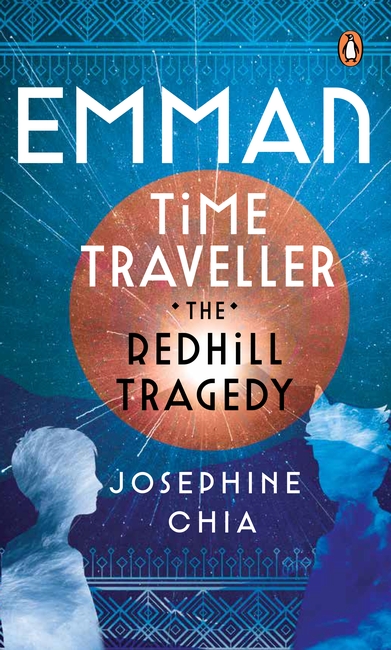
Emmanuel was in school when he received a strange visitor. It seems that no one but Emman could see the boy who was dressed in an old-fashioned Malay outfit. When Emman approached him, the boy ‘spoke’ to Emman telepathically to tell him that he was The One. When Emman asked him The One what? The boy said, The One to save him. The boy made an urgent plea to Emman to help him, then dashed away hastily. A magic portal opened up and the boy stepped through it and disappeared.
Before he left, the boy had told Emman to attend a talk called The Redhill Tragedy. Curious, Emman searched online and found the talk to be at the National Museum. He asked his Peranakan, paternal grandmother to attend with him. The talk was about a boy Nadim, who was killed in the Redhill Tragedy. Suddenly, the boy Emman saw before, appeared again, telling Emman he was Nadim. He persuaded Emman to save him.
But what could Emman do? Nadim had lived and died in the 14th century Singapura. How could he undo history? And how would he be able to get back to the 14th Century to prevent Nadim’s murder? When he posed his dilemma to his Grandmother, Grandma surprised him by telling him that she can show him a way. But first he must have the courage to accept the quest.
Too Far From Antibes
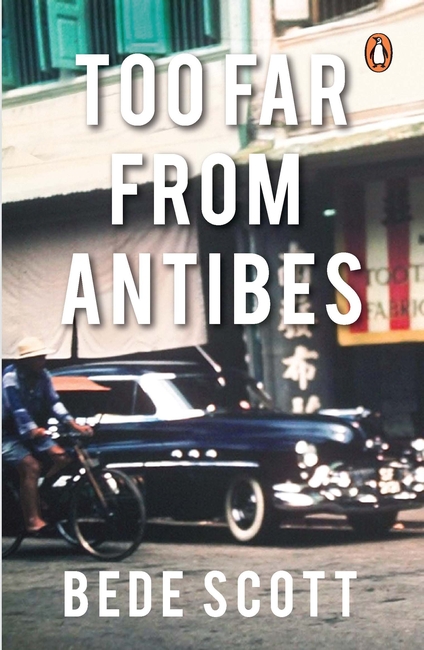
It is 1951, and Jean-Luc Guéry has arrived in Indochina to investigate the murder of his brother, Olivier, whose body was found floating in a tributary of the Saigon River. As an avid reader of detective fiction, Guéry is well aware of how such investigations should proceed, but it is not immediately clear that he is capable of putting this knowledge into practice. In addition to being a reporter for an obscure provincial newspaper, he is also a failed writer, an incorrigible alcoholic, and a compulsive gambler who has already squandered a fortune in the casinos of the Côte d’Azur. Despite his dissolute tendencies, however, and his aversion to physical danger, Guéry does eventually manage to solve the case. In order to do so, he is obliged to enter a world of elaborate conspiracies, clandestine intelligence operations, and organized crime – only to discover, in the novel’s final pages, that the truth behind his brother’s murder is far stranger than he could have imagined.
Written in the style of Graham Greene and Eric Ambler, Too Far From Antibes is a ‘retro’ thriller that brilliantly evokes the city of Saigon during the early 1950s, when it was a centre of intrigue, insurgency, and empire.