



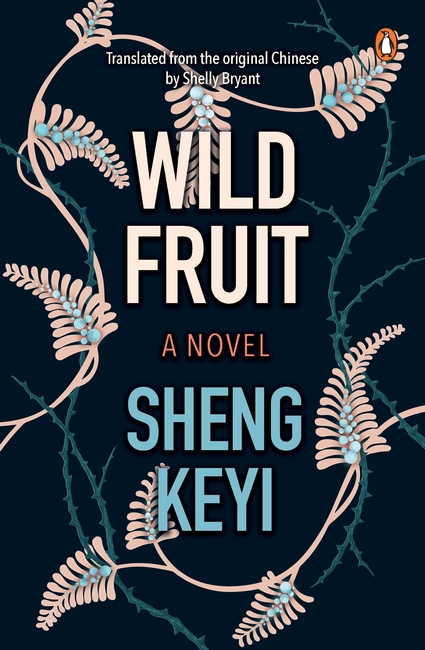
Xiaohan, the youngest daughter, shares her family’s unconventional life and exposes the depth of what it means to live in contemporary China today. Through sketches dedicated to each person in the Li clan, she shows how those close to her are forced to find new ways to survive, like wild fruit falling from a tree.
Archives: Books
Divining Duterte
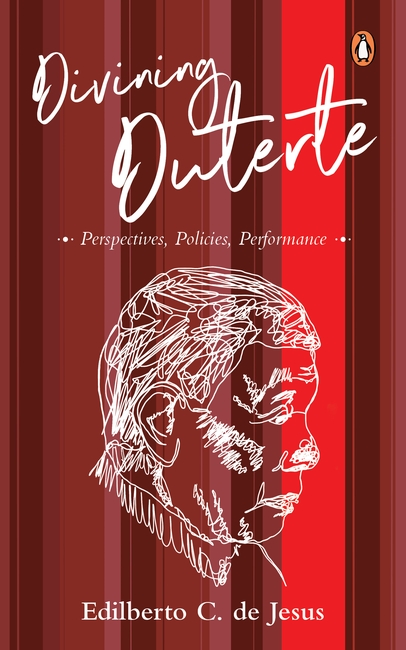
First published as opinion pieces, the essays in Divining Duterte provide contemporaneous commentaries on the context, course and consequences of the policies Philippine President Rodrigo Duterte pursued after his 2016 election.
Duterte became the first president in seventy years to come from Mindanao and the first to vault from a city mayor’s office to Malacañang Palace. Exploiting the potential of social media, Duterte was an Asian example of the elected “populist strongman,” like Brazil’s Bolsonaro, Hungary’s Orbal, and Russia’s Putin. His policies challenged the commitment to established political values assumed unassailable: human rights and the rule of law; separation of powers; and the preference to ally with the United States and other nations that shared its democratic liberal values rather than with authoritarian regimes. Despite these policies and problems coping with the pandemic, public opinion polls rewarded him with high approval ratings.
Restricted to a single presidential term, he will inevitably exert an influence on the 2022 elections. Duterte’s 2016 underdog victory rewrote the rules for presidential politics. In reviewing the path he took to bring the country towards 2022, Divining Duterte explores his success in overturning Philippine political values
Northern Girls
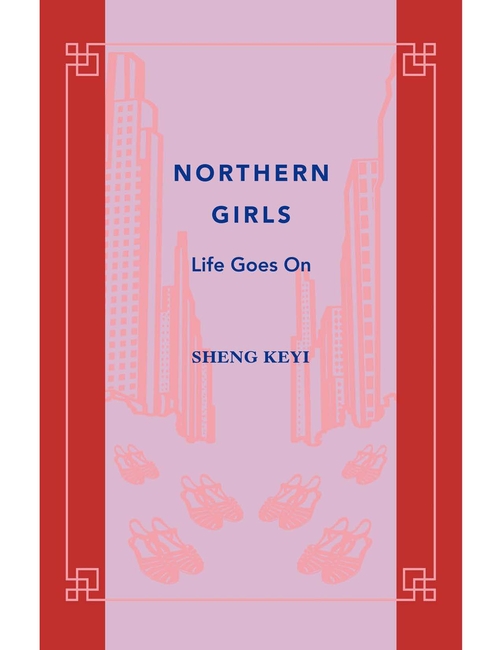
Qian Xiaohong is born into a sleepy Hunan village, where the new China rush towards development is a mere distant rumour. A buxom, naïve sixteen-year-old, she yearns to leave behind hometown scandal, and joins the mass migration to the bustling boomtown of Shenzhen. There, she must navigate dangerous encounters with ruthless bosses, jealous wives, sympathetic hookers and corrupt policemen as she tries to find her place in the ever-evolving society.
Hardship and tragedy are in no short supply as her journey takes her through a grinding succession of dead end jobs. To help her through this confusing maze, Xiaohong finds solace in the close ties she makes with the other migrant girls – the community of her fellow ‘northern girls’ – who quickly learn to rely on each other for humour and the enjoyment of life’s simple pleasures.
A beautiful coming-of-age novel, Northern Girls explores the inner lives of a generation of young, rural Chinese women who embark on life-changing journeys in search of something better.
Foresight
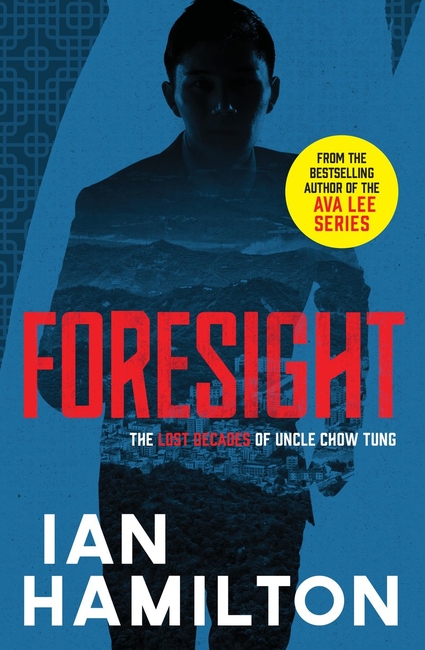
1980: A pivotal year in modern Chinese history as Premier Deng Xiaoping begins what he intends to be the transformation of China into an economic superpower. The most visible evidence of Deng’s policy is the creation of Special Economic Zones, and one has been set up in Shenzhen, next door to Hong Kong and on Fanling’s doorstep. Among Triad leaders, Uncle is the only one who recognizes that Deng’s intentions could have profound repercussions on their organizations. To protect his gang and their interests, he acts to not only minimize the danger, but to turn events to his advantage.
Covid 19: A Black Comedy of Emotional Intelligence
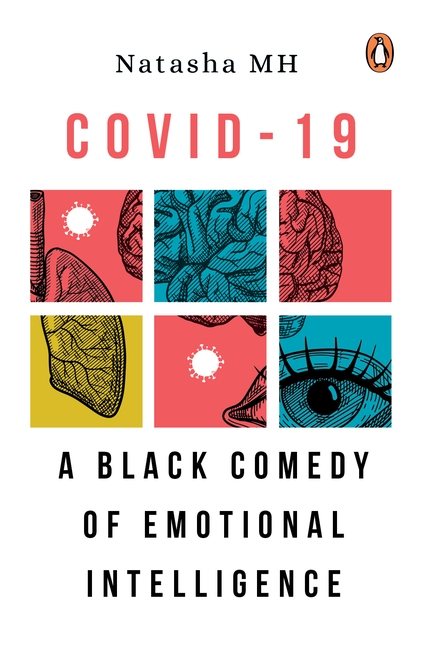
The pandemic crisis is not showing us our lives are irrevocably damaged. On the contrary, it reminds us of our role towards humanity and that some areas may have been neglected and systems need to be upgraded.
From weak healthcare systems, poor leadership, to the frailty of human communication, COVID19: A Black Comedy of Emotional Intelligence is both a social satire and a reflection exercise towards becoming a more engaged citizen of the world after the virus turned the world upside down. So much was conveyed from mainstream media, social media, skeptics and conspiracy theorists alike which rose to the surface like crema, an interesting tapestry of reexamining life as how we know it. A pandemic united the world, many agree to disagree on how the future of the planet ought to be handled. People saw ugly truths of their governments with their backhanded policies. But will life ever be the same again? It isn’t just about the world in action but also about countries and their inaction. And where do we go from here? All of these are discussed in short reflective pieces that make up the entire book written during quarantine.
Each chapter fuses aspects of both science and arts, swinging from psychology, sociology, politics to economics providing both comic relief and cognitive stimulation. Students, educators and readers alike can benefit from the compilation of facts and sardonical approach.
Five Energies of Horrible Bosses…And How Not to Become One
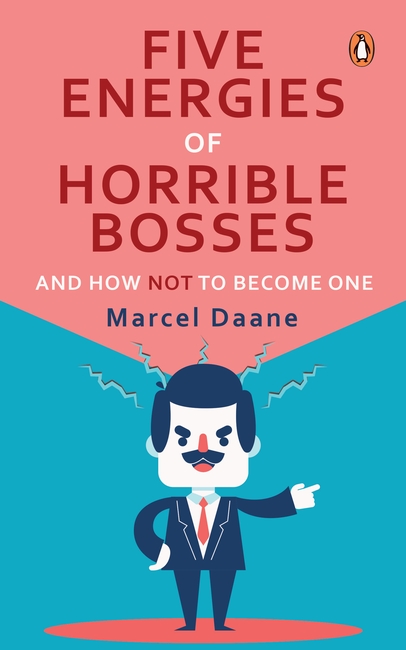
‘The fundamental difference between a great boss and a horrible boss is how they project their energy onto others. Everything else is born from that energy’
Five Energies of Horrible Bosses…And How Not To Become One is a Leadership Book like you have never read before. This book offers a holistic framework using a powerful blend of Ancient Asian Energy Practices and Modern Western Science that helps leaders and teams master their energy projection for better influence, connectedness, communication, and collaboration.
Born from an early adult life of repeated failures, managing clinical depression, alcoholism, and finally becoming a horrible boss himself, Marcel Daane tells a compelling story how he finally found direction through his practice of Martial Arts, combined with Meditation and Energy Healing.
Citing real-life examples while working with leaders and teams as a Professional Certified Coach and Neuroscientist, Marcel shares his powerful system that not only helps you assess for yourself whether the type of energy you are generating and projecting is serving you as a leader or boss, but it also teaches you how to become a master of all five energies so you can ensure you will never ever become a horrible boss yourself.
Softer Voices
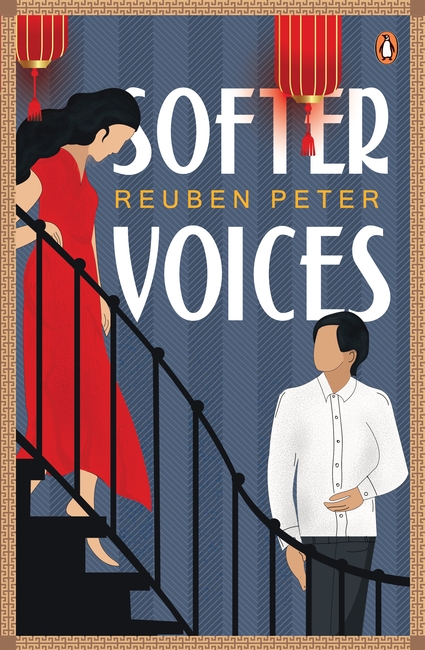
Philip Montfort is a man of contradictions. He is an Anglo-Indian born in British India and torn between his Part-Caucasian heritage and his Indian identity. Born into a vanishing aristocratic family with fading fortunes, his life is a struggle to reconcile his circumstances with his desires and to render a true account of himself. He is irreligious but a seeker of truth and authenticity. After studying law at Cambridge, and being denied a place in both England and India, he seeks instead to make life anew in the Colonies – specifically in the bustling, ecstatic British outpost of Singapore.
There, he is drawn into the orbit of young, privileged intellectuals like himself who seek truth just as he does, while gorging and stupefying themselves with layers of luxury. They call themselves the Asiatic Club and commission themselves to doing civic works in the lead up to the War. More secretive however are their preparations to form a stay-behind auxiliary in the event that Singapore is occupied.
When War reaches Singapore in the early forties, the excess is stripped away and each member of this exclusive coterie is forced to confront their true selves as they make sacrifices and compromises of character. While fighting as a reserve officer in the British Indian Army’s III Corps, Philip is captured as a prisoner-of-war. Thereafter, he is convinced to join the Axis-collaborationist Indian National Army under its mercurial but brilliant leader, Subhas Chandra Bose.
Lies that Blind
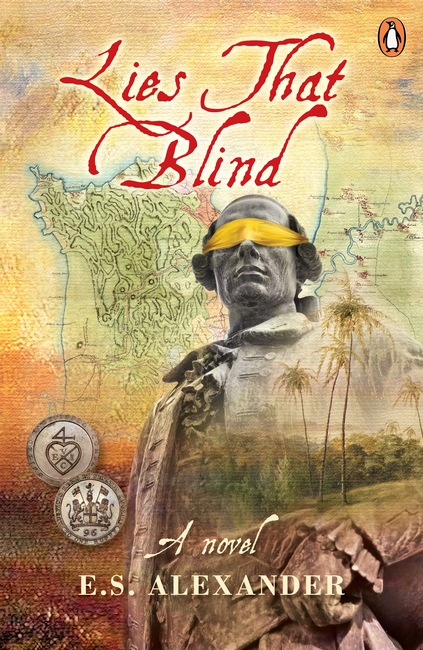
Malaya, 1788:
Aspiring journalist Jim Lloyd jeopardises his future in ways he never could have imagined. He risks his wealthy father’s wrath to ride the coat-tails of Captain Francis Light, an adventurer governing the East India Company’s new trading settlement on Penang. Once arrived on the island, Jim-as Light’s assistant-hopes that chronicling his employer’s achievements will propel them both to enduring fame. But the naïve young man soon discovers that years of deception and double-dealing have strained relations between Light and Penang’s legal owner, Sultan Abdullah of Queda, almost to the point of war. Tensions mount: Pirate activity escalates, traders complain about Light’s monopolies, and inhabitants threaten to flee, fearing a battle the fledgling settlement cannot hope to win against the Malays. Jim realises that a shared obsession with renown has brought him and Light perilously close to infamy: a fate the younger man, at least, fears more than death. Yet Jim will not leave Penang because of his dedication to Light’s young son, William, and his perplexing attraction to a mercurial Dutchman. He must stay and confront his own misguided ambitions as well as help save the legacy of a man he has come to despise.
Inspired by true events, Lies That Blind is a story featuring historical character Francis Light (1740-1794) who, in an effort to defy his mortality, was seemingly willing to put the lives and livelihoods of a thousand souls on Penang at risk.
The Mountain Master of Sha Tin
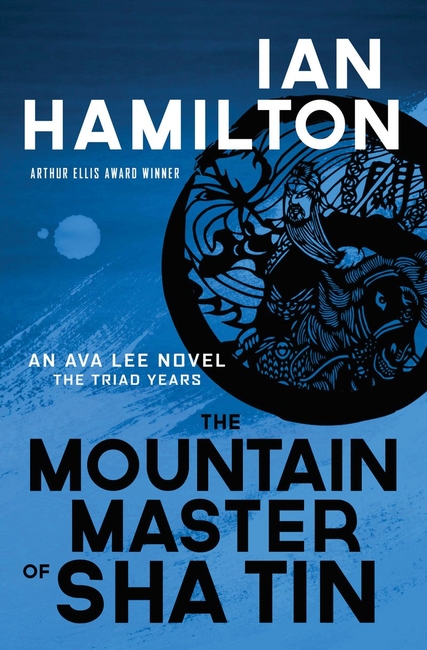
Ava is in Shanghai visiting her ailing friend, the Mountain Master Xu, when a triad war breaks out in Hong Kong. Sammy Wing, an old enemy of Ava’s who has twice tried to kill her, has enlisted the aid of his nephew Carter – the new Mountain Master of Sha Tin – to reclaim control of his old territory, Wanchai, from Xu’s men.
There is nothing subtle about the Wings’ methods. Xu’s most trusted enforcer, Lop, has been shot, and six of his street soldiers kidnapped. The Wings threaten to execute them unless Xu’s men vacate Wanchai immediately. Ava steps in to broker a settlement, and the Wings respond by sending her a box containing six fingers – and a twelve-hour deadline.
As the violence and tension mount, Ava is driven to the edge, and she is forced to devise a plan that will bring her face-to-face with Sammy and Carter Wing. The only question is who will pull the trigger first?
Assembling Alice
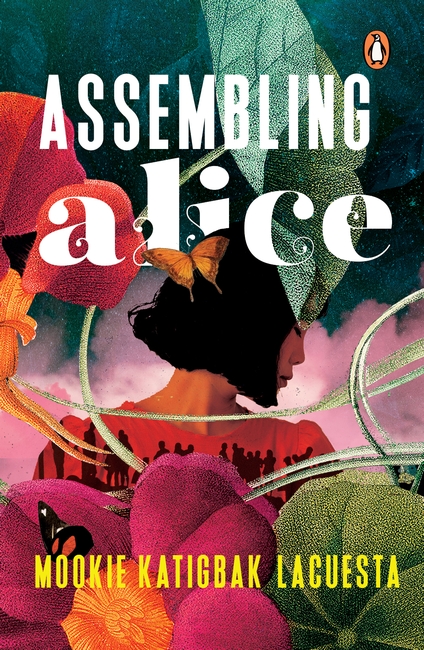
Before and after the Battle of Manila, a Japanese spy and an American soldier have one thing in common: they both fall in love with Alice Feria, a pianist who would later become one of the first women journalists in the Philippines. Both would prove to be instrumental to her survival during the Japanese occupation and the liberation of Manila.
Assembling Alice is a portrait of a woman as much as it is a portrait of the times she lived in. She came of age during the commonwealth period, survived both the occupation and the war, and did not write of her experiences as much as she spoke of them to those in her inner circle. Her experiences were sublimated into editorials she wrote for a small magazine called The Filipino Home Companion where she wrote of nation-building and what it meant or should mean to be a Filipino after the second world war.
Inside these pages are the stories she told, and have been told about her.