




It is 1949, and young Etienne Legast is in trouble. Estranged from his pious Catholic family, having fled a messy love affair with an older man at the end of the war, he returns home to Paris for a funeral, only to find himself quick drawn into a deadly debt to a neighborhood gangster and an unexpected romance with Samphan, an orphaned Cambodian student radical. Though the two young men come from different worlds, they soon develop a bond that helps them transcend their respective tragedies – until revolutionary political intrigues and the Parisian underworld threaten to pull them under once more.
Archives: Books
Of Myths and Men
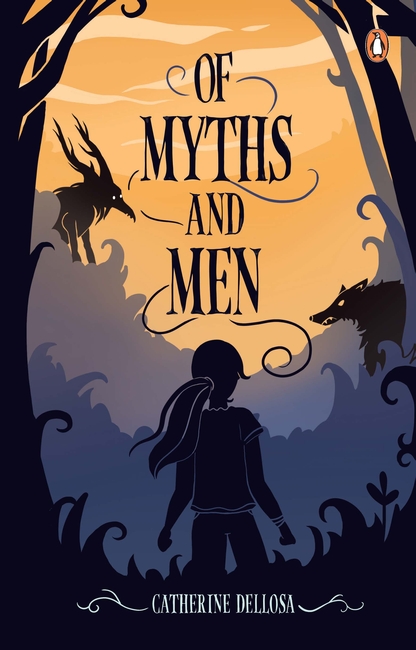
Eighteen-year-old Ava has saved the world 152 times – ever since she got her hands on her first console. It’s all fun and games, but after a mysterious encounter with not-a-vampire Brad, she discovers that the mythological creatures she’s only ever seen in video games are actually totally real. Brad reveals they’re alien refugees living among humans – bonus points because Ava finds the guy really, really cute.
As she’s suddenly thrust into a quest with a surfer wendigo, a friendly manananggal, a telepathic nine-tailed fox, a Sudoku-loving centaur, and a huggable Bigfoot, Ava embarks on an actual mission to fend off an alien invasion – and she soon realizes that this time, she just might need to save the world for real.
Where’s a save point when you need one?
Prophecy of the Underworld
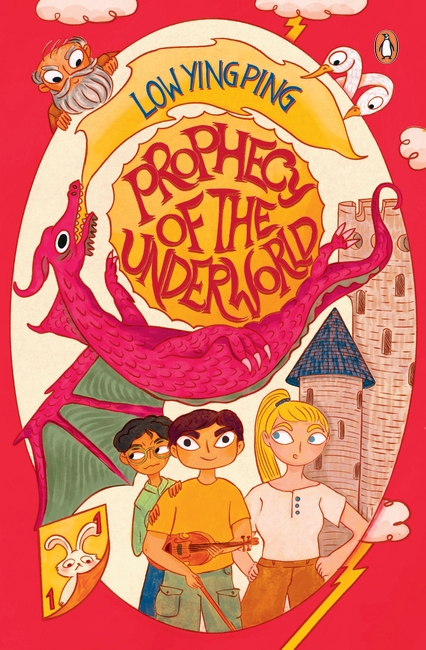
When the prophesied hero dies one day before the world needs saving, 13-year-old Julian Kee is randomly chosen as a last-minute replacement. With absolutely no world-saving skills whatsoever, he must nonetheless lead his friends into the Underworld to retrieve a magical rock that can save their world.
The problem is that the ruling council of the Underworld objects to their quest, and the rock can only be obtained by passing through a series of terrible trials, including navigating an unsolvable maze, enduring unspeakable tortures in the dungeons of the council’s citadel, and facing a really cute bunny. And is the Underworlder who cheerfully volunteers to risk her life to help them simply a girl with a very kind, selfless heart, or is she really a spy for the council?
A fast-paced adventure filled with lots of exciting twists and turns, this hilarious spoof of adventure/hero stories will be enjoyed by both the young and the not-so-young!
The Unvisible
Alex, a struggling journalism student, begins a school project about children’s stories of invisible friends.
Because of her project, Alex gets invited to a secret society-Carte Blanche-that studies the existence of an invisible human race.
The more she learns, the more she starts to be intrigued by the possibility of these stories actually being real.
Alex learns that anyone who reveals the existence of The Unvisible will be killed, because The Unvisible know that humans will kill them if they found out about The Unvisible. Humans kill everything that we perceive to be a threat to our existence.
As Alex gets drawn into the alluring world of The Unvisible, she also needs to fight with the trauma of having her world view turned upside down, and the profound loneliness that comes from not being allowed to share humanity’s biggest secret. With feelings of inferiority and doubt she struggles to take the lead to save herself, her family-and humanity.
Life is Beautiful. Death is Imminent.
The Apple and the Tree

When an apple falls, does it roll far or stay close to its tree?
Is it an exact clone of all the other apples the tree produces or something entirely different?
This is the question that has perplexed the public about Marina for the simple reason that she is the daughter of the man who has governed Malaysia for almost twenty-four years. Does she echo him in his view of the world, or does she chart her own path?
Why is it that in her own public life, in her writing and speeches, she expresses opinions that seem to contradict his?
This book hopes to detail how she has navigated her life as the daughter of a charismatic politician and a loving father, even as sometimes she has chafed at being constantly under his shadow. It talks about how she has struggled to find her own identity, to defend her worldview at times and to reconcile them with his at others.
She tells the story of growing up as the daughter of Malaysia’s most influential leader, from the values instilled in her as a child, right up to the day he was forced to step down as the 7th Prime Minister after leading the historic ouster of the government he used to lead.
The Raffles Affair

Fresh from a gruelling three-month assignment in East Africa, beautiful former MI6 agent Victoria West arrives at Raffles Hotel in Singapore to attend her friend’s wedding. But Victoria’s plans for a relaxing break end abruptly with news that the groom has been kidnapped. Warned not to contact the police, Victoria sets out to find him. But in this glamorous setting, nothing is quite what it seems. As the deadline to pay the ransom draws near, events take a deadly turn. Victoria suspects murder. But which of the wedding guests did it? They all have a motive… and a talent for lying. With time fast running out, Victoria must untangle the web of domestic squabbles, red herrings and false alibis before it is too late.
Nusantara – A Sea of Tales
Nusantara – A Sea of Tales is the most comprehensive collection of folk tales, fairy tales, myths and legends from the Nusantara and Southeast Asian region, and was written to sit alongside the great anthologies of folklore from other parts of the world.
Although it is impossible to trace the origins of most of these traditional tales, we do know that these stories were used as a means to discover ourselves and the world around us. Like a living creature, these tales came into existence at some point, and have since evolved and adapted to suit the needs of the community that it finds itself in. The seafaring nature of the people in this region has no doubt contributed to the spread of these tales and explains the fascinating variations across Southeast Asia.
These rich and layered tales contain all manner of wonder, marvels and strange curiosities, and have been written to enthral a new audience. The author has delved into the history and the meaning behind these tales but like all good fairy tales and folk tales, each reader will extract their own meaning from these stories. The symbols in these stories engage our imagination and challenges us to question, discuss and unravel life’s conflicts and mysteries. Herein lies the true power of these stories and the reason why these tales must be preserved and allowed to live and breathe once more.
The Stories Women Journalists Tell
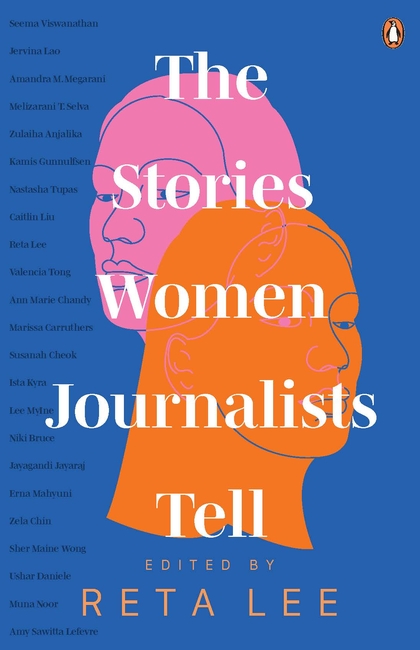
Twenty-two women journalists in Southeast Asia share their personal experiences in essays spanning politics, culture, travel, human interest and lifestyle.
In these insightful and compelling essays, the former and current journalists take us through the journey as a woman covering news in male-dominant newsroom culture while keeping eyes on the ground. The Stories Women Journalists Tell is an inspiring collection of essays that celebrates kinships, camaraderie and strength, while highlighting our most important and interesting history in events and news.
Themes
1. Politics: The essays reflect events that happened in a local environment while providing balanced coverage of key organisations and political events.
2. Life & Style: The essays in this volume foreground the role that life & style writers and editors played in reporting news while staying grounded in an image-obsessed world.
3. Human Interest: The human interest essays here focus on details that resonate emotionally with the readers, and sometimes can be described as ‘getting the story behind the story’ or ‘putting a face on the news.’
4. Culture: The essays discuss a particular belief or values of a particular group of people at a particular time.
5. Travel: The essays here are part travelogue, part literature, which can double up as a historic travel narrative.
Final Reckoning: An Insider’s View of The Fall of Malaysia’s Barisan Nasional Government
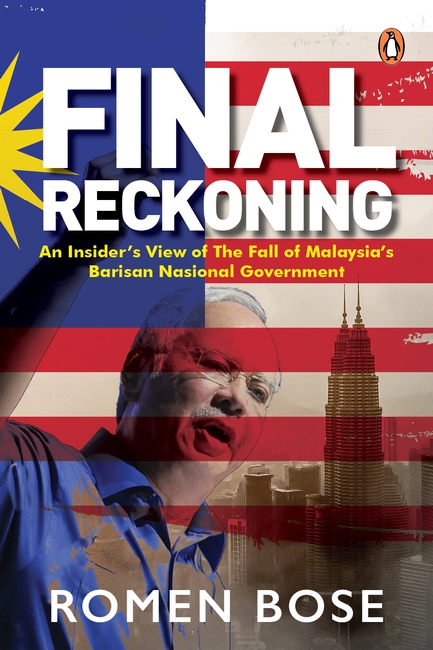
From the innermost sanctum of the Prime Minister’s private offices among the Minaret-studded buildings of Putrajaya to streets filled with tear-gassed protestors in downtown Kuala Lumpur, Romen Bose, a former international correspondent and political communications consultant to then Prime Minister Najib Razak, provides a gripping and engaging true story of drama, intrigue, violence and incompetence that finally ended the rule of Malaysia’s sixty-one- year old Barisan Nasional Government in May 2018.
With a front-row seat to the major controversies that hit the Najib Razak administration, Romen reveals for the first-time how the country’s leadership reacted to the disappearance of MH370 and the still classified covert moves to retrieve the remains of Malaysian victims following the shooting down of MH17.
Final Reckoning also gives a blow-by-blow account of how the 1MDB scandal rocked the Government and the attempts by the country’s top politicians and their advisers to contain and explain it away. Through numerous conversations with key players and his presence at various top secret meetings amid the global investigations into the scandal, Final Reckoning pieces together how a sitting Prime Minister became, Najib claims, ‘the fall guy’ for a mastermind who had managed to pull off the single biggest con of the century. In doing so, Final Reckoning tells the story of an ultimately futile scramble to try and preserve a crumbling political legacy that had long been out of step with the realities of a new Malaysia.
This book is the story of the wild roller-coaster ride that marked the Barisan Nasional Government’s rule, from the 2013 General Elections, until its 61-year-old hold on power came to an end on the night of 9 May 2018.
She Never Looks Quite Back

The life of a woman, no matter who she is or where she might be, typically encompasses loss and longing, despair and courage, regret and love. She Never Looks Quite Back murmurs of such experiences and more. The stories depict themes of growing up, social unrest, nature, war, migration, reconciliation, sensuality, infidelity and the pandemic. The narratives allow glimpses into lives conflicted by chance and choice… women who find themselves in the most extraordinary circumstances, yet never giving up, not without a fight.
Be transported from Singapore’s swanky skyscrapers to wild Malaysian forests to rough African seas through waves of penultimate moments. Ode to Joy plays a forgotten tune while reliving the scars of surviving the Japanese Occupation in Singapore. Bird Watching captures a woman’s panic and escape, eventually plunging into the depths of her existential being. The Liquid Goalie -a fictionalised true story-charts a young Gambian woman on a perilous journey to Europe. A Polish in Katarzyna’s Secret is bent on staying alive, despite violation to her body, to reunite with her children someday.
Mallika Naguran’s debut collection of short stories reveals women’s unquenchable thirst for life without being unfazed by cruel turn of events. Her lyrical style of writing amplifies the fragility of humans while bringing into play metaphorical connection and intervention. The tales are timeless yet prick at many of today’s issues.