



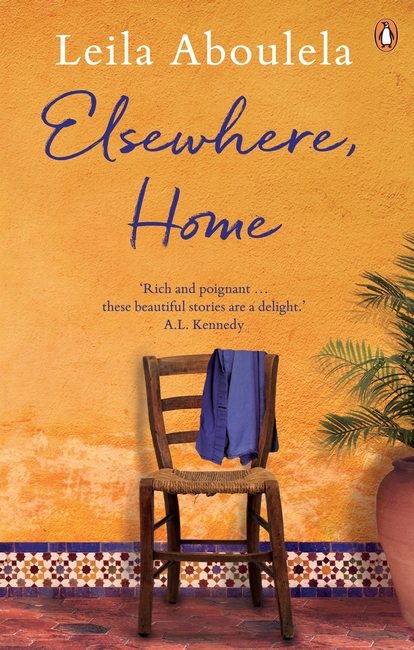
From one of our finest contemporary writers whose work has been praised by J.M. Coetzee, Ali Smith and Aminatta Forna, Leila Aboulela’s Elsewhere, Home offers us a rich tableau of life as an immigrant abroad.
A young woman’s encounter with a former classmate elicits painful reminders of her former life in Khartoum. A wealthy Sudanese student in Aberdeen begins an unlikely friendship with a Scottish man. A woman experiences an evolving relationship to her favourite writer, whose portrait of their shared culture both reflects and conflicts with her own sense of identity.
Shuttling between the dusty, sun-baked streets of Khartoum and the university halls and cramped apartments of Aberdeen and London, Elsewhere, Home explores, with subtlety and restraint, the profound feelings of yearning, loss and alienation that come with leaving one’s homeland in pursuit of a different life.
Archives: Books
Where were you?
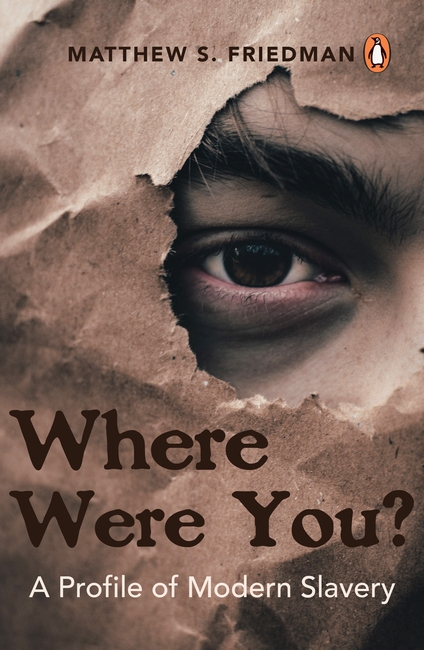
There are more slaves in the world today than any other time in history.
Enter the world of human trafficking and explore what we can do together to end this global crime. Where Were You?: A Profile of Modern Slavery by Matthew Friedman provides an up-to-date overview of human trafficking, a largely ignored present-day evil, and recounts true stories of enslavement in Asia today. Former United Nations and USAID expert Matthew Friedman obtained in-depth first-hand knowledge with boots-on-the-ground work over 30 years throughout Asia. Human trafficking exists in nearly every nation on earth and Friedman has personally interviewed hundreds of freed slaves and imprisoned traffickers throughout South and Southeast Asia.
The modern slave trade operates in brothels, fisheries, clothing and chocolate industries, as well as a myriad of other manufacturing jobs and is a billion dollar business that continues to grow unchecked.
Even with the collective response of governments, the UN and civil society partners, less than 0.2 percent of the victims are assisted.
“We’re not winning the fight against human slavery. Relying solely on the anti-slavery community around the world to tackle the scourge of modern slavery and the criminals behind it simply is not working. Unless something drastic changes, this trend will continue unabated,” writes Friedman.
This book not only reveals the plight of human trafficking victims, Friedman also offers valuable advice and guidance related to his own personal experiences working in the counter-trafficking and development world. He offers valuable lessons for those thinking about entering this field.
A Long Road to Justice
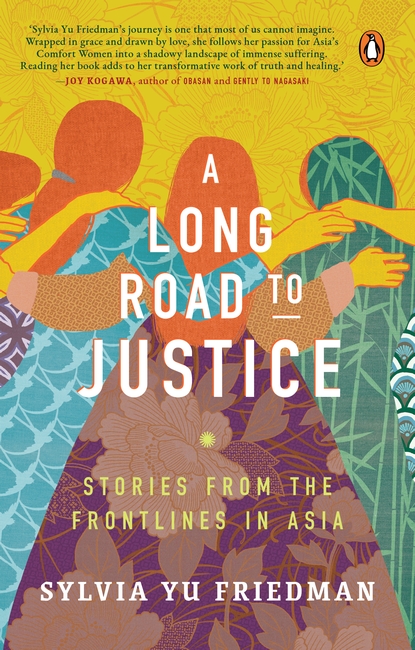
A constant stream of impoverished women and girls have been, and are being, enslaved and abused in the Asia Pacific region. Slavery is not a historical issue – it’s happening today. History is repeating itself.
Through Sylvia Yu Friedman’s work in journalism, counter-trafficking and philanthropy, she has had rare and incredible access to victims of sex trafficking and modern slavery in China, Thailand, Cambodia, North Korea, South Korea, Myanmar and Indonesia.
Amid this terrible human suffering, she has seen frontline workers carrying a great light that has overcome the darkness in some of the most frightening places on Earth. This memoir describes her personal journey in the fight against slavery through supporting philanthropic initiatives and raising awareness through writing articles and producing films. She shares her personal setbacks, and how her awakening to the plight of the victims of Imperial Japanese sex slavery during World War II helped her come to terms with her identity issues over her Korean heritage. She writes about the lessons – the good, the bad, and the ugly – and the people and events that have shaped her along the way.
Sindicato & Co.: A Novel
David Elliot, an American expat in Manila, gets a new assignment from his multinational consulting firm. To deliver to a client a very sensitive message that’s cached on his phone.
Angela Avellana, a Miss Universe finalist turned prostitute turned master thief, lands the motherlode of her thieving career. An American she picks up in a bar.
When the American goes missing, Francesca Godiñez, the daughter of a slain journalist who was the latest victim in the infamous extra-judicial killings, discovers the truth about the War on Drugs. And the innumerable number of the dead and the disappeared of which the American could soon be added to.
Before the missing American becomes an international incident, General Luis Alberto, the head of the Philippine National Police and the brains behind Operation: Tokhang, needs to locate him. And as the decorated general adds yet another name to his dreaded kill list, he will have to decide whether to keep the American alive.
A Time for Murder
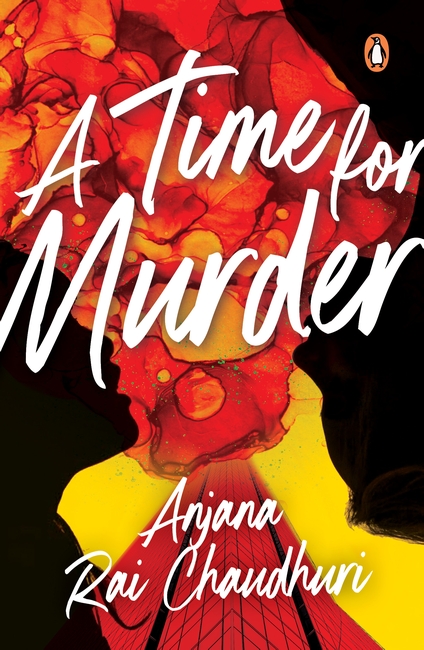
The first of the Das Sisters Mystery Series finds Inspector Dolly Das of the Singapore CID and her sister, Lily, on the trail of a cold-blooded murderer in the Singapore heartland. It is 2009.
On a dark, hazy December night, Mary Jacob’s dead body is found at Silver Springs Condominium in the Singapore heartland. Is it a suicide, or did someone push Mary out of her kitchen window? Forensics investigation points to murder.
Inspector Dolly Das of the Singapore CID is assigned to the case. Multiple suspects have means and motives for murdering Mary, ranging from her estranged husband to her neighbours. When two more murders occur, pressure
mounts on Dolly putting her job at risk. Desperately, she turns to her sister, Lily, for help in solving the murders. Lily runs a café and minimart at Silver Springs Condominium, placing her in a good position to gain information that the police cannot access. Supported by Uma, their sharp-tongued 78-year-old mother, Lily’s assistant, Vernon, his girlfriend, Angie, and Lily’s domestic helper, Girlie, the Das Sisters team up to solve the murders.
But can Dolly concentrate on the case when her marriage is breaking up? What will Lily do when she finds herself drawn to one of the chief suspects? And which of the Das sisters uncovers the crucial clue that unmasks a cool and calculating murderer?
Maths Problem Solving: Grade 6
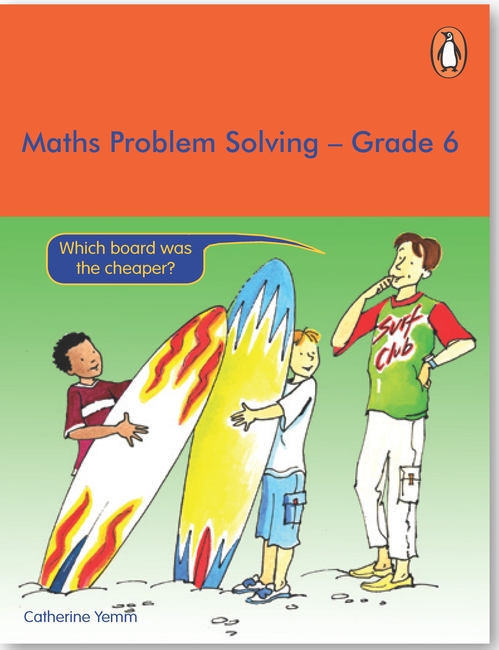
The books cover the ‘solving problem’ objectives from the numeracy framework. They are designed in such a way that each section has six stages of questions to be worked through. Every stage is split into three levels, for example 1a, 1b or 1c, based on achievement. Each corresponding question from these levels follow the same line of questioning, so that when the teacher talks about a certain question, the solution process is the same for each level but the complexity of the sum varies.
Maths Problem Solving: Grade 5
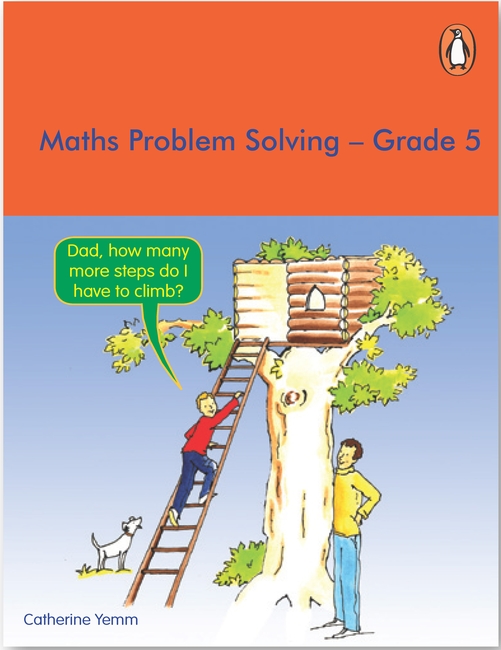
The books cover the ‘solving problem’ objectives from the numeracy framework. They are designed in such a way that each section has six stages of questions to be worked through. Every stage is split into three levels, for example 1a, 1b or 1c, based on achievement. Each corresponding question from these levels follow the same line of questioning, so that when the teacher talks about a certain question, the solution process is the same for each level but the complexity of the sum varies.
Maths Problem Solving: Grade 4
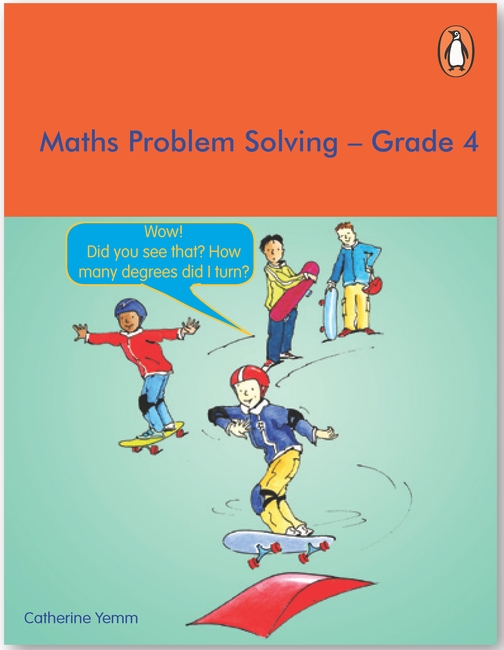
The books cover the ‘solving problem’ objectives from the numeracy framework. They are designed in such a way that each section has six stages of questions to be worked through. Every stage is split into three levels, for example 1a, 1b or 1c, based on achievement. Each corresponding question from these levels follow the same line of questioning, so that when the teacher talks about a certain question, the solution process is the same for each level but the complexity of the sum varies.
Maths Problem Solving: Grade 3
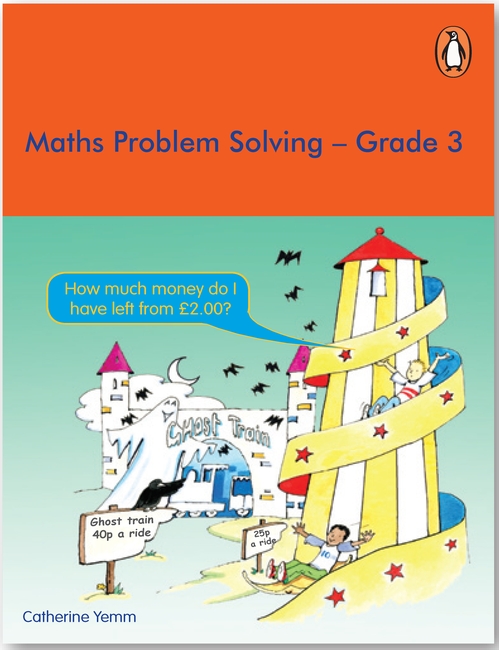
The books cover the ‘solving problem’ objectives from the numeracy framework. They are designed in such a way that each section has six stages of questions to be worked through. Every stage is split into three levels, for example 1a, 1b or 1c, based on achievement. Each corresponding question from these levels follow the same line of questioning, so that when the teacher talks about a certain question, the solution process is the same for each level but the complexity of the sum varies.
Maths Problem Solving: Grade 2
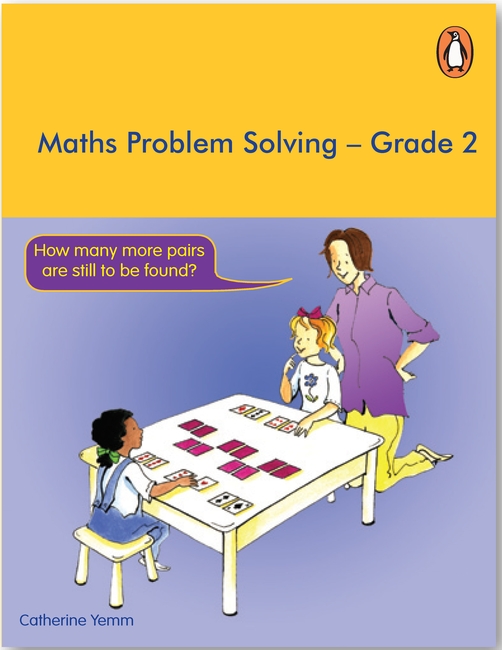
The book cover the ‘solving problem’ objectives from the numeracy framework. They are designed in such a way that each section has six stages of questions to be worked through. Every stage is split into three levels, for example 1a, 1b or 1c, based on achievement. Each corresponding question from these levels follow the same line of questioning, so that when the teacher talks about a certain question, the solution process is the same for each level but the complexity of the sum varies.