



Hong Kong is a dynamic city. But the contrast between the well-off and the poor is stark. In the 1980s and 1990s, and to a lesser extent in this century, Luxury brand bag-toting women can often be seen walking past beggars on the sidewalks of busy streets. Poverty has always existed in the city. Where else can we find it
there and is it getting worse? Does it matter? Inequality has been steadily increasing from 1976. Poverty makes people more vulnerable and corruptible, whether to choosing bad leaders or undertaking terrorist activities. The motivation of this book is to ascertain the extent of poverty in Hong Kong in the context of the experiences in other parts of the world. The meditations in this book are not meant to be encyclopaedic. They are a sample of the unique challenges that exist in different parts of the world. This book does not take a stand on the current political protests against the diminishing freedom and autonomy imposed by Beijing in Hong Kong, although it proffers underlying causes for the demonstrations. Inequality is a recurring theme, so are the social chasms that the wealth, education, and digital gaps created. And only by grasping the facts of Hong Kong’s destitute can one help them.
Archives: Books
A Consequence of Sequence
After suffering strokes, general practitioner Dr. Idayu Maarof underwent major surgery to remove a heart valve tumour believed to have caused the strokes. Unfortunately, what seemed to be the end of a journey was only the beginning of an even more arduous one. Her symptoms evolved to multiple episodes of daily seizures. To control the seizures, she was put in a medically induced coma. A mysterious brain lesion became the prime suspect, but no one was certain. She later underwent two surgeries to remove what appeared to be a brain tumour. Dr. Idayu Maarof contextually concludes how a sequence of events and decisions led to a particular consequence. This is not an account about being ill. This is story of acceptance, gratitude, and the struggle for a life worth living.
IQ EQ DQ
Do you know that 60% of children around the world have experienced at least one cyber-risk such as cyber-bullying, technology addiction, misinformation, online sexual exploitation, and others? The COVID-19 pandemic is accelerating the digitalization of global society. Cyber-risks among children, digital skill gaps and societal instability due to fake news and cyber-threats, are rapidly increasing and widening inequality. Amidst these challenges, how can we move forward to realize a better future?
This book is about Park’s social impact journey to develop DQ (Digital Intelligence) as the global standard for digital literacy, digital skills, and digital readiness with the belief that ‘technology is only meaningful when it enhances humanness’. This book shares over a decade of her experiences and insights on the empowerment of individuals across more than 80 countries with digital citizenship, which constitutes the core life skills that are needed in the digital age to minimize cyber-risks and maximize human potential. The story invites all people to envision how DQ can help to reshape technology, education, and well-being in the digital age.
The Hunter’s Walk
Generations of prolonged drought and hunger have allowed the harsher voices of the Zarda tribe to set edicts of discrimination against their fair skin members.
Ghar, a dark skin cave painter and Dun, his fair skin brother, push back on this discrimination to ensure that Dun and the fair skins can take part in the Hunter’s Walk, a Zardan rite of passage.
When a fair skin is caught defying the ban on hunting, the fair skins are expelled from the tribe. Ghar has trouble coming to terms with the expulsion, and eventually he himself is cast out. After a giant wolf attack leaves him close to death, he is saved by Mai, a healer from the Khamma tribe.
A new unseen kind of storm hits the Khamma. Ghar and Mai try to prepare their tribe for the new challenges the storm brings, but the same forces that mislead the Zarda now grow in the Khamma.
Can Ghar and Mai push back on tribalism and exclusion by being inclusive and willing to take on ‘foreign’ ideas? Will Ghar ever meet Dun and the fair skins again? Will they ever complete the Hunter’s Walk?
Orchids of the Rainforest
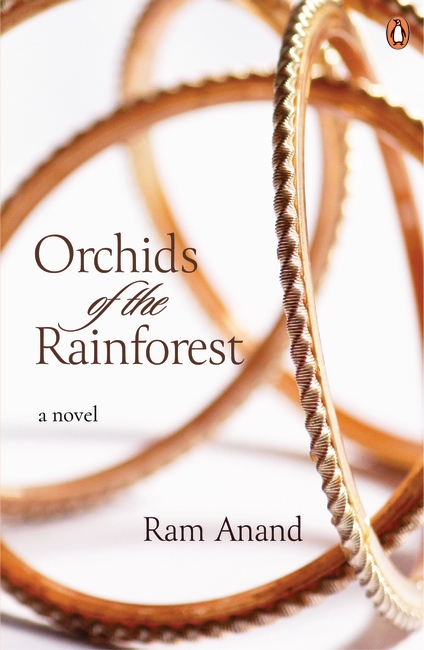
Geetha’s seemingly perfect world is shattered when she loses her husband of five years, forcing her into a period of introspection.
Her younger brother, Yuva, has to confront his own prejudices as his relationship with his partner gradually crumbles by the day.
Sabitha-their cousin and the youngest of the three-is about to reveal a secret that she had kept from her family for many years, and has to live with the repercussions.
As they deal with their personal troubles, the cousins encounter and bond with other Malaysian Indians who are trying to break the shackles of tradition.
Together, they attempt to reconcile their identities with their culture and heritage, while realising that acceptance is sometimes found in the unlikeliest of places.
Depth of Field
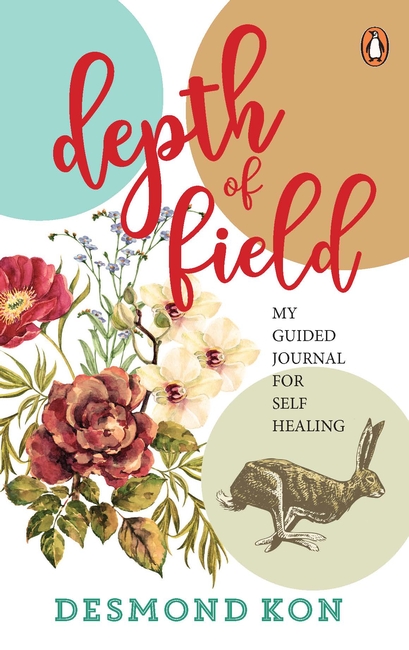
Depth of Field, deftly combines the self-help book with the activity book. Prefaced by epigraphs from Freud, Jung and Lacan, this book comprises 37 creative exercises, which may also be read as prompts or riddles. Accompanied with illustrations for ekphrastic inspiration, this book premises its ethos on the idea of writing as witness, investigating how people engage with their personal history through writing, and render particular experiences through the fine act of deeply felt writing.
The collaborative engagement approaches writing as a powerful means of healing, in excavating buried emotions and expressing them in such purposeful intimation. Depth of Field excellently spans a wide-ranging demographic of reader, from the adolescent to young adult, mature reader to retired elderly. The exercises work with such thoughtful complexity, so much so that they come across at once accessible and intellectual. These are easy to read, yet compelling in their introspective scope.
Depth of Field, a guided journal is also a reminiscent of activity books during childhood, filled with games and puzzles that encourage meaningful, self-initiated activities. In the same manner in which such books kept us occupied and entertained, Depth of Field is meant to be immersive, allowing readers to interact with the various prompts. Each prompt helps the reader to explore some aspect of the self, mining deep memories, emotions and values. Through the fine process of writing-this can cross genres to include nonfiction, poetry and fiction-readers reacquaint with their inner selves, developing a deeper sense of where they are in their life journey.
Engaging Millennials
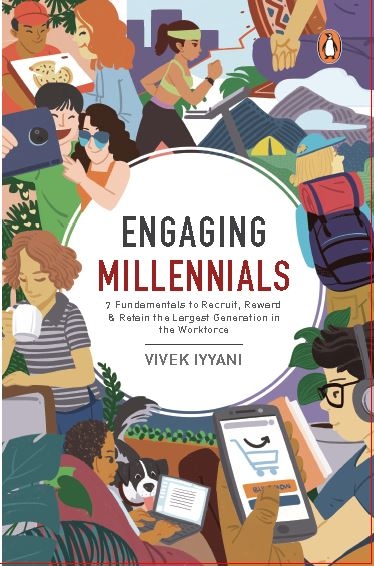
By 2025, Millennials will form 75% of the global workforce and more than half of them (58% of global Millennials) are living in Asia! As this huge demographic surges towards becoming a substantial contributor to Asia’s workforce, organisations continue to face engagement and retention challenges while balancing the need to stay relevant in a volatile, uncertain, complex and ambiguous world.
Archaic methods of management do not deliver success with the new breed of employees. Instead, the outdated model leaves Millennials uninspired and unmotivated to produce results. Like any generation of workers, performance lies in management-if you’re not getting what you need from your Millennials, it’s time to learn how to lead them the way they need to be led. To get the best out of Millennials, it is imperative for leaders to modify their current management style.
While the pop culture narrative would have us believe that Millennials are entitled, lazy, spoiled brats- Millennials are the generation of change: highly adaptive, bright, and quick to take on a challenge. If the different generations can learn how to collaborate in a way that capitalises on their strengths and compensates for their weaknesses, it will inspire a knowledge sharing inevitably encourages the crosspollination of ideas which can spark major innovation
Best practices and proven strategies from Google, Netflix, LinkedIn, and other top employers provide real-world models for effective management, and new research on first-wave versus second-wave Millennials helps you parse the difference between your new hires and more experienced workers. You’ll learn why flex time, social media, dress code, and organizational structure are shifting, and answer the all-important question: How do we engage Millennials?
Millennials are the product of a different time, with different values, different motivations, and different wants. This book shows you how to bring out their best and discover just how much they’re really capable of.
16 Swipes
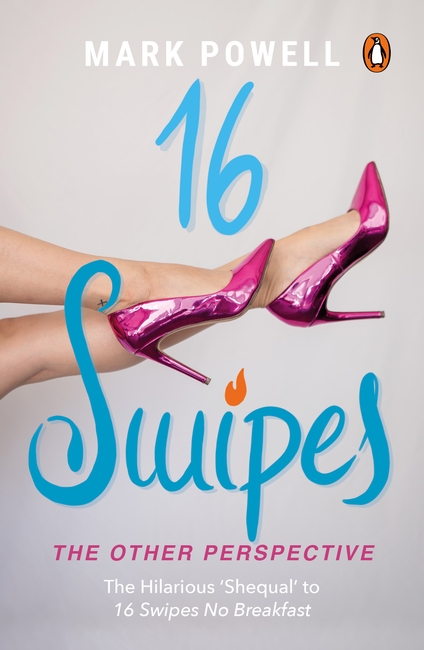
After reading this book, sixteen very red faced men should give up online dating. Your dates have now spoken.
16 Swipes: The Other Perspective takes you on a journey of discovery through a rinse cycle of Tinder dates, personal encounters, and struggles, as women navigate the sea of online profiles in search of a soulmate. Through a fair number of swipes, you’ll smile, split your sides laughing and be thankful to have dodged these yourself. Beyond the humour, you will gain insights into the relationships to avoid, situations to extract and the men you should never get serious with. Mistakes are shared so you gain valuable dating lessons.
The Elephant Trophy and Other Stories

The Elephant Trophy and Other Stories is a collection of 18 slice-of-life short stories featuring nuanced and diverse depictions of the Indian community in Malaysia. The overall theme of this collection echoes the outer and inner demons that possess the Malaysian Indian community. Specifically, the stories dictate the outlook of their lives as both Indians and Malaysians. The collection covers themes such as socio-politics, socio-economic imbalance, gender issues, social class juxtaposed to community values.
Grandma’s Gangsta Chicken Curry and Gangsta Stories from My Hippie Sixties
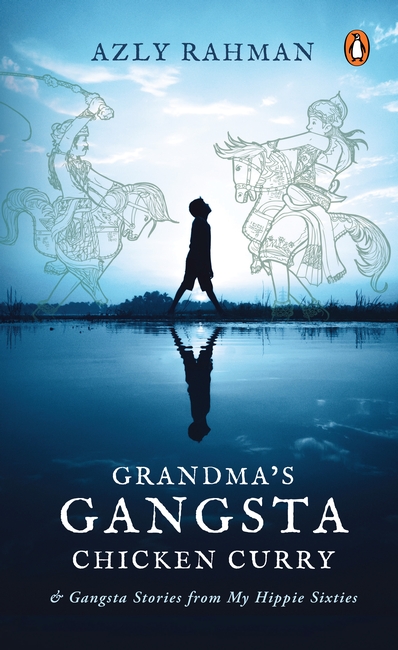
He is no longer him, today. At ten, he saw a chicken beheaded in his backyard, he too, an accomplice. He roamed his village, sometimes barefoot, wading through streams, backyards of his neighbors’ houses where young men were high, smoking ganja. He once saw a group of men in red headbands with Arabic words on them, ready to march to the capital city to slaughter many.
He fought demons, wept when the family dog died battling a cobra. He saw men in a trance, munching on broken glasses and hibiscus petals, high on Javanese trance-dance music, turning into horses. A spaceship landed on the school field. He thought he died, shot by Martians.
He was saved from being a Taliban. Saved by the music of the American Hippies. He confronted a boy in a green robe and white turban, preaching jihad against Western music. He chased the young mullah out of the school.
His story told in the language of the Sixties. Of Beat poetry. Of rap, joyfully, he now narrates with melancholy.