“Words do not express thoughts very well. They always become a little different immediately after they are expressed, a little distorted, a little foolish.”
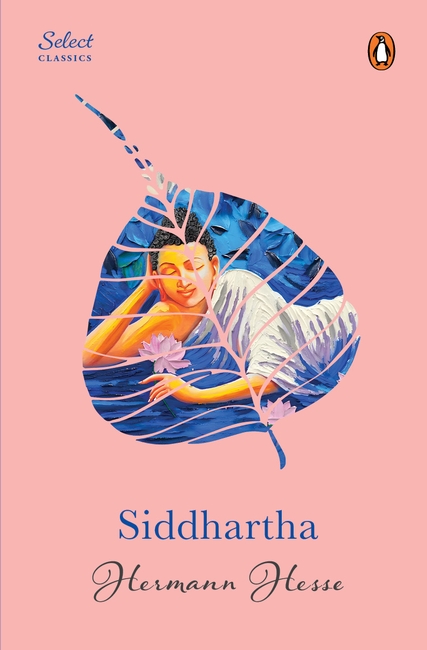
Set in ancient India, a young and curious Siddhartha moves to the wilderness on a quest to understand the meaning and purpose of our existence in this world.
Siddhartha, as a young Brahmin had become discontented with the superficiality of life, where the chase was for more personal gain and wealth, never for a lasting impact of one’s actions.
As a wandering ascetic, Siddhartha’s search for fulfilment leads to the realization that enlightenment is a deeply personal journey, and that traditional teachings and societal norms may not necessarily lead to true wisdom and contentment.
Siddhartha is a timeless and meditative narrative that urges one to take a journey of self-realization, to find their individualistic path to inner happiness.
- A profound journey of self-discovery and enlightenment.
- Explores the search for meaning beyond material pursuits.
- Challenges traditional teachings in the quest for wisdom.
- A timeless meditation on personal fulfillment and contentment.
- Inspires readers to forge their own path to inner peace.
“I will not serve that in which I no longer believe, whether it calls itself my home, my fatherland, or my church: and I will try to express myself in some mode of life or art as freely as I can and as wholly as I can.”
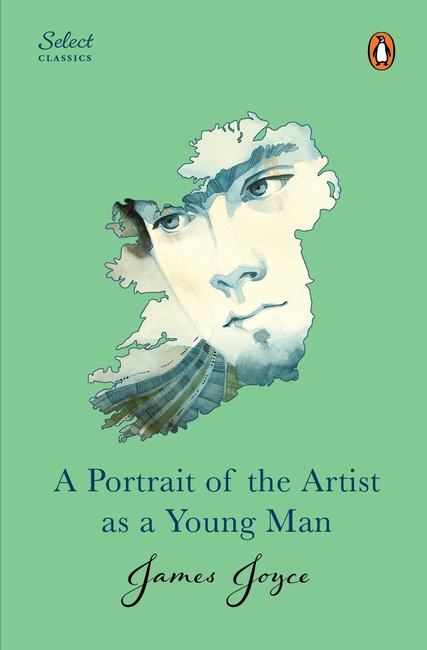
In the 19th century, Stephen Dedalus, a young boy growing up in Dublin, Ireland, shows the grit, self-reflection and courage it takes to absorb life and turn it into art.
Stephen is a sensitive and intelligent boy, yet rebellious and independent. He struggles to break free from the constraints of his family expectations, the dominance of his religious teachings and the politics of his country. In his quest to seek reason behind his actions, he learns to break away from the norm and express his own unique perspective of the world.
Writing poetry and prose become his means of expression, as he highlights the tensions between individuality and conformity.
A Portrait of the Artist as a Young Man is a timeless and introspective work inviting readers to experience catharsis and self-realization through beautiful poems, prose and motivating conversations.
“Beauty was not everything. Beauty had this penalty — it came too readily, came too completely. It stilled life — froze it.”
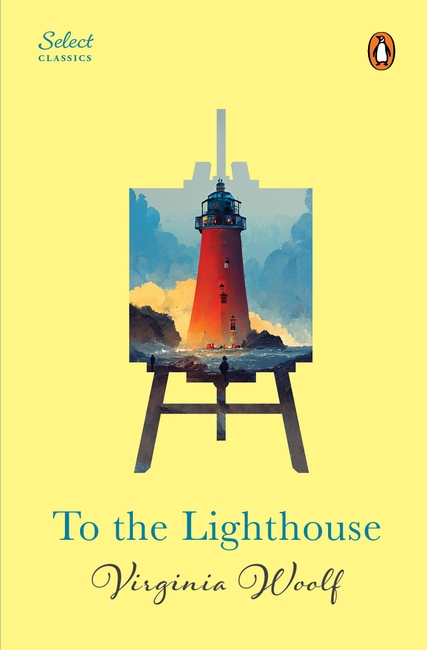
It’s the story of a family, like every family, and the many dents and complex love that make up relationships. Follow the Ramsay family over a period of three decades, in three parts ‘The Window,’ ‘Time Passes,’ and ‘The Lighthouse.’
The first part of the novel, ‘The Window,’ introduces the middle-class Ramsay family with eight children. The second, ‘Time Passes,’ takes place ten years later. The Ramsay’s have moved away from the house on the Isle of Skye, and Mrs. Ramsay has died. The house is now empty and neglected. The third part, ‘The Lighthouse,’ takes place ten years later, as the family finally return to the lighthouse, which has been a symbol of desire and longing for many years.
Woolf ’s thoughtful, reflective and sensitive writing allows the readers to delve deep into the inner thoughts and emotions of the characters.
Like a conversation the reader is having in solitude with themselves, every emotion feels lived and relatable, highlighting the enduring power of memory to capture the essence of our lives.

“He who climbs upon the highest mountains laughs at all tragedies, real or imaginary.”
In this philosophical masterpiece, Zarathustra a fictional sage descends from the mountains to share his wisdom with humanity. He challenges conventional thought and explores profound themes of self-overcoming, the will to power, and the nature of existence.
The character of Zarathustra serves as a mouthpiece for Nietzsche’s philosophical ideas, challenging readers to question their beliefs and embrace a more individualistic and self-directed approach to existence. His journey from solitude in the mountains to engagement with humanity symbolizes the philosopher’s quest to achieve the will to power, and the rejection of herd mentality.
Nietzsche’s emphasis on the individual’s potential for self-mastery and creative self-expression resonates throughout Zarathustra’s teachings. It’s an uplifting and motivational read which helps enhance confidence in oneself, leadership skills and focus.
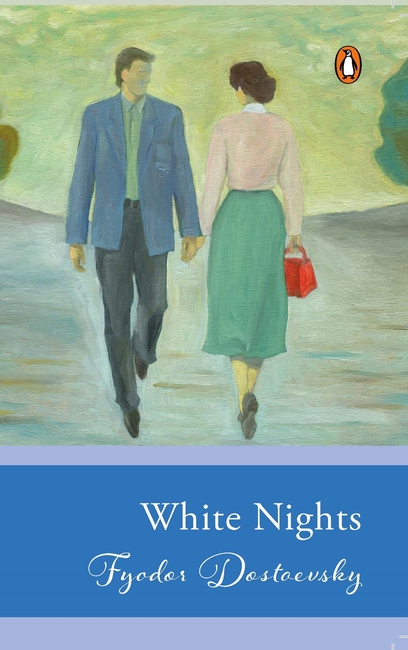
“I don’t know how to be silent when my heart is speaking.”
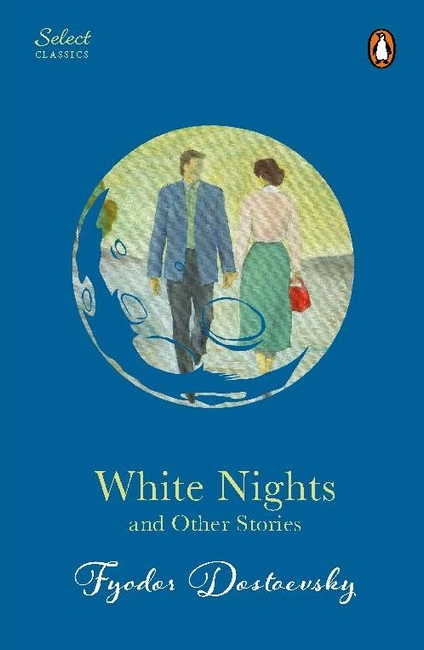
Set in the enchanting streets of St. Petersburg, this is a story of a young man who is a dreamer, and wanders on the city’s deserted lanes during long summer nights.
On a foggy night, under the hazy streetlights, a young man met Nastenka, who captured his heart with her beauty and innocence. They spent four consecutive nights together, as he becomes increasingly besotted with Nastenka, sharing his innermost thoughts and feelings.
Just as he was beginning to feel safe in their oasis, he discovers that Nastenka is in love with another man; a prince who has promised to return to her after a long absence. Yet, he is certain that even Nastenka is drawn to him, each grappling with their own sense of longing and desire for connection.
Through this vivid narrative of the intoxicating power of hope, the young man’s monologues reveal his absolute yearning for love, while Nastenka’s vulnerability and romantic idealism add layers of emotion to the story.
Through these fragile yet sublime characters we witness the beauty and pain of unrequited love.
- A timeless tale of love, longing, and unfulfilled dreams in St. Petersburg.
- Includes Notes from Underground and A Christmas Tree and a Wedding.
- Explores themes of hope, desire, and the beauty of unrequited love.
- Premium hardbound edition, perfect for classic literature collectors.
- An ideal gift for literature enthusiasts and Dostoevsky fans.

“I don’t know how to be silent when my heart is speaking.”
Set in the enchanting streets of St. Petersburg, this is a story of a young man who is a dreamer, and wanders on the city’s deserted lanes during long summer nights.
On a foggy night, under the hazy streetlights, a young man met Nastenka, who captured his heart with her beauty and innocence. They spent four consecutive nights together, as he becomes increasingly besotted with Nastenka, sharing his innermost thoughts and feelings.
Just as he was beginning to feel safe in their oasis, he discovers that Nastenka is in love with another man; a prince who has promised to return to her after a long absence. Yet, he is certain that even Nastenka is drawn to him, each grappling with their own sense of longing and desire for connection.
Through this vivid narrative of the intoxicating power of hope, the young man’s monologues reveal his absolute yearning for love, while Nastenka’s vulnerability and romantic idealism add layers of emotion to the story.
Through these fragile yet sublime characters we witness the beauty and pain of unrequited love.
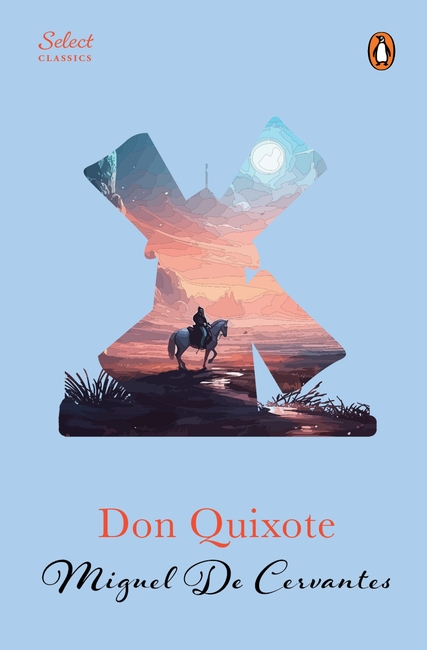
“For neither good nor evil can last forever; and so, it follows that as evil has lasted a long time, good must now be close at hand.”
One fine day, Alonso Quixano, a hidalgo from La Mancha, picks up the armor, renames himself Don Quixote and sets to right the wrongs and defend the helpless. Obsessed with chivalric romances, he decides the only way to make things better is to become a knight-errant himself, Don Quixote is a complex and contradictory character; he is idealistic, brave, and always willing to fight for what he believes in.
However, he is also delusional and often misinterprets the world around him. On this eventful journey he is accompanied by his squire Sancho Panza, who is a more practical man.
They navigate a world where the line between illusion and reality blurs. While they chase their dreams and idealistic visions, they are soon faced with grave consequences in trying to build the perfect world.
Don Quixote through his adventures in the rich landscape of medieval Spain, raises pertinent questions about what it means to be a citizen, and reminds us of the power in the common man’s will and determination.

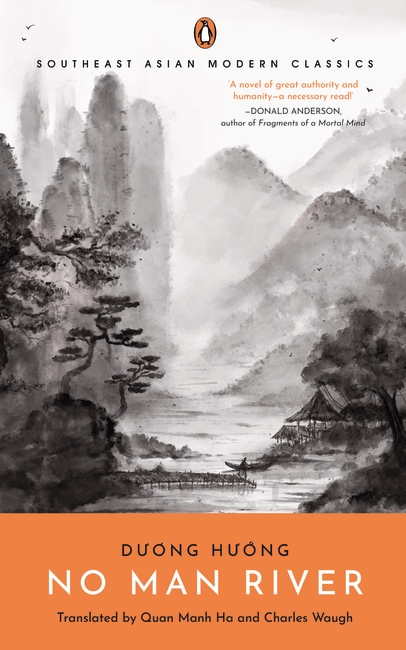
Undeniably one of Vietnam’s most beloved stories, Duong Huong’s No Man River is a novel about the homefront during the American War and its aftermath. Awarded the Vietnam Writers’ Association’s most prestigious prize in 1991—the same year Bao Ninh’s The Sorrow of War was published—it has been translated into many languages, and twice been adapted into film. It tells the story of a village in northern Vietnam that must send its men to fight, but at the same time continue the communist revolution’s transformation of their society. An injured but idealistic veteran of the war against the French named Van hopes to create a modern society in which everyone will live in harmony, but first he must overcome the superstition and prejudices still held by his community. He must also keep secret his love for the village beauty, Nhan—the widow of his dearest fallen comrade. Complications arise when his nephew marries Nhan’s daughter, Hanh, just before he leaves to fight in the South. Parents long for the return of their sons. Wives and children anxiously await the return of their husbands and fathers. Resisting the socialist revolutionary notion that war is glorious or heroic, No Man River presents an innovative portrait of wartime and postwar village life that tells the story of the countless Vietnamese who carried not only the burden of war, but also all the tribulations of forging of a new society during the most tumultuous time in modern Vietnamese history.
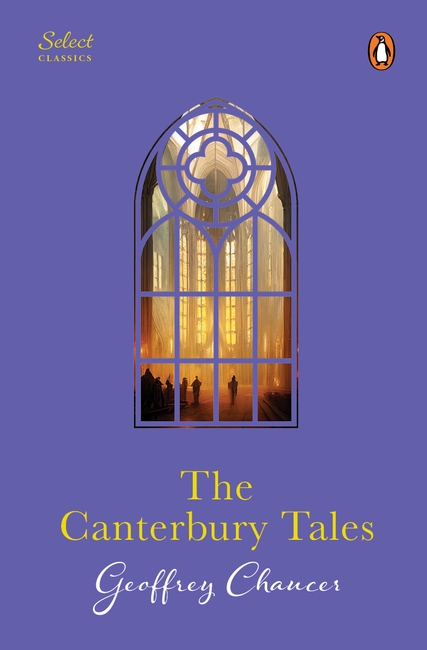
“We know little of the things for which we pray…”
Set in medieval England, a group of pilgrims from different walks of life embark on a journey to the sacred shrine of Thomas Becket in Canterbury, Cathedral. While on their voyage, they agree to tell stories in the hope to pass time; each vying to outdo the others with their tales of love, morality, humor and tragedy.
One of the characters is the Knight, a chivalrous and honorable man who is also a bit naive. Another is the Wife of Bath, a strong- willed woman who has been married five times. And then there is the Pardoner, a corrupt church official who sells indulgences to people who want to avoid going to hell.
All the stories reflect how complex is the human thought process, their dreams and fears. The idea of the pilgrimage is a metaphor for life’s journey reflecting the wisdoms for a happy life.
A heartening and enlightening read bringing a sense of focus in the chaos around us.
London, 1952. Young man Hamid, adrift from his studies and from himself, uncertain of his future and that of Malaya, not yet a country. He wants to belong to something but is it to his Sultan, to a barely imagined nation or to the British Empire? The answer, he believes, is to find a wife.
In the Great Smog, he meets Tom Pelham, an old friend from Malaya and son of a former British Resident, who invites Hamid to spend Christmas at his family estate. Excited, Hamid anticipates reuniting with his childhood crush, Clare Pelham, only to be met with another pleasant surprise: Clare’s two competitive friends, Hermione and Margaret. Hamid finds them as exotic as they find him. Caught in the middle of the three women, Hamid does the unthinkable, loses Clare’s trust and is thrown out of the house. But all is not lost. Tom offers Hamid a route back to redemption and to Clare—if he spies for England.
Cold War Berlin, 1953. Hamid is sent to seduce an East German communist student leader. Abandoned in East Berlin when it is sealed off during a violent uprising (unknown today outside Germany), Hamid must save himself from Soviet tanks and rely on the unknown loyalties of a Soviet Colonel and especially on the wits of his mistress, loyal only to herself. Hamid must cross the final bridge to safety, to adulthood and to belonging to something, or to someone.