



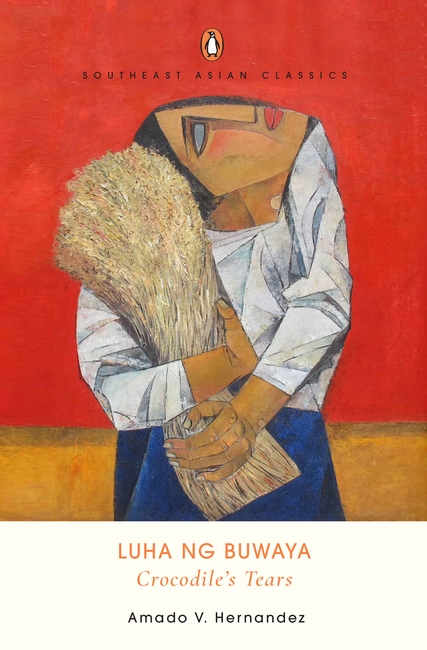
The novel is set in the town of Sampilong which is under the conjugal dictatorship of Donya Leona and Don Severo Grande. They control the wealth and power in the town and use the institutions of politics, Church and law for their own ends. The townsfolk are composed of farmers and people living in depressed areas. Bandong, a teacher, serves as their leader and adviser. He educates the people and tries to bind them together to fight the wealthy and greedy couple.
The novel has wonderful set-pieces that vividly show the gap between the rich and the poor-the feast in the house of the rich as opposed to the imprisonment of Andres, the slum-dweller; the wake and the setting up of the cooperative; the wicked ways of the people under the control of the Grande family and the corrupt politicians. The novel ends when the townsfolk discover that the Grande family does not own the land they are claiming as theirs. The townsfolk have awakened from their slumber and decide to change the unjust system. They now have a newfound faith in themselves and their capacity to change their lives and the destiny of their country.
Catagory: Classics
The Preying Birds
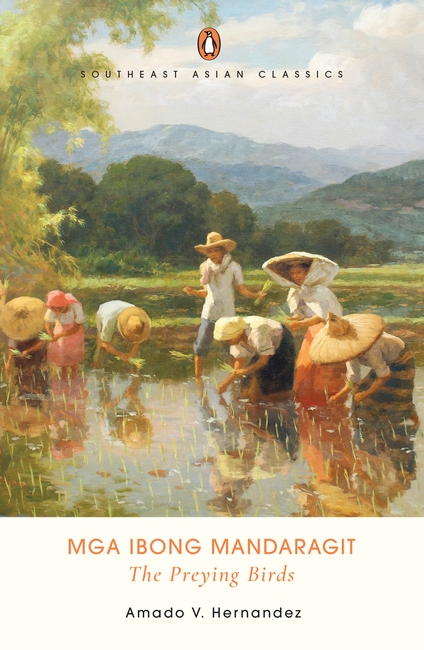
Mando Plaridel is the lead character in this novel of social consciousness. His character combines the qualities found in Simoun and Ibarra, the two lead characters in national hero Jose Rizal’s novels: Noli Me Tangere and El Filibusterismo. Ibarra is the passive character in Rizal’s novels, while Simoun is the active propagandist who wakes up the people from their centuries-old sleep under Spanish colonialism.
After the war, society begins to know him as the brave editor of the Kampilan newspaper. He later becomes involved in the problems of the farmers with the abusive Monteros. Told from an omniscient point of view, Hernandez is able to enter the consciousness of the wealthy characters. He shows how the ruling classes-the politicians, landowners, judges, deputies and bishops-only protect their own interests, that is why they do not want to change the status quo.
Dr Sabio is the progressive president of a university founded by Mando, who used the treasure thrown into the sea at the end of Rizal’s second novel to help improve society. The money is used to fund Freedom University and set up Kampilan, the brave newspaper. The novel points to the cooperative system of land ownership as the way out for the landless poor. It implies that change can only begin when the eyes of society have been finally opened.
Banaag at Sikat (Radiance and Sunrise)
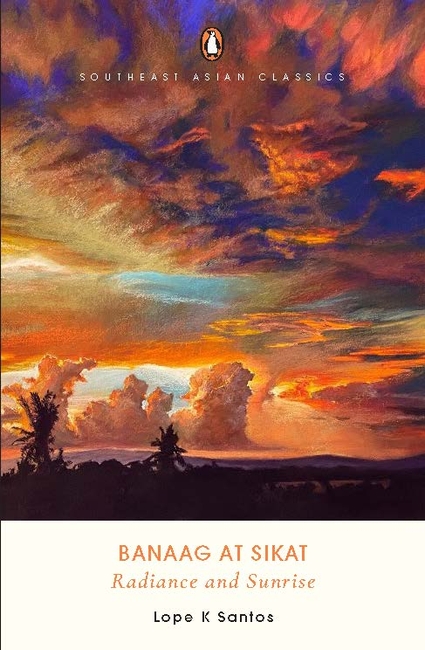
Lope K Santos’ novel, Banaag at Sikat, is a love story framed in the context of a political tale. Published in 1906, it became the fountain head of social realism in the Tagalog novel and hailed as Asia’s first proletariat novel. It revolves around Delfin, a poor man in love with Meni, a capitalist’s daughter. Delfin is a socialist while Felipe, his friend, is an anarchist. Delfin wants the citizens to have more rights in business and property relations. He believes that society could be changed through education. On the other hand, Felipe believes in tearing down society’s walls. Factories should be owned by those who work there and land owned by those who till it. Although he is a landlord’s son, Felipe hates his father’s ways. He wants to see a society with equal status for all, where the horizon of hope is limitless. Banaag at Sikat mirrors the clash of forces during the early days of the American empire. Its burning passages on race, class, and colonialism still resonate today. Translated by ‘one of Asia’s best writers’, may this modern rendering inspire new readers to shape their lives so they ‘can help change the world’.
Prisna, Vol 2
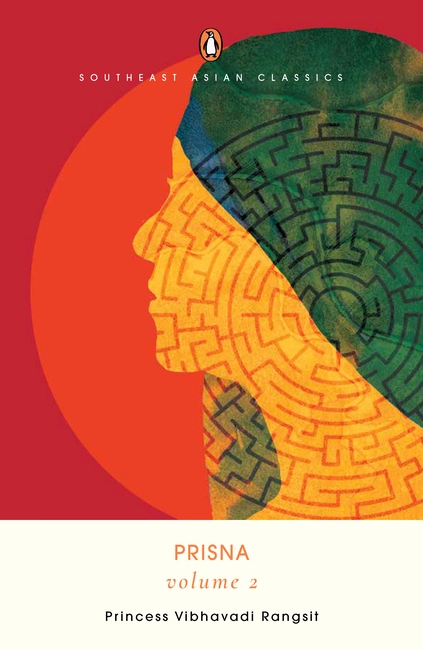
Prisna takes place in 1938 in Phra Nakhon, Thailand, during a time when men and women were not equals. Marriage for women meant security, not love. Prissana is the youngest daughter among four girls and was the only one raised in America by their uncle. She is outgoing, cheerful, and pretty, but at the same time, she is also headstrong, intelligent, and opinionated. She returns to Thailand after living in America for 12 years and is once again reunited with her family. Prissana, whose name means ‘mystery, a puzzle/riddle,’ causes quite a stir in Thailand with her open, American behavior and refreshing beauty. She develops a dislike toward Taan Chai Puthpreecha, whom she has never met, because everyone puts him on a pedestal.
Over the course of time, both end up having to reevaluate their presumptions of each other as they get to know one another better.
Prisna, Vol 1
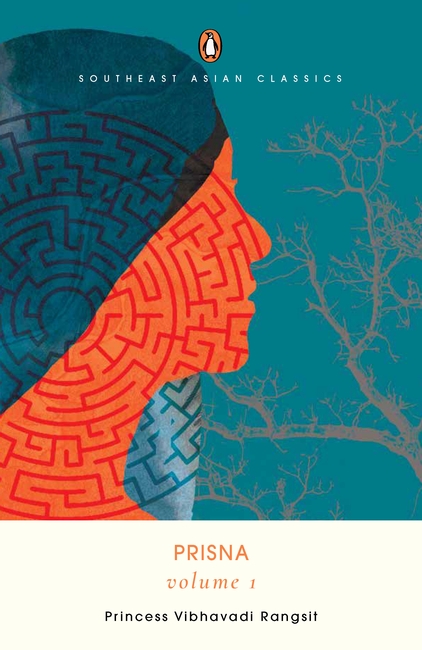
Prisna takes place in 1938 in Phra Nakhon, Thailand, during a time when men and women were not equals. Marriage for women meant security, not love. Prissana is the youngest daughter among four girls and was the only one raised in America by their uncle. She is outgoing, cheerful, and pretty, but at the same time, she is also headstrong, intelligent, and opinionated. She returns to Thailand after living in America for 12 years and is once again reunited with her family. Prissana, whose name means ‘mystery, a puzzle/riddle,’ causes quite a stir in Thailand with her open, American behavior and refreshing beauty. She develops a dislike toward Taan Chai Puthpreecha, whom she has never met, because everyone puts him on a pedestal.
Over the course of time, both end up having to reevaluate their presumptions of each other as they get to know one another better.
The Genealogy of Kings (Sulalatus Salatin)
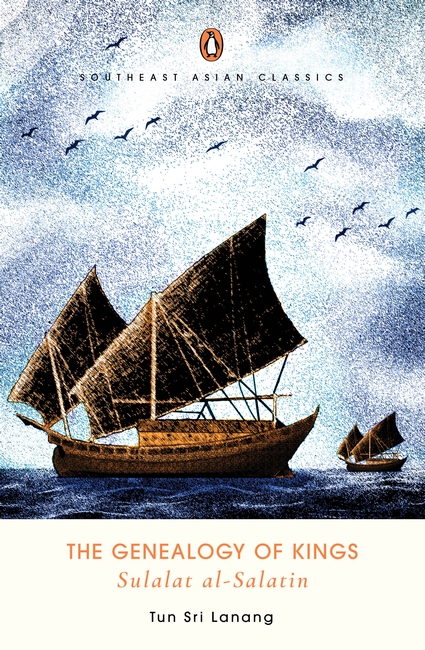
The Genealogy of Kings (Malay: Sulalat al-Salatin or Sejarah Melayu), is a literary work that gives a traditional interpretation of the origin, evolution and demise of the great Malay maritime empire, the Malacca Sultanate. The work which was composed sometime between the 15th and 16th centuries, is considered one of the finest literary and historical works in the Malay language.
In 2001, The Genealogy of Kings was listed on UNESCO’s Memory of the World Programme International Register. The work covers the founding of Melaka and its rise to power; its relationship with neighbouring kingdoms and distant countries; the advent of Islam and its spread in Melaka and the region as a whole; the history of the royalty in the region including battles won or lost, marriage ties and diplomatic relationships; the administrative hierarchy that ruled Melaka; the greatness of its rulers and administrators, including the Bendahara Tun Perak and Laksamana Hang Tuah.
Frankenstein

‘If I cannot inspire love, I will cause fear!’
In trying to create life, Victor Frankenstein unleashes forces beyond his control, setting into motion a long and tragic chain of events that brings him to the very brink of madness. The botched creation, rejected by Frankenstein and denied human companionship, sets out to destroy his maker and all that he holds dear. The young scientist is pushed to embark on a treacherous journey to end the monster’s existence. This timeless gothic novel presents the epic battle between man and monster, and is a remarkable exploration of the dangers of human creativity.
Les Miserables
With breath-taking realism, Victor Hugo takes readers deep into the Parisian underworld and carries them to the barricades during the uprising of 1832. This dramatic tale follows the stories of the peasant Jean Valjean, Fontine the prostitute, Thenardier the rogue and the universal desire to escape the prisons of one’s own mind. Les Misérables is an extravagant spectacle that dazzles the senses even as it touches the heart.
Little Women
Grown-up Meg, tomboyish Jo, timid Beth and precocious Amy-the four March sisters couldn’t be more different. With their father away at war and their mother working
to support the family, they have to rely on one another. Through sisterly squabbles, midnight plays, Christmas celebrations, happy times and sad, they discover that growing up is sometimes very hard to do.
Sense and Sensibility
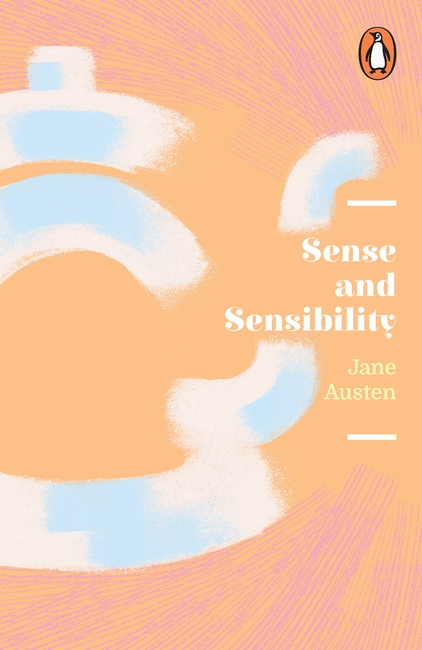
Sense and Sensibility‘s two heroines-so utterly unlike each other-experience the most violent passions when they are turned down by the men they love. What differentiates them, and gives this extraordinary novel its complexity and brilliance, is the way each expresses her suffering: Marianne-young, impetuous, ardent-
falls into paroxysms of grief when she is rejected by the dashing John Willoughby; while her sister, Elinor-wiser, more sensible, more self-controlled-masks her despair
when she discovers that Edward Ferrars is to marry the mean-spirited and cunning Lucy Steele. All, of course, ends happily-but not until Elinor’s ‘sense’ and Marianne’s ‘sensibility’ come together to reveal the profundity of the emotional undercurrent beneath the surface of Austen’s immaculate art.