The year is 1914 and the fissures of war are spreading across Europe. A Russian cruiser Zhemtchug is sunk off the coast of Penang by the German warship, Emden.
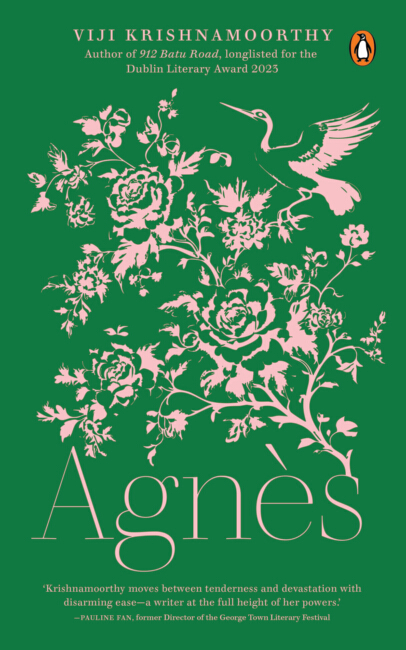
A half-Oriental half-Russian baby is saved from drowning by a local fisherman and his son. An infant, with no name and without a birthplace, carried on the wind with no remembrance. This little miracle is given to the sisters at the Convent Light Street.
Named Agnès for she is holy and pure, she is raised as an orphan in Baby House. She stood out from an early age, a half-caste child, a keen learner who would trade cleaning and sewing chores for time spent with books. Agnès quickly learnt the unfairness of her birth.
Against the backdrop of the Second World War and the Malayan Emergency, Agnès’ life is a patchwork of injustice, betrayal, love and death, friendship and sisterhood. But buried deep within Agnès is loss and an intense yearning to belong.
When Agnès is offered a second chance at rebuilding her shattered life, will she learn to embrace it or will she still live in the shadows of her past?

“Did it never strike your mind that what every woman says some women may feel?”
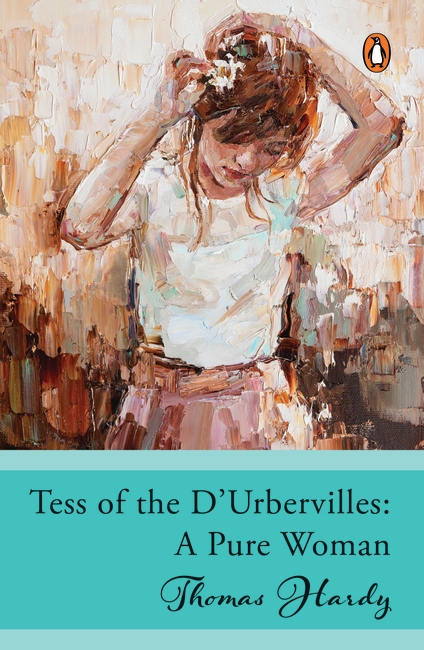
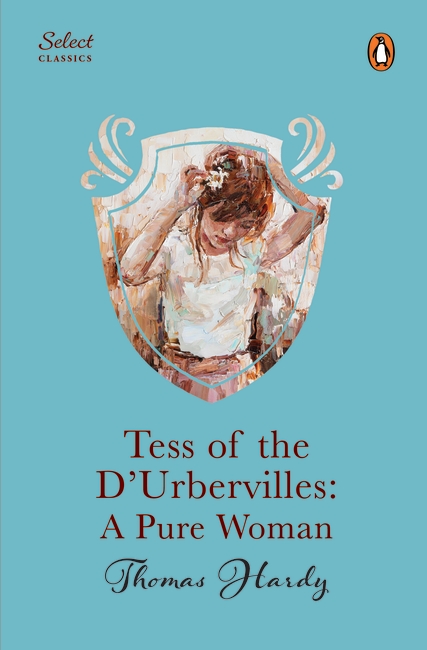
Set in the thriving countryside of England, this is the story of a vibrant young girl, Tess, who was leading a life of considerable agency, freedom, happiness, and aspirations. However, everything changed when her family discovered they were descendants of nobility and inherited the heavy and consequential surname of d’Urberville. Suddenly, Tess from the countryside became Tess d’Urberville, and with that name came the restrictions of England’s upper-class society. She could no longer think, act, or live on her own terms. Conforming to her new reality began to stifle and drain her spirit. The final nail in the coffin was her encounter with Alec d’Urberville, which irrevocably altered the course of her life. Written with profound emotional depth and thought-provoking prose, Tess’s journey is an ode to women and a call to never give up on the power they hold within.

“Did it never strike your mind that what every woman
says some women may feel?”
Set in the thriving countryside of England, this is the story of a
vibrant young girl, Tess, who was leading a life of considerable
agency, freedom, happiness, and aspirations.
However, everything changed when her family discovered they were
descendants of nobility and inherited the heavy and consequential
surname of d’Urberville. Suddenly, Tess from the countryside
became Tess d’Urberville, and with that name came the restrictions
of England’s upper-class society.
She could no longer think, act, or live on her own terms. Conforming
to her new reality began to stifle and drain her spirit. The final
nail in the coffin was her encounter with Alec d’Urberville, which
irrevocably altered the course of her life.
Written with profound emotional depth and thought-provoking
prose, Tess’s journey is an ode to women and a call to never give up
on the power they hold within.
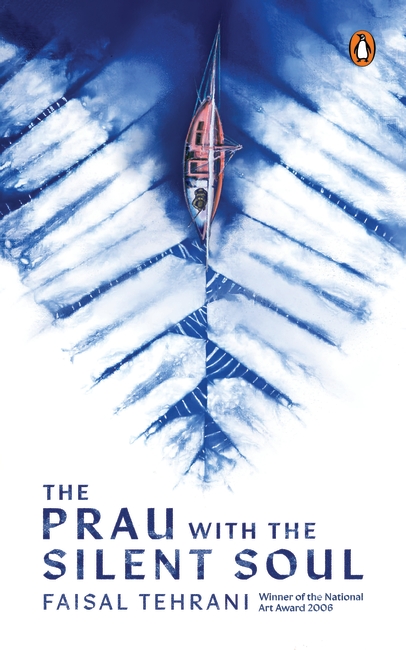
Wefada Marwan, an academic, is thrust into captaining her family’s shipping business. She must also face up to her nascent feelings for her much younger Algerian student, Elemine, which she initially tries to deny. However, as their romance blossoms, she starts remembering lessons from her grandparents’ marriage to navigate her own.
Fatimah, Wefada’s grandmother, too, fell in love with an Arab man—Ben Qortubi. He migrated to Malaysia, established their shipping business, and started a family with Fatimah. But tragedy struck during the Japanese invasion of Malaysia, silencing Wefada’s grandfather forever.
Will Wefada successfully navigate the choppy waters of looking out for her family and their business while finding love?
In The Prau with the Silent Soul, Faisal Tehrani explores transgressive love, intergenerational trauma, and most importantly, the Malayan people’s unbreakable bond with their sea, which can be a nightmare and a source of love and sustenance. This is a story that has emerged from the sea and that returns to it.
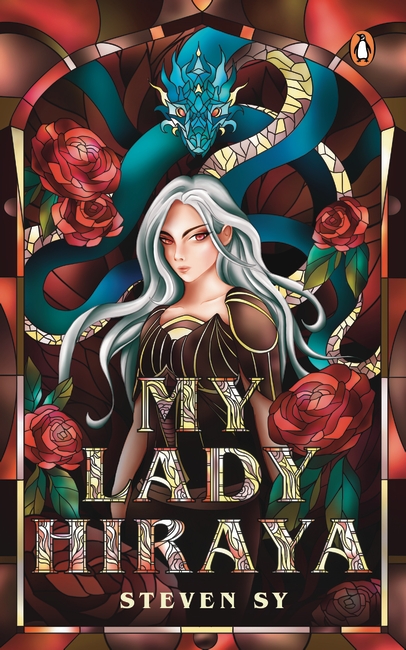
Five years ago, when Elise’s wife died in a fire, she vowed that she would stop at nothing to bring her back. Her quest leads her to Hiraya, an immortal monster hunter with secrets deeper than the shadows of the haunted manor she calls home. Hiraya, though hesitant at first, agrees to train Elise in the secrets of Chaos, magic that could alter the strands of time themselves.
As their bond deepens, Elise and Hiraya find themselves embroiled in an eons-old conflict among the gods of love, destiny, and the future. The choices they make and the love they discover between themselves will shape this world and all the worlds that could ever be.
Inspired by Filipino mythology and folk tales, My Lady Hiraya is a romance fantasy novel that follows Elise’s dogged pursuit of her lost love and the love she finds along the way.
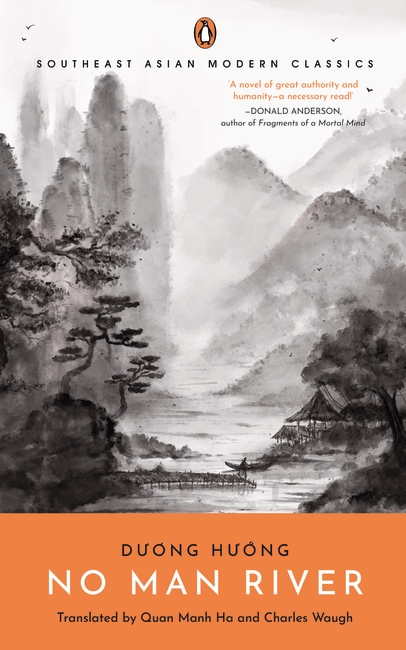
Undeniably one of Vietnam’s most beloved stories, Duong Huong’s No Man River is a novel about the homefront during the American War and its aftermath. Awarded the Vietnam Writers’ Association’s most prestigious prize in 1991—the same year Bao Ninh’s The Sorrow of War was published—it has been translated into many languages, and twice been adapted into film. It tells the story of a village in northern Vietnam that must send its men to fight, but at the same time continue the communist revolution’s transformation of their society. An injured but idealistic veteran of the war against the French named Van hopes to create a modern society in which everyone will live in harmony, but first he must overcome the superstition and prejudices still held by his community. He must also keep secret his love for the village beauty, Nhan—the widow of his dearest fallen comrade. Complications arise when his nephew marries Nhan’s daughter, Hanh, just before he leaves to fight in the South. Parents long for the return of their sons. Wives and children anxiously await the return of their husbands and fathers. Resisting the socialist revolutionary notion that war is glorious or heroic, No Man River presents an innovative portrait of wartime and postwar village life that tells the story of the countless Vietnamese who carried not only the burden of war, but also all the tribulations of forging of a new society during the most tumultuous time in modern Vietnamese history.

A young boy befriends a girl from a haunted house known as ‘Adorable’. A roast pig at a Taoist funeral becomes a symbol of rebellion. A man adopts a Thai doll, hoping it would change his luck.
Meanwhile, a family of monsters live on Mount Pleasure, disguising themselves with anagrams, and a black metal scandal ruins a teenage couple’s after-school hangout at Gurney Plaza.
Set in Penang, Malaysia, these short stories describe how the island makes its people do crazy things. Its characters navigate a world of social tension and moral panic, while trying to find peace for themselves.
“We know little of the things for which we pray…”
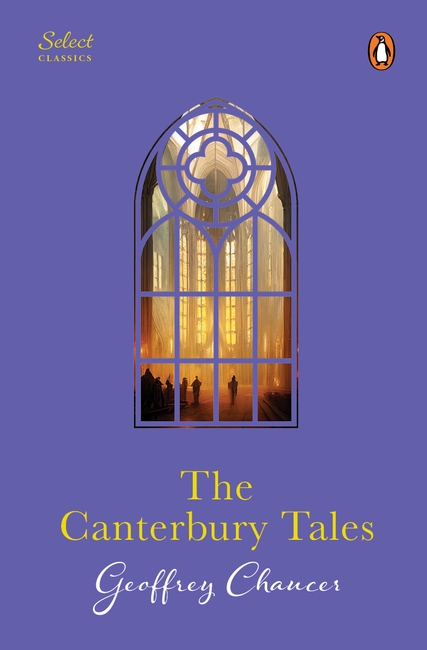
Set in medieval England, a group of pilgrims from different walks of life embark on a journey to the sacred shrine of Thomas Becket in Canterbury, Cathedral. While on their voyage, they agree to tell stories in the hope to pass time; each vying to outdo the others with their tales of love, morality, humor and tragedy.
One of the characters is the Knight, a chivalrous and honorable man who is also a bit naive. Another is the Wife of Bath, a strong- willed woman who has been married five times. And then there is the Pardoner, a corrupt church official who sells indulgences to people who want to avoid going to hell.
All the stories reflect how complex is the human thought process, their dreams and fears. The idea of the pilgrimage is a metaphor for life’s journey reflecting the wisdoms for a happy life.
A heartening and enlightening read bringing a sense of focus in the chaos around us.
It is 1951, and Jean-Luc Guéry has arrived in Indochina to investigate the murder of his brother, Olivier, whose body was found floating in a tributary of the Saigon River. As an avid reader of detective fiction, Guéry is well aware of how such investigations should proceed, but it is not immediately clear that he is capable of putting this knowledge into practice. In addition to being a reporter for an obscure provincial newspaper, he is also a failed writer, an incorrigible alcoholic, and a compulsive gambler who has already squandered a fortune in the casinos of the Côte d’Azur. Despite his dissolute tendencies, however, and his aversion to physical danger, Guéry does eventually manage to solve the case. In order to do so, he is obliged to enter a world of elaborate conspiracies, clandestine intelligence operations, and organized crime – only to discover, in the novel’s final pages, that the truth behind his brother’s murder is far stranger than he could have imagined.
Written in the style of Graham Greene and Eric Ambler, Too Far From Antibes is a ‘retro’ thriller that brilliantly evokes the city of Saigon during the early 1950s, when it was a centre of intrigue, insurgency, and empire.

LET ME TELL YOU A SECRET.
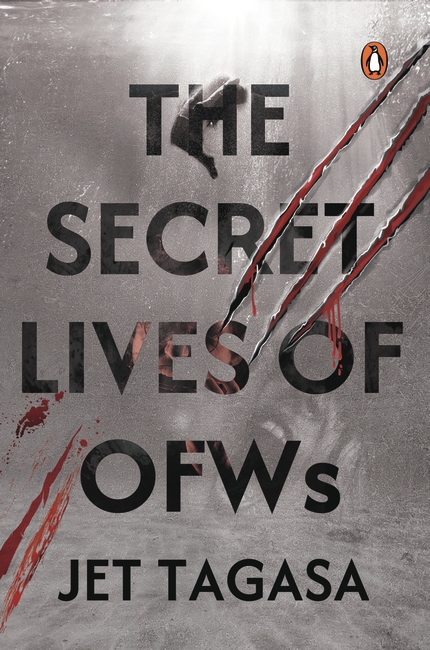
Overseas Filipino Workers or OFWs. You either know one, are related to one, want to be one, or are one. OFWs are so ubiquitous to the Philippines that we think we’re familiar with the kind of lives they lead. We presume we know who they are, what they’re like, or perhaps even what secrets they keep. But do we?
From mananangals to aswangs, engkantos to mambabarangs, oryols to andudunongs, and even the great Bakunawa—The Secret Lives of OFWs follows eight different stories of Filipino migrant workers who happen to be supernaturals. Forced to embark on their own migratory sojourns to seek a better life and provide for their loved ones, these stories delve into the struggles faced by OFWs and their families—and how even feared creatures of Philippine folklore are not spared from the hardships of the diaspora.
This collection tells moving narratives of love and resilience. Of enduring against the monstrosity of abuse, assault, isolation and fractured family dynamics. A speculative exploration that answers the question: can the horrors and challenges of the Filipino migration experience surpass even the darkest realms of the supernatural?