



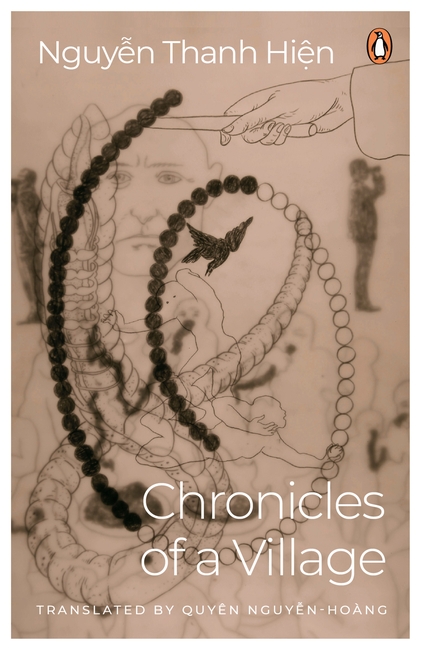
Chronicles of a Village is set in an anonymous Vietnamese village based on the author’s personal memories. The surrealistic narrative touches on the country’s pre-modern history, the colonial era and the onslaught of modernity that irreversibly affects the mountains, rivers, soil and memories of a wretched people. Written in vibrant fragments that resemble prose poems, the novel combines the author’s melodious style of oral storytelling with historical micro-narratives and mythological elements. The book takes the reader through poetic and political landscapes teeming with ancient legends, love stories, marvelous nature, war tragedies and modern alienation, which constitute the beauty and ‘the fatal historical disabilities of a land’.
Catagory: Historical Fiction
A Paradise of Illusions
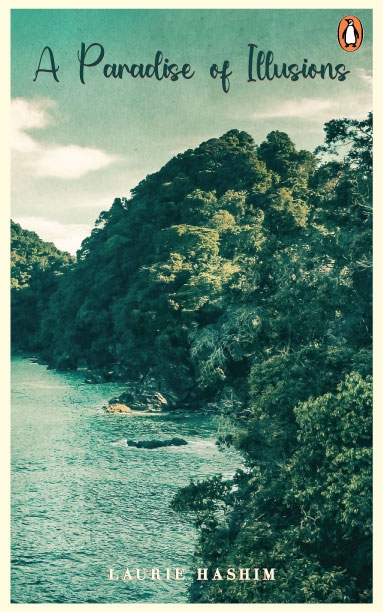
Anna, the pampered daughter of a maverick Englishman and his local Muslim wife, has been promised the unprecedented freedom to marry for love. Her young life, like the island she inhabits, is perched at the crossroads of eastern and western cultures in the waning days of the British Empire in Asia. The first man she falls for, the son of a prominent Chinese family in Penang, breaks her heart when he submits to an arranged marriage with a ‘backward’ but ambitious mainland Chinese bride. Anna’s next choice seems to be more suitable, a second-cousin on her mother’s side, an earnest self-made man whom her family adores. The newlyweds struggle to reconcile their individual aspirations with the expectations of their sprawling, extended families. The rumblings of the Second World War and the brutal Japanese Occupation transform their individual plights into a matter of life and death when they are thrust together in a desperate struggle to survive. This epic story of love and loss is illuminated by the richly painted backdrop of a multicultural society in flux on a vibrant island that is both breathtakingly beautiful and heartbreakingly suffocating.
Rejection
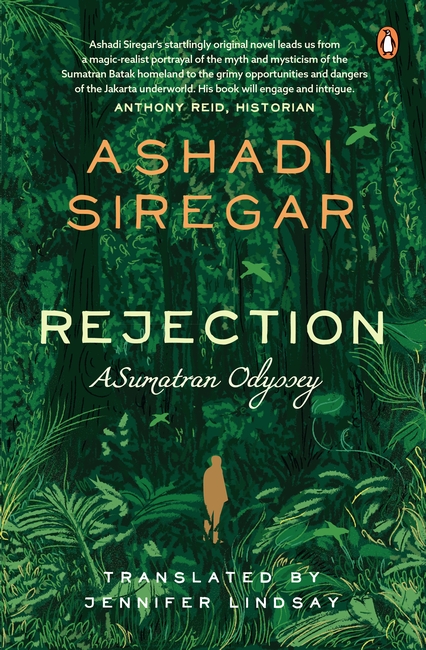
Rejection: A Sumatran Odyssey is an epic family drama by Ashadi Siregar set against the turbulent years following Indonesia’s independence.
The story follows Tondi who as a young man joins the separatist rebellion of the late 1950s and early 1960s in North Sumatra. Later he moves to Java and finds his way in the murky Jakarta underworld. Tondi’s story is interwoven with the magical world of his paternal grandfather, a shaman traditional priest living in the old pre-Islam, pre-Christian world of Batak belief. Tondi’s father deserts the family when Tondi is a child, moves to Jakarta, and joins the Indonesian national army. Tondi’s mother stays in Sumatra and forges a life of her own, for a while working at a hospital with Dutch personnel who return to the former Dutch colony after Indonesian independence.
A central section of the novel describes Tondi’s journey alone through the primeval jungle of North Sumatra, on a mission for the rebel army. His grandfather has given him directions to pass through this rarely-traversed realm where his ancestors used to roam.
In rich and poetic storytelling, Ashadi Siregar portrays the Batak culture of North Sumatra: its language, beliefs, ceremonies, and intricate kinship system. He also vividly depicts a critical period in history when Indonesia was struggling to find its place internationally against the backdrop of the Cold War, while fighting internally to keep the new nation together.
The main characters all have choices to make in this time of love and war and conflicts between the old ways and the new. All reject something, just as the time itself is one of rejection; rejection of past ways; rejection of nationalist ideals; and the Sumatran rebels’ rejection of the centralist Indonesian government.
This English translation of Ashadi Siregar’s ground-breaking historical novel brings a non-Indonesian readership into a fascinating, vast and little known part of Indonesia’s history.
Too Far From Antibes

It is 1951, and Jean-Luc Guéry has arrived in Indochina to investigate the murder of his brother, Olivier, whose body was found floating in a tributary of the Saigon River. As an avid reader of detective fiction, Guéry is well aware of how such investigations should proceed, but it is not immediately clear that he is capable of putting this knowledge into practice. In addition to being a reporter for an obscure provincial newspaper, he is also a failed writer, an incorrigible alcoholic, and a compulsive gambler who has already squandered a fortune in the casinos of the Côte d’Azur. Despite his dissolute tendencies, however, and his aversion to physical danger, Guéry does eventually manage to solve the case. In order to do so, he is obliged to enter a world of elaborate conspiracies, clandestine intelligence operations, and organized crime – only to discover, in the novel’s final pages, that the truth behind his brother’s murder is far stranger than he could have imagined.
Written in the style of Graham Greene and Eric Ambler, Too Far From Antibes is a ‘retro’ thriller that brilliantly evokes the city of Saigon during the early 1950s, when it was a centre of intrigue, insurgency, and empire.
The Zero Season

It is 1949, and young Etienne Legast is in trouble. Estranged from his pious Catholic family, having fled a messy love affair with an older man at the end of the war, he returns home to Paris for a funeral, only to find himself quick drawn into a deadly debt to a neighborhood gangster and an unexpected romance with Samphan, an orphaned Cambodian student radical. Though the two young men come from different worlds, they soon develop a bond that helps them transcend their respective tragedies – until revolutionary political intrigues and the Parisian underworld threaten to pull them under once more.
The Golden Realm
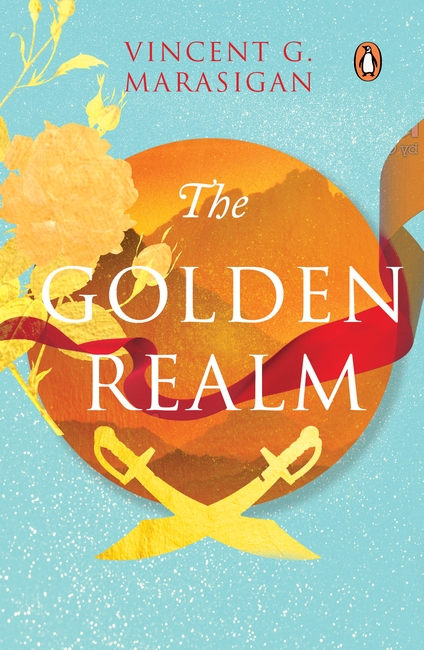
Pula has now metamorphosed into a formidable fighter.
He is just like his father, Sikat, the aging Datuk who holds a massive realm on the northernmost tip of Borneo. It is during a time when the early datuks rule the Southeast Asian region, sometime in 400 AD.
But an incident erupts-the neighbours, D’yak people who have gory practices of headhunting, try to stir trouble in the realm. In response, Datuk Sikat sends his highest officer to infiltrate the den of Jooba and obliterate their kind, a savage and vicious threat.
And as the kadatuan reels on a major war with the headhunters, Tali his eldest, has a sinister plan. He longs for the throne of his father, but his half-brother, Pula, stands in his way. Who will succeed to be the next datuk of the realm?
Th e story continues with the amazing encounters of Pula of the diverse tribes of Borneo and the Philippines, leading to his discovery of the Golden Realm.
Silence in the Land of Gold
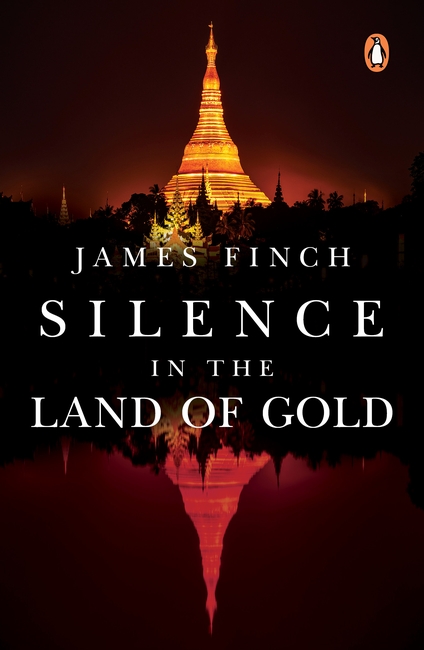
Molly Durberville and George Wilford, foreign lawyers working in the country, are assigned to untangle the legal issues surrounding a plane crash. They are led to a struggle between the Burmese military and the Kachin Independence Army. Ultimately, they realize that the origin of the crash has been from within their law firm. Though Molly has been assigned to spy on George, through their adventures they become lovers. George is torn by his realization, however, that Molly is attracted to Zaw Dan, a general in the Kachin army. One facet of the novel examines the legal profession from the perspectives of two women lawyers-Molly and Khine San Myo, who is housebound because of her history and that of the country.
Softer Voices

Philip Montfort is a man of contradictions. He is an Anglo-Indian born in British India and torn between his Part-Caucasian heritage and his Indian identity. Born into a vanishing aristocratic family with fading fortunes, his life is a struggle to reconcile his circumstances with his desires and to render a true account of himself. He is irreligious but a seeker of truth and authenticity. After studying law at Cambridge, and being denied a place in both England and India, he seeks instead to make life anew in the Colonies – specifically in the bustling, ecstatic British outpost of Singapore.
There, he is drawn into the orbit of young, privileged intellectuals like himself who seek truth just as he does, while gorging and stupefying themselves with layers of luxury. They call themselves the Asiatic Club and commission themselves to doing civic works in the lead up to the War. More secretive however are their preparations to form a stay-behind auxiliary in the event that Singapore is occupied.
When War reaches Singapore in the early forties, the excess is stripped away and each member of this exclusive coterie is forced to confront their true selves as they make sacrifices and compromises of character. While fighting as a reserve officer in the British Indian Army’s III Corps, Philip is captured as a prisoner-of-war. Thereafter, he is convinced to join the Axis-collaborationist Indian National Army under its mercurial but brilliant leader, Subhas Chandra Bose.
Lies that Blind
Malaya, 1788:
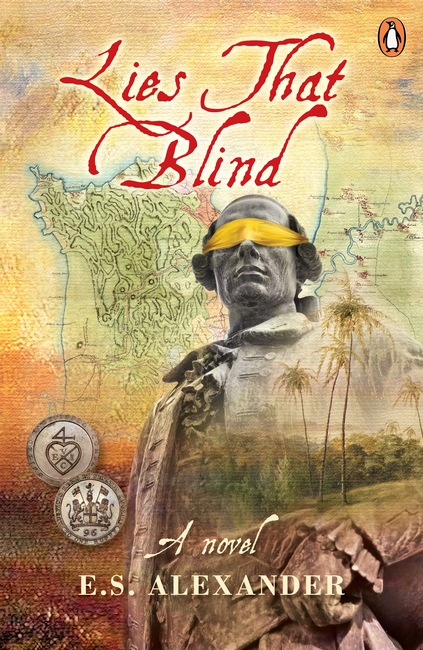
Aspiring journalist Jim Lloyd jeopardises his future in ways he never could have imagined. He risks his wealthy father’s wrath to ride the coat-tails of Captain Francis Light, an adventurer governing the East India Company’s new trading settlement on Penang. Once arrived on the island, Jim-as Light’s assistant-hopes that chronicling his employer’s achievements will propel them both to enduring fame. But the naïve young man soon discovers that years of deception and double-dealing have strained relations between Light and Penang’s legal owner, Sultan Abdullah of Queda, almost to the point of war. Tensions mount: Pirate activity escalates, traders complain about Light’s monopolies, and inhabitants threaten to flee, fearing a battle the fledgling settlement cannot hope to win against the Malays. Jim realises that a shared obsession with renown has brought him and Light perilously close to infamy: a fate the younger man, at least, fears more than death. Yet Jim will not leave Penang because of his dedication to Light’s young son, William, and his perplexing attraction to a mercurial Dutchman. He must stay and confront his own misguided ambitions as well as help save the legacy of a man he has come to despise.
Inspired by true events, Lies That Blind is a story featuring historical character Francis Light (1740-1794) who, in an effort to defy his mortality, was seemingly willing to put the lives and livelihoods of a thousand souls on Penang at risk.
Enrique the Black
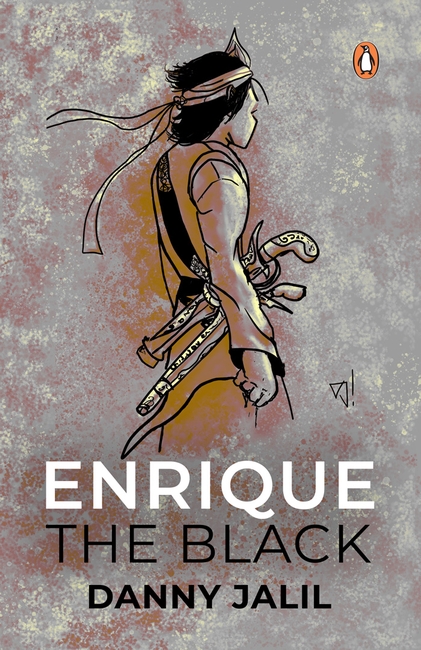
Who was the man they called Enrique the Black?
Taken from his family, and forced into slavery during the Portuguese invasion of Malacca in 1511, the Malay boy rechristened as Enrique must quickly to adapt to a new religion, and to the strange new lands of Portugal and Spain.
A decade later his master Ferdinand Magellan, dreaming of fame and fortune, has an audacious plan to sail to the other side of the world, on a seemingly quick, uncharted route to the Moluccas Spice Islands. Enrique will prove invaluable once they arrive there, as he alone speaks the islanders’ Malay language.
What no one in Magellan’s fleet can foresee though, is how giants, bad weather, mutiny and excruciating hunger haunt their every move.
Even more dangerous however, is Magellan’s own religious fervour, which threatens to undo the entire expedition once they arrive at the islands soon to be known as the Philippines, where Enrique will face certain death, and perhaps the chance to finally taste freedom.