
Publish with us

Connect with us

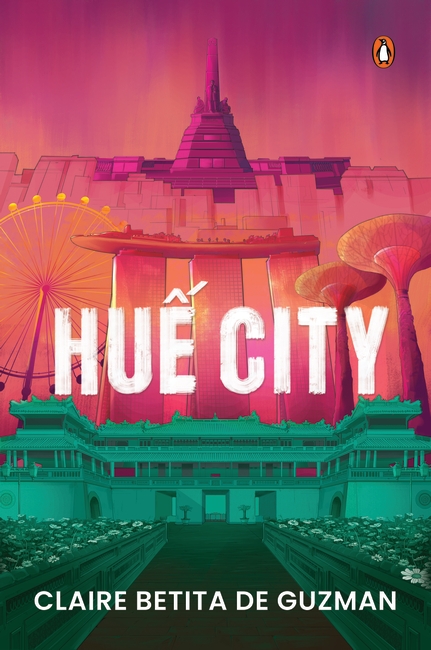
Hue City

Meet the notorious Ativan Gang, a group of scammers in Manila who befriends solo tourists, then drugs and robs them. Twenty-five-year-old Carmen Maranan is their newest member, a college dropout desperate to see her mother, Nicole, now living with her new family in Vietnam’s old capital, Hue City. When Carmen flees Manila for Hue, she meets Hai, a receptionist, tout, and part-time pimp. Ambitious and driven, Hai’s goal is to be rich and run his own hotel, a dream that feels closer when he crosses paths with Marina, a wealthy Singaporean yearning for a new life—and love.

Told from the points of view of Carmen, Hai and Marina, Hue City brings you deep into the soul of Southeast Asia—from the faded, enigmatic streets of Vietnam’s former capital, to the fraught, gritty drags of Manila and the gleaming, cosmopolitan environs of Singapore—as it tells their intertwined journey towards the treacherous and sometimes heart-breaking path of starting over.
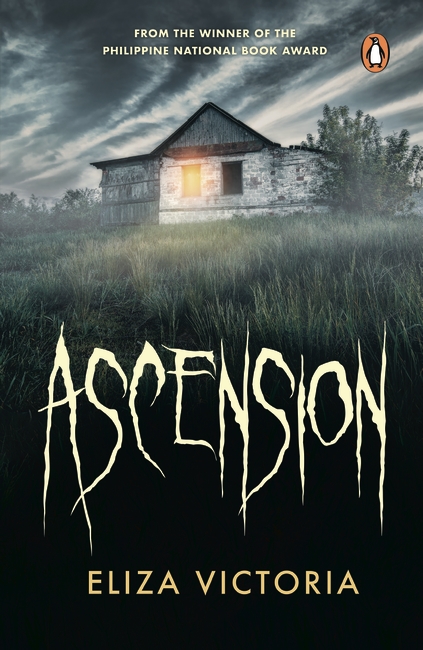
Ascension

First, you need to give it something precious to you. Then, a shelter, a doorway…

Something lives in a rotting house in the town of Santa Clara.

Emilia has not thought of this house for years, until a chance meeting with Alma, an old friend from her hometown.

When Alma suddenly dies, Emilia finds her way back to Santa Clara, to her circle of friends who rekindle memories of a bizarre ritual left unfinished.

Of a dark visitor who sits by their bed at night, of a being who won’t let them sleep.

Must they once again awaken whoever dwells in that lonely house?

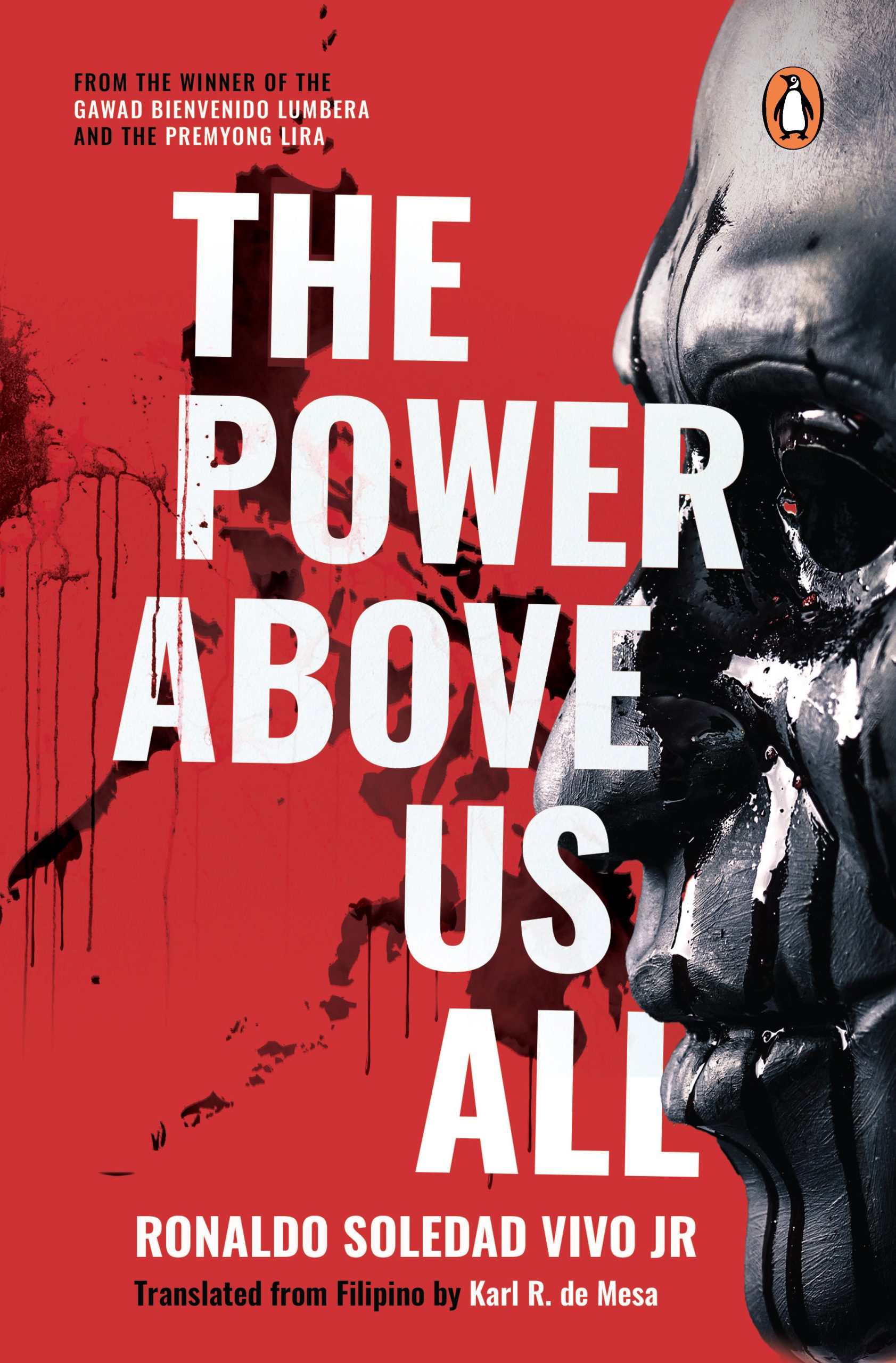
The Power Above Us All

A novel of ordinary decent criminals and extraordinarily brutal cops weaving together and colliding inside the giant slum of ‘Dreamland’, within the megalopolis of Metro Manila, Philippines.

Dreamland’s entrance may smell of soap from the nearby detergent factory, but within the sprawling maze of thousands squeezed into tenements and shanties, there’s only the reek of corruption, crime, and cockroaches—the insect and human kind.

Dodong’s cushy life as a low-level criminal takes a violent turn when his girlfriend Che, a beautiful bar girl, turns up dead. The police officers have tagged Dodong as the primary suspect and he decides to scrub any evidence he and Che were ever lovers to survive.

With the help of his best friend Buldan, Dodong endeavors to investigate who framed him. As they try to elude the villainous police officer Elmer, a manhunt for the serial killer of gay men proceeds with startling incompetence.

This manhunt is also connected, among other things, to part-time mortician Butsok’s increasing purchases of oil and why his sister’s a cripple.

These seemingly disparate stories will unlock the mystery of Che’s death and Dodong’s suffering. As the cordon tightens around them, Dodong and Buldan move towards a furious denouement, encountering unlikely allies and enemies, stumbling on foul truths in their world drenched in perpetual violence and poverty.

When all paths unforgiving are found, the friends will wish they’d never uncovered the power above that rules all and spares none.

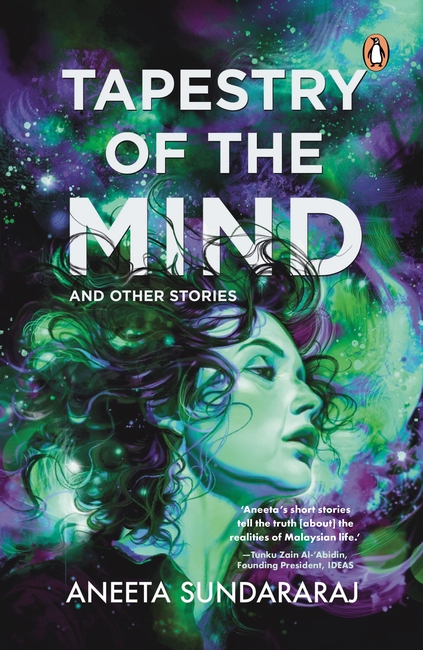
Tapestry of the Mind and Other Stories

Tapestry of the Mind is best described as the writer’s literary love affair with trying to make sense of the human psyche. It is a collection of seventeen fully-developed short stories that are serious, funny, tender and grounded in Malaysia and, in particular Aneeta Sundararaj’s hometown of Alor Setar in northern Peninsular Malaysia.
The reader moves among a diverse range of protagonists from classical Indian dancers, toddlers engaging with spirits, pet therapy, mothers losing their children because of inequitable laws and the manipulation of the metaverse, men lacking self-worth, and divorcees mulling failed marriages, to probable stigma of homosexuality, narcissism, mean adults, sibling rivalry, bullying, spiritual abuse, clandestine adoptions, autism, environmental disasters, men’s regret from love lost, and the destruction of the mission schools.
Like all love affairs, specific and unique cultural, ethnic and religious differences gave rise to moments of betrayal, poignancy, heartache and, sometimes, much mirth. Ultimately, this haunting collection pieces together an everlasting tapestry of words rooted in brutal honesty. When viewed as a whole, it brings to light issues long avoided, evaded or hidden. With each story prefaced by a quote from an expert in mental health, Tapestry of the Mind is cradled with gravitas.

Duxton Hill

Set against the backdrop of an aging boutique hotel, once a jewel of elegance in the heart of Singapore’s Duxton Hill, a tropical rain storm brings together two unlikely singles, Clara Tan and Nicholas Tate. Their personalities and cultural backgrounds at first seem at complete odds. Unbeknown to them, their futures are very much aligned. Through the twists and turns of a potential relationship, and the trials and tribulations of sorrow, love, friendship, courage and the Duxton Hotel’s fight for survival, Clara discovers that her tendency to fall in love too fast for every single male she encounters, needs some adjustment.
Her life is about to completely turn upside down when she inherits the hotel from its billionaire owner Mr Chan, but through having to lead and re-brand the hotel towards its new beginning, she inadvertently overcomes a sensitive and socially difficult medical condition. In the meantime, her love for Nicholas develops, deepens and blossoms as a result of her new found confidence, on which a new life and hotel empire begins.

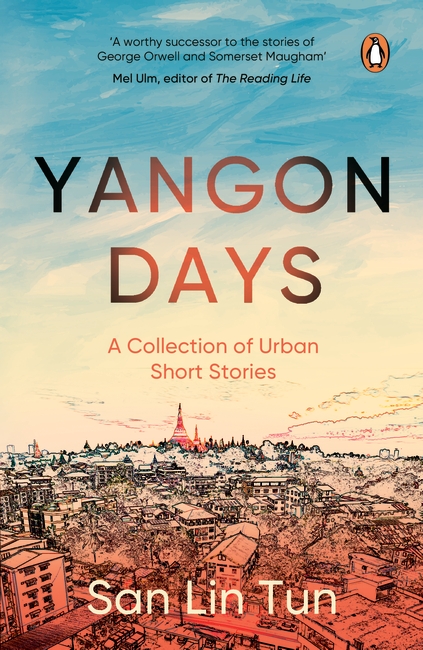
Yangon Days

Yangon, previously known as Rangoon, is the former capital of Myanmar (Burma) and one of the major commercial cities in Southeast Asia. Moreover, it stands out among its neighboring cities, such as Bangkok, Phnom Penh, Hanoi, Kuala Lumpur, and Singapore, and is regarded as a well-structured and booming city. The influx of people is constant, with individuals coming and going through the city. Even famous international literary luminaries, such as Rudyard Kipling, Rabindranath Tagore, George Orwell, Pablo Neruda, and Somerset Maugham, once visited, stayed, and enjoyed Rangoon’s vibrant life.

Yangon has become a home for many people, both locals and expats, who seek jobs, success, a new life, good food, and good housing. While most Yangon residents gain success and prosperity from what the commercial city has to offer, some encounter failures and frustrations. However, a city is a city, amiably welcoming those who seek refuge in its bountifulness.

These twenty-six stories revolve around people, especially ordinary individuals, living in the city of Yangon. They depict their delight, empathy, follies, and humanness through their daily and family lives. “Yangon Days” is about them.

The book is intended for general readers, especially teenagers and adults living in Southeast Asia and beyond. By reading these stories, they will become more familiar with Yangon and its charming people, gaining insights into how the city offers and treats its residents.

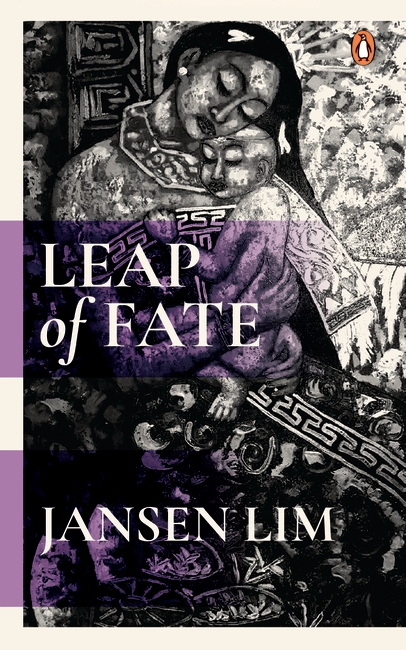
Leap of Fate

Singaporeans found themselves having to navigate livelihoods and relationships in unexpected tragicomic ways. Siblings would turn out to be lifelong enemies, money—or rather the lack of it—a crippling nightmare, love an ever posture of deception, wild gossip the coup de grâce. In spite of it all, the unforeseen, even death itself, would every so often become a flint for courage and redemption for some, especially Tin, a brave teenage girl who continued to defy familial odds, and Mona, a widow-turned-prostitute who was forced to thwart her own expectations.
Equal parts inspired by real-life anecdotes and borne of imagination, this story promises to lay bare the struggles and aspirations of those living in an era and a place unwittingly defined by societal taboos and quirky traditions that have long vanished from the face of contemporary Singapore. Ultimately, this is the story of what it means to be human when fate decides to take a leap.

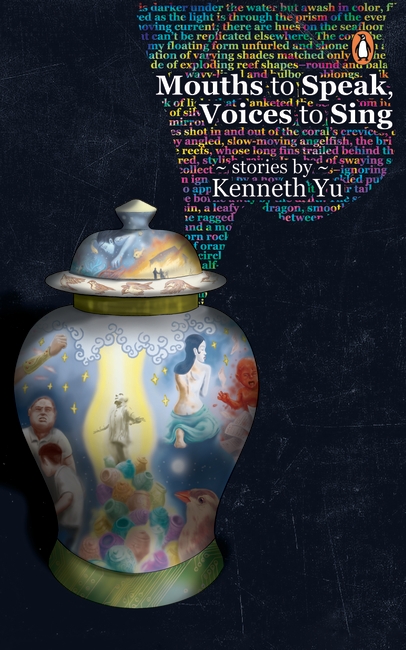
Mouths to Speak, Voices to Sing

Singing Chinese antiquities. Ghosts that only one young man could sense. A house with a sentient A.I. that becomes a part of the family. A cricket that acts as a tragic voice of reason. A man born and bred for neural mass surveillance.
This anthology is a collection of unpredictable stories of various genres—fantasy, science fiction, crime, horror and the supernatural—that touch on courage and fear, loss and resolution, denial and honesty, despair and hope…from an author who writes about being human in a world where the unseen is suddenly exposed. Every story is written in versatile language, with characters sure to elicit sympathy, and perhaps even familiarity, from readers who are sure to recognize themselves or those they know in the unique situations of each entertaining tale.

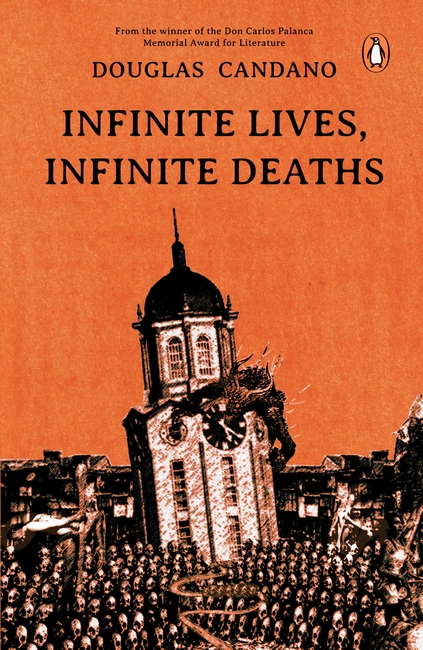
INFINITE LIVES, INFINITE DEATHS

Infinite Lives, Infinite Deaths is a collection of stories that straddle genres such as horror, magic realism, metafiction, and science fiction, while stitching together elements from world mythology and folklore, Philippine history and society, and the Chinese-Filipino experience in a nightmarish version of Manila.

In Dreaming Valhalla, a family’s noodle restaurant is converted into a Norse-themed girly bar that parallels the rise and destruction of the Æsir. A group of children take a traumatic fieldtrip in A Visit to the Exhibition of the International Committee on Children’s Rights. In An Epistle and Testimony from June 13, 1604 a Spanish friar meets a Chinese convert bearing the stigmata, while in The Life and Death of Hermes Uy, a Chinese-Filipino entrepreneur opens a pharmacy in 1950s Manila, diversifying and expanding the business throughout the decades until its mysterious and abrupt closure.

A professor of applied folkloristics discusses the case of a young girl who returned home as a crone a few days after her elopement in A Reply to a Query, while Where Old Whores Go to Die features a grant application assessment detailing the context and procedures that govern a concentration camp for aged prostitutes. In The Way of Those Who Stayed Behind a Chinese-Filipino expatriate returns home and uncovers a family secret, while The Lament of Philip Reyes features a failed doctor coming face-to-face with the possibilities that never materialized throughout his life.

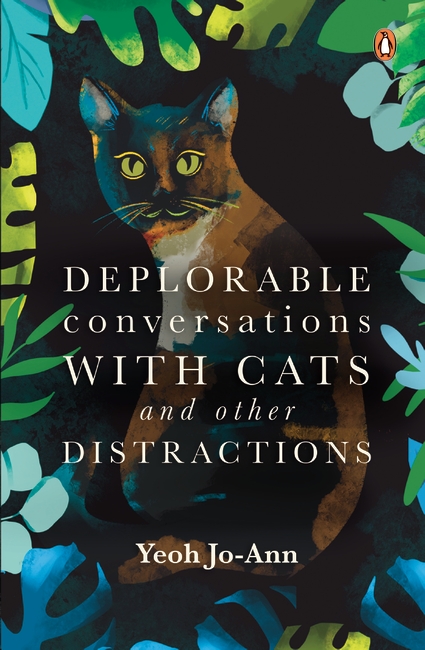
Deplorable Conversations with Cats and Other Distractions

Lucky Lee has everything—wealth, charm, money, good looks—and does very, very little with it. He’s content. He’s happy. He takes for granted that life is good and always will be. But then his sister, the go-getting, successful, famous TV chef Pearl Lee, dies, horribly, and suddenly. Lucky is devastated. As he struggles to live without the big sister who’s always been the dominant, often relentless force in his life, the inconceivable happens—her cat begins to talk to him. It wants to know where Pearl is. It questions his eating habits, his outfit choices, his life. It hogs the TV. It tells him stories. Now grief-stricken Lucky has a major problem: he may very well be mad.