




What price does a family pay for an unapproved birth?
Li Fu and Mei, farmers from a far-flung province seeking a livelihood in the capital, Beijing, flout the country’s One-Child Policy by giving birth to a second daughter, Ying. Unable to pay the hefty penalty, their baby is forcefully taken by corrupted officials and sold to an orphanage, and is eventually put up for adoption. Stricken by grief, the family falls apart. Li, obsessed with finding his missing daughter, leads a dysfunctional and chaotic life with his eldest daughter Yan after his wife walks out of the family. Seventeen years passed before he eventually locates Ying in San Francisco.
However, his dream of a reunited family is quickly crushed when Ying, now an all-American girl, cannot accept her biological family’s un-American way of life. Intolerant of their behavior and illegal immigrant status, Ying does the unthinkable – calling the immigration department to deport her family back to China.
Overcome with guilt and remorse, Ying decides to go to China to face her father and tell him the truth about their arrest and deportation.
Told from the perspectives of the two sisters, this novel reveals the dark side of cross-cultural adoption and love between father and daughter. The story is inspired by actual accounts of missing children in China, some of whom were abducted by corrupted officials for profiteering.
Catagory: Literature & Fiction
Migrantik
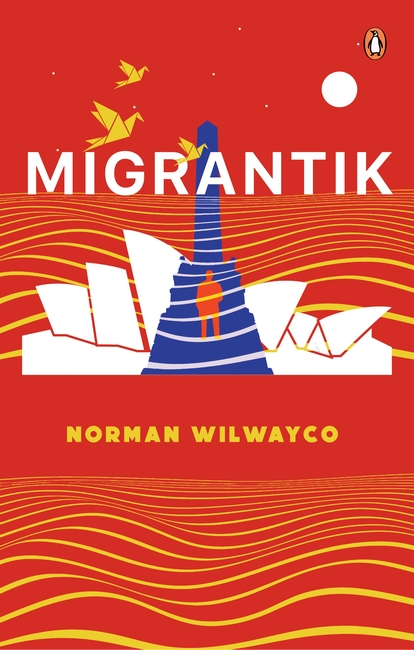
Tony is one of millions of Filipinos scattered across the globe, working to send money back to his family. But unlike other migrants, he’s no pushover at work and doesn’t live in fear of losing his visa.
Squatting in the office with an Irish co-worker to save money, Tony hustles as a web designer and battles with a ball-busting Scottish boss during the day. At night, he washes away the loneliness and fights the enormous pressure with booze and weed, saving most of what he earns to send back home.
But the money from all the hard work never seems to be enough.
If it’s not a new phone for his teenaged daughter, it’s for a cousin’s birthday or an uncle who needs funding for a business. Everyone ‘s counting on his salary. So Tony plugs away, seeking small comfort in video calls with his family, finding short-lived happiness in skateboarding in empty carparks, and diving deep into the dark side of Sydney – away from the posh lights of the Harbor Bridge and smack dab into the seedy suburbs.
Tony’s life as a migrant begins to unravel as events come to a head, and he’s forced to face the consequences of his actions.
Translated from Filipino by Peter Dominique Mutuc, Migrantik is told through the lens of economic, emotional, and occasionally actual violence.
Chronicles of A Village
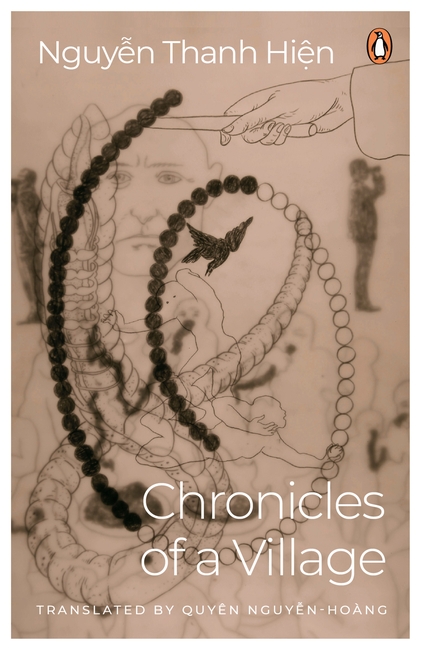
Chronicles of a Village is set in an anonymous Vietnamese village based on the author’s personal memories. The surrealistic narrative touches on the country’s pre-modern history, the colonial era and the onslaught of modernity that irreversibly affects the mountains, rivers, soil and memories of a wretched people. Written in vibrant fragments that resemble prose poems, the novel combines the author’s melodious style of oral storytelling with historical micro-narratives and mythological elements. The book takes the reader through poetic and political landscapes teeming with ancient legends, love stories, marvelous nature, war tragedies and modern alienation, which constitute the beauty and ‘the fatal historical disabilities of a land’.
A Flutter in the Colony
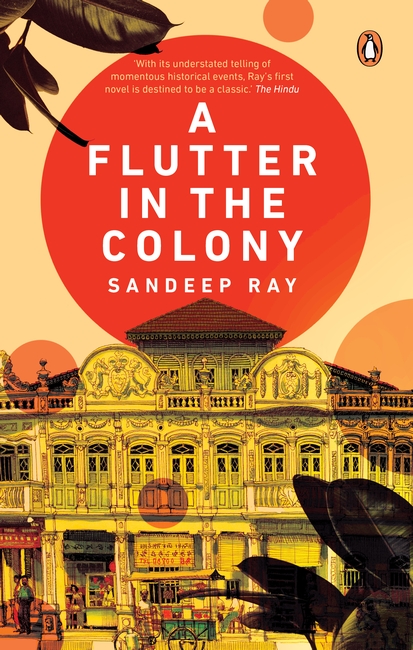
In 1956, the Senguptas travel from Calcutta to rural Malaya to start afresh. In their new hamlet of anonymity – a small settlement on the edge of a British rubber plantation – the couple gradually forget their troubled pasts and form new ties. But this second home is not entirely free and gentle. A complex, racially charged society, it is on the brink of independence even as communist insurgents hover on the periphery. How much can a newcomer meddle before it starts to destroy him?
Shuttling in time and temper between the politics of a small Malayan town and the anguished years of pre-Partition Bengal, between the Malayan Emergency and Direct Action Day, between indifference and lust, A Flutter in the Colony is a tender, resonant chronicle of a family struggling to remain together in the twilight of Empire in Asia.
A Paradise of Illusions
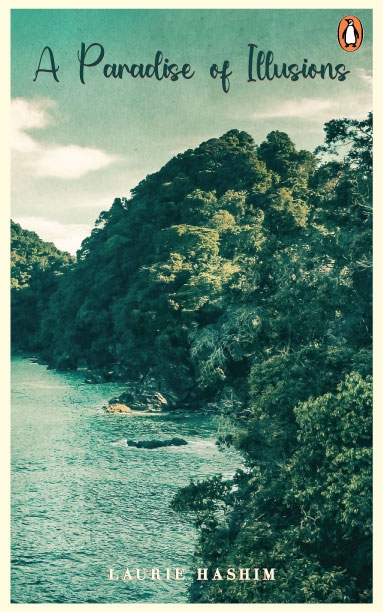
Anna, the pampered daughter of a maverick Englishman and his local Muslim wife, has been promised the unprecedented freedom to marry for love. Her young life, like the island she inhabits, is perched at the crossroads of eastern and western cultures in the waning days of the British Empire in Asia. The first man she falls for, the son of a prominent Chinese family in Penang, breaks her heart when he submits to an arranged marriage with a ‘backward’ but ambitious mainland Chinese bride. Anna’s next choice seems to be more suitable, a second-cousin on her mother’s side, an earnest self-made man whom her family adores. The newlyweds struggle to reconcile their individual aspirations with the expectations of their sprawling, extended families. The rumblings of the Second World War and the brutal Japanese Occupation transform their individual plights into a matter of life and death when they are thrust together in a desperate struggle to survive. This epic story of love and loss is illuminated by the richly painted backdrop of a multicultural society in flux on a vibrant island that is both breathtakingly beautiful and heartbreakingly suffocating.
After Time
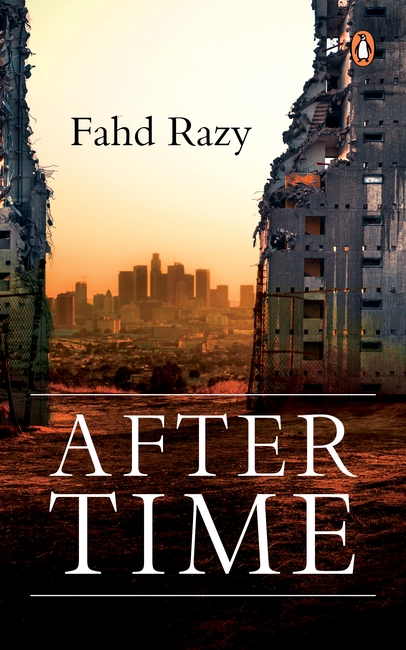
After civilization as we know it ends in a nuclear war, triggered by pursuit of black gold, mankind is given a fresh start. The thrones of power are void and unclaimed. Survivors crawl out from the darkness where they hid to wait out the aftermath of the disaster, grasping at all the hopes and opportunities above the ruins of the corrupted world. A second chance for humanity to prove itself.
From semi-primitive settlements to architectural marvels, the homo-civilis sure is a master at survival. But as they breathe their new lives, greed pulses in their heartbeats. Their inner demons never cease to feed on power and riches, and this was the same curse that befell their ancestors.
After Time witnesses the dawn of this new stronghold of humanity in fragments of tales, like a folklore. An ambitious commoner and a greedy royalty. A blind seer and a prodigal young genius. A murderous advisor, cunning princes, and kings who fall for their own machinations. A warrior blinded by love, and warlord who wields greed as his sword. Rulers so fearful of knowledge, they doom their people to illiteracy.
Trails of blood, lust and intrigue trickle through each chapter, building up to a massive tidal wave that will eventually drag the empire to its knees, paving the way for a better generation to carry the torch of human civilization.
Born and Bred in Myanmar
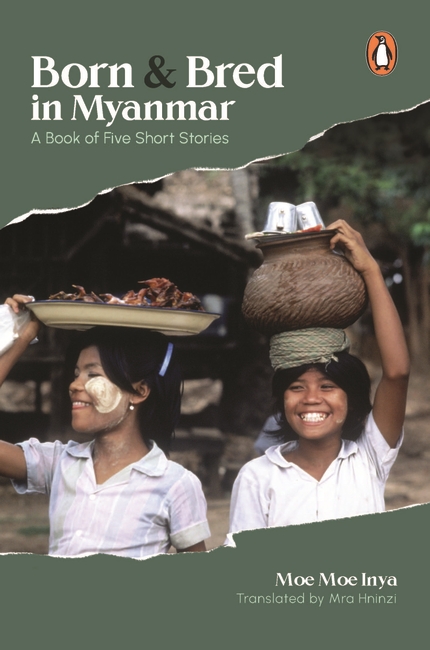
Born and Bred in Myanmar is about the life and struggles of rural dwelling youths in Myanmar who, at an early age, have to work to supplement the household income or work alongside their parents to support the family.
They often find it difficult to even complete their basic formal education and thus find it hard to break the poverty cycle that their parents have been trapped in. The book portrays the lack of a support system from the government or even support from the family for young people who dream of pursuing a good education in life.
Some of the youths whose stories are told in this collection are: Khin Soe from Mon State, who drops out of primary school due to his father’s deteriorating health and has to work as a carrier transporting the cargo of pilgrims making the trip to the top of the mountain to visit the famous holy pagoda; Moe Kyaw from Kyaukpadaung town, who volunteers to help his father who became ill working as a long distance bus driver, yet is never recognized for his help which is instead dismissed as a mere excuse for not wanting to go to school; Ma Nyo Pyar from Baw Lel village, who quits her studies to help her struggling mother in the paddy fields as well as look after her newborn sister, after turning down an offer from her mother’s friend to put her through school.
Although these are stories of youths who lived in Myanmar in the 1980s, these stories still reflect the lives of youths in rural Myanmar today.
Rejection
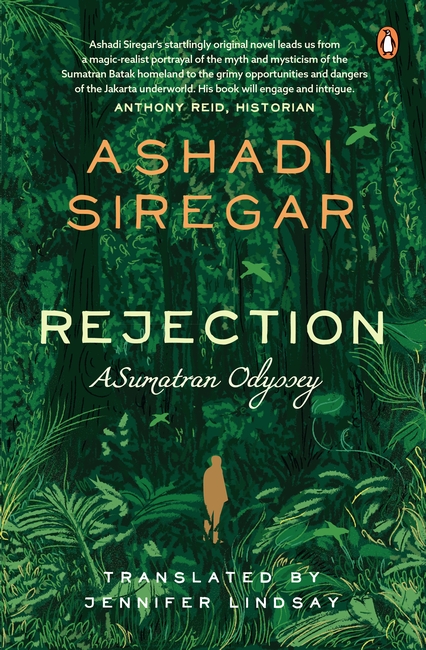
Rejection: A Sumatran Odyssey is an epic family drama by Ashadi Siregar set against the turbulent years following Indonesia’s independence.
The story follows Tondi who as a young man joins the separatist rebellion of the late 1950s and early 1960s in North Sumatra. Later he moves to Java and finds his way in the murky Jakarta underworld. Tondi’s story is interwoven with the magical world of his paternal grandfather, a shaman traditional priest living in the old pre-Islam, pre-Christian world of Batak belief. Tondi’s father deserts the family when Tondi is a child, moves to Jakarta, and joins the Indonesian national army. Tondi’s mother stays in Sumatra and forges a life of her own, for a while working at a hospital with Dutch personnel who return to the former Dutch colony after Indonesian independence.
A central section of the novel describes Tondi’s journey alone through the primeval jungle of North Sumatra, on a mission for the rebel army. His grandfather has given him directions to pass through this rarely-traversed realm where his ancestors used to roam.
In rich and poetic storytelling, Ashadi Siregar portrays the Batak culture of North Sumatra: its language, beliefs, ceremonies, and intricate kinship system. He also vividly depicts a critical period in history when Indonesia was struggling to find its place internationally against the backdrop of the Cold War, while fighting internally to keep the new nation together.
The main characters all have choices to make in this time of love and war and conflicts between the old ways and the new. All reject something, just as the time itself is one of rejection; rejection of past ways; rejection of nationalist ideals; and the Sumatran rebels’ rejection of the centralist Indonesian government.
This English translation of Ashadi Siregar’s ground-breaking historical novel brings a non-Indonesian readership into a fascinating, vast and little known part of Indonesia’s history.
Joy
Ariston Letrero is a renaissance man: audio producer, insurance salesman, musician, composer, part-time fast food mascot, and a philanderer who quickly and quietly abandons his wife and son, Lucas, at the peak of his mottled career, for a new life in America with his lover Odette.
Years and years later, he sends an email to his son, Lucas Letrero, an advertising man who has been brought up on super robot cartoons, Catholic school truisms, and a diet of fast food and loneliness, and who has reconnected with his childhood sweetheart Dedes, who has made a post-annulment life for herself in America.
In the 30-odd years in between is a story that sings songs and anthems of identity, relations, loneliness, and loss, and how they figure in the lives of contemporary Filipinos who are not scattered across space and time, but who are also connected and separated at the same time.
Joy is a story of joy-lived forward, backward, sideways, and upside down, in lives and loves that are fragmented, separated, gathered, made virtual, and made real.
Only Connect

As the good ship McCarthy wends its way from the UK to China across troubled waters, Susan and Howard – two employees in a shipping and logistics company – establish an extraordinary friendship in cyberspace. Entrusted with ensuring the timely delivery of a valuable cargo, they discuss everything under the sun (and then some) as their relationship develops with each passing port of call.
Only Connect examines the very nature of human interaction and the desperate need for connection in an increasingly fraught world in which things are not always what they might seem. The Asian leg of the ship’s journey leads to a potentially catastrophic geopolitical flashpoint, as revelations are made that result in dramatic and fascinating consequences.