



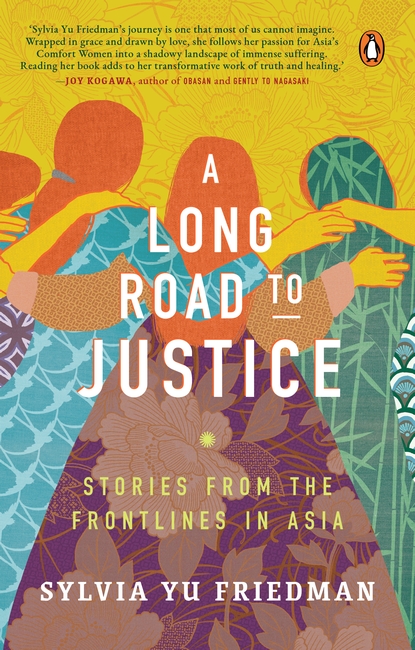
A constant stream of impoverished women and girls have been, and are being, enslaved and abused in the Asia Pacific region. Slavery is not a historical issue – it’s happening today. History is repeating itself.
Through Sylvia Yu Friedman’s work in journalism, counter-trafficking and philanthropy, she has had rare and incredible access to victims of sex trafficking and modern slavery in China, Thailand, Cambodia, North Korea, South Korea, Myanmar and Indonesia.
Amid this terrible human suffering, she has seen frontline workers carrying a great light that has overcome the darkness in some of the most frightening places on Earth. This memoir describes her personal journey in the fight against slavery through supporting philanthropic initiatives and raising awareness through writing articles and producing films. She shares her personal setbacks, and how her awakening to the plight of the victims of Imperial Japanese sex slavery during World War II helped her come to terms with her identity issues over her Korean heritage. She writes about the lessons – the good, the bad, and the ugly – and the people and events that have shaped her along the way.
Catagory: Biographies, Diaries & True Accounts
Beyond Storms and Stars – A Memoir
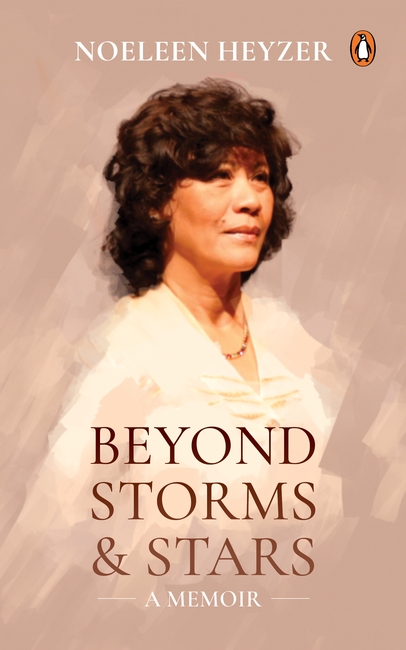
How did a young girl who rose from underprivileged circumstances in post-war Singapore become a trailblazer of women’s global leadership at the United Nations? Noeleen Heyzer was the first woman from outside North America to be appointed as Executive Director of the United Nations Development Fund for Women (UNIFEM) and the first woman Executive Secretary of the Economic and Social Commission for Asia and the Pacific (UNESCAP). In these memoirs, Noeleen Heyzer reflects on her remarkable journey – from the challenges of her childhood and youth, her intellectual development at the University of Singapore and the University of Cambridge, to her groundbreaking work on women’s empowerment and her meteoric rise to the position of Under-Secretary-General of the United Nations. It is a book that celebrates the resilience of the human spirit and the courage of individuals, communities, and societies to transform structures of discrimination and injustice.
Whispers of Hope
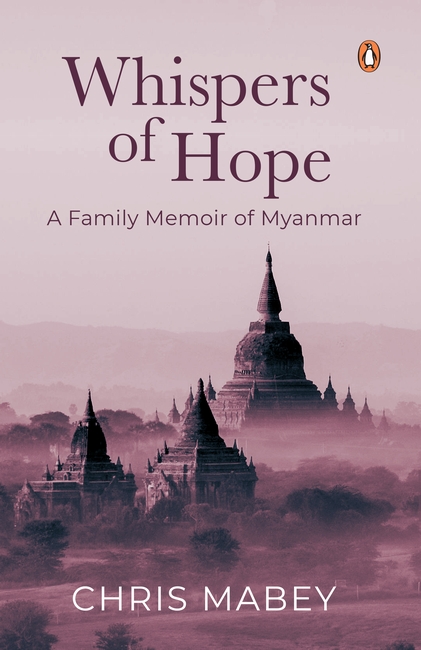
As a British teenager, I meet a beautiful Burmese girl on the school bus. Her family self-exiled in 1964, soon after the military coup, to start a new life in England. My fascination is fired for this far-off land.
How did Burma, with such a regal past, swathed in natural beauty and populated by a people of unmistakable poise and serenity slide into repression and obscurity? How can the up-beat memories of April’s parents be reconciled with Myanmar’s current malaise?
Over 16 years I recorded the oral history, anecdotes and reminiscences of her family who were eye witnesses to momentous events in mid-century Burma. These together with more recent conversations – with Aung San Suu Kyi and a range of Burmese millennials – provide a unique portrait of Myanmar stretching back to April’s great, great grandfather in 1852.
For all the woes of this country, whispers of hope can be heard.
A Consequence of Sequence
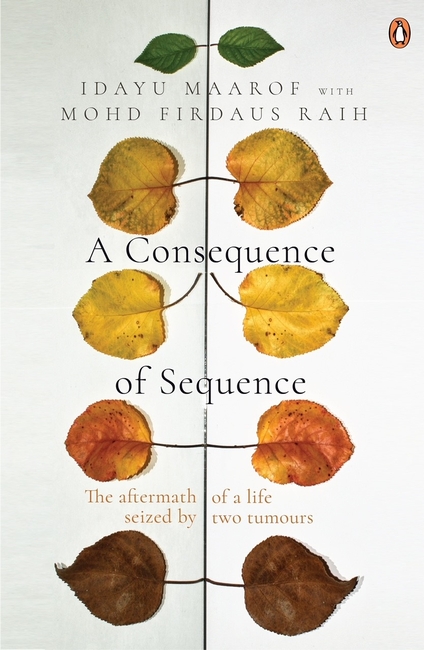
After suffering strokes, general practitioner Dr. Idayu Maarof underwent major surgery to remove a heart valve tumour believed to have caused the strokes. Unfortunately, what seemed to be the end of a journey was only the beginning of an even more arduous one. Her symptoms evolved to multiple episodes of daily seizures. To control the seizures, she was put in a medically induced coma. A mysterious brain lesion became the prime suspect, but no one was certain. She later underwent two surgeries to remove what appeared to be a brain tumour. Dr. Idayu Maarof contextually concludes how a sequence of events and decisions led to a particular consequence. This is not an account about being ill. This is story of acceptance, gratitude, and the struggle for a life worth living.
Grandma’s Gangsta Chicken Curry and Gangsta Stories from My Hippie Sixties
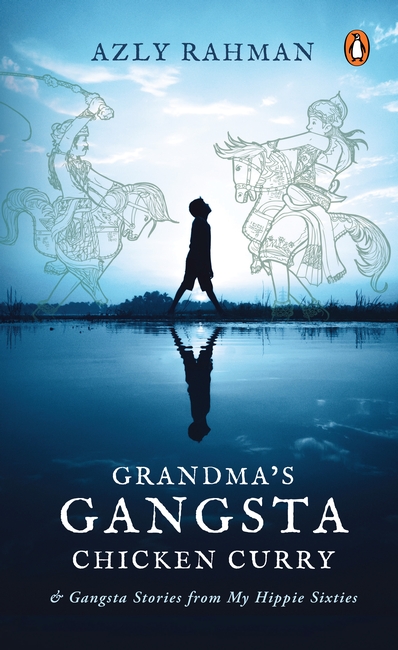
He is no longer him, today. At ten, he saw a chicken beheaded in his backyard, he too, an accomplice. He roamed his village, sometimes barefoot, wading through streams, backyards of his neighbors’ houses where young men were high, smoking ganja. He once saw a group of men in red headbands with Arabic words on them, ready to march to the capital city to slaughter many.
He fought demons, wept when the family dog died battling a cobra. He saw men in a trance, munching on broken glasses and hibiscus petals, high on Javanese trance-dance music, turning into horses. A spaceship landed on the school field. He thought he died, shot by Martians.
He was saved from being a Taliban. Saved by the music of the American Hippies. He confronted a boy in a green robe and white turban, preaching jihad against Western music. He chased the young mullah out of the school.
His story told in the language of the Sixties. Of Beat poetry. Of rap, joyfully, he now narrates with melancholy.
The Votive Pen: Writings on Edwin Thumboo
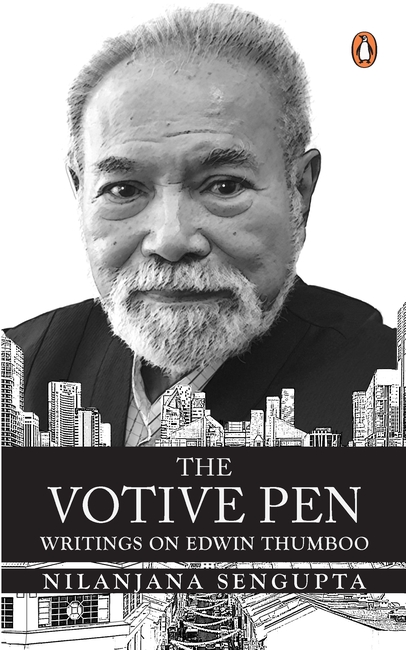
Born of Tamil and Teochew parents, Edwin Thumboo embraced the Protestant faith late in his life. He has a self-confessed fetish for Yeats and Pound and yet completed his doctoral thesis on post-colonial African poetry. He taught himself the Ramayana and I-Ching but found traces of the Odysseus in the shadows of the Merlion. He is brusquely vocal about poetry with a purpose and yet appears a hopeless romantic in his poems about his wife. What happens when a mind which is such a melting pot of brilliant ideas and contrary emotions tries to unscramble
the identity of a country like Singapore which is complex, multiracial, has known a fierce economic growth that has often elbowed aside everything else? The Votive Pen sets out to see Edwin Thumboo’s poetry-steadily and see it whole-without the intervening static of earlier critical writing and with
an intense alertness to the text.
Battulga: Up Close and Personal
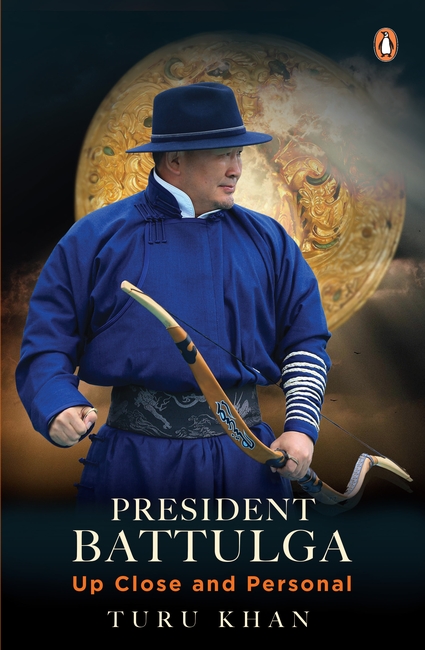
is is the authorised biography of the current President of Mongolia, Khaltmaa Battulga.
Battulga and the author studied together in college. At that time, Tulgaa, as his friends fondly called him, was sewing jeans, selling records and merchandizing. Then he went on to participate in sports and won the world championship in Sambo wrestling and became World Champion, while working at the branch of the city’s Craftsmen’s Committee.
He went on to wear many hats of accomplishments in his life. He started a business that expanded into the Yellow Taxi Service, organised a lottery called Millionaire, opened a disco club and the first ever supermarket in Mongolia. With the advent of privatisation, he obtained big ventures like the Bread and Candy Factory, the Meat Company Impex and the Bayan Gol Hotel and matured into a major businessman known throughout the country. Since then, he was elected into the parliament three times, where he served as Minister for Road and Transportation as well as Minister for Industry and Agriculture, led the Mongolian Democratic Union and became President of the Mongolian Judo Wrestling Association. He exerted substantive effort to become the first World Judo Champion born in Mongolia.
Despite his successsful ventures, he has always been a secretive person. It is difficult to hear even a few words from his mouth. Who is Khaltmaa Battulga actually? He has numerous followers and just as many fierce critics and has always been in the attention of journalists who have sometimes turned him into a subject of controversy on mass media. What does he really want? What has he so consistently been fighting for?
Based on exclusive interviews with the man himself, enriched by objective facts and events that the author has witnessed, read on as the author attempts to give the readers a better understanding of the character of the man who built the gigantic statue of Chinggis Khan on horseback and initiated an eco-town named Great Maitra, and shares what he has been up to recently.
The Good Day I Died: The Near-Death Experience of a Harvard Divinity Student
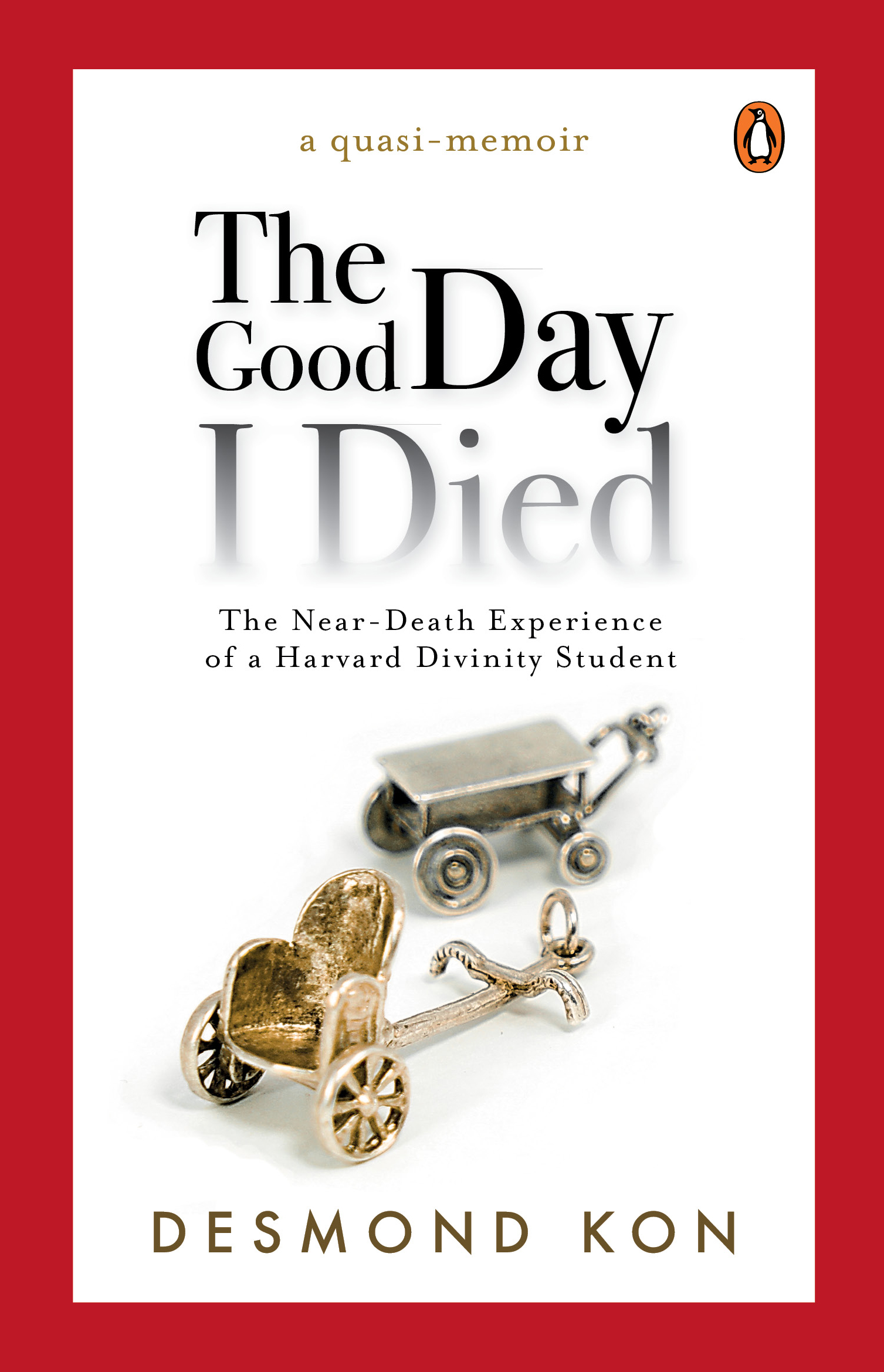
In 2006, Desmond Kon died, and came back to life. This is better understood as a near-death experience (NDE). Fresh from studying world religions at Harvard, Desmond’s NDE in Somerville, Massachusetts, shared remarkable consistency with other documented NDE accounts, such as encountering otherworldly beings, altered time-space realms, and the classic tunnel of light. Post-NDE symptoms included paranormal sightings. Framed as a quasi-memoir, The Good Day I Died is constructed as a self-administered interview, allowing the account its moments of deep intimation. Completed with the aid of the Creation Grant from Singapore’s National Arts Council, The Good Day I Died represents Desmond’s most confessional writing, relating the story of his death, and his transformed life
after his return.
The Great Flowing River: A Memoir of China, from Manchuria to Taiwan
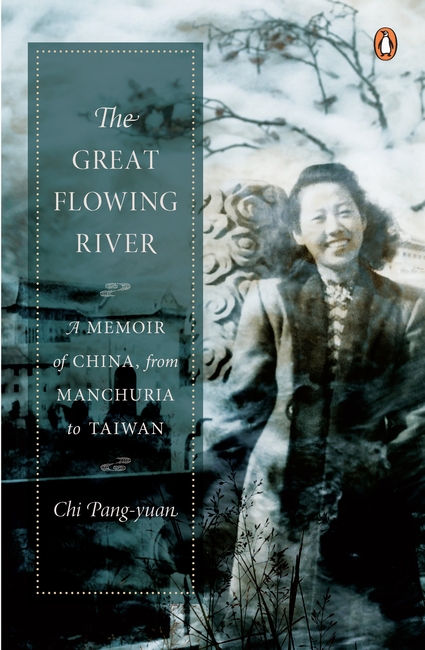
Heralded as a literary masterpiece and a bestseller in the Chinese-speaking world, The Great Flowing River is a personal account of the history of modern China and Taiwan unlike any other. In this eloquent autobiography, the scholar, writer, and teacher Chi Pang-yuan recounts her youth in mainland China and adulthood in Taiwan. Chi’s remarkable life, told in rich and striking detail, humanizes the eventful and turbulent times in which she lived.
The Great Flowing River begins as a coming-of-age story set against the backdrop of China’s war with Japan. Chi depicts her childhood in pre-occupation Manchuria and gives an eyewitness account of life in China during the war with Japan. The book describes the deepening political divide in China. Chi details her growth as an educator, scholar, and promoter of Chinese literature in translation and her realization that despite her roots in China, she has found a home in Taiwan, giving an immersive account of the postwar history of Taiwan from a mainlander’s perspective. A novelistic, epoch-defining narrative, The Great Flowing River unites the personal and intimate with the grand sweep of history.