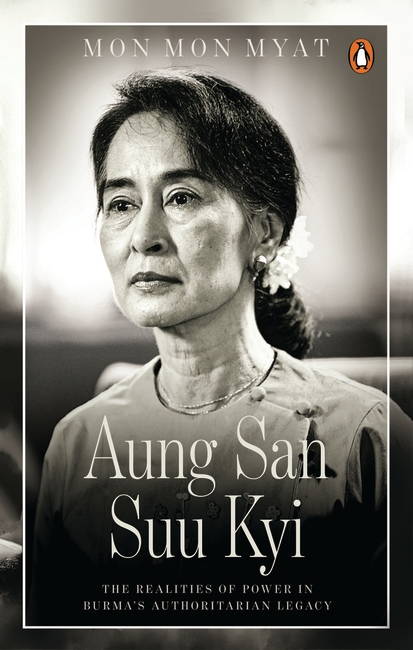
For more than three decades, Burma’s political prisoners, activists, and visionaries have embodied moral courage in defying authoritarian repression and unjust laws. At the forefront of this moral struggle stands Aung San Suu Kyi, whose unwavering commitment to nonviolence, democracy, and spiritual renewal has shaped the modern Burmese political landscape.
This book undertakes a philosophical exploration of Aung San Suu Kyi’s political thought, drawing inspiration from Johan Galtung’s study of Gandhi and guided by personal interviews and close observation of her political journey from 2012 to 2020. It examines whether she should be understood, as Michal Lubina suggests, as a ‘hybrid politician’—one who blends Western liberal ideals with Burmese Buddhist values—or whether a more fitting lens reveals her as a peacebuilder committed to a spiritual revolution.
This study challenges simplistic portrayals and explores whether Aung San Suu Kyi’s principled leadership reflects not a betrayal of liberal ideals, but rather the articulation of a distinctively Burmese path toward peace and justice. It presents a deeply contextual account of moral courage, just law, and an uncorrupted society as essential elements in Burma’s ongoing quest for federal democracy and decentralized governance.
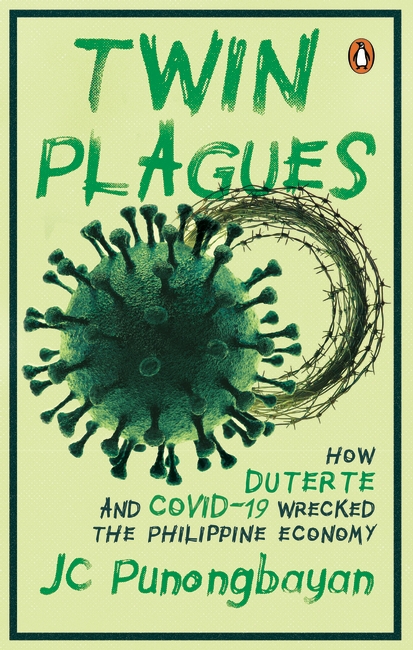
Twin Plagues: How Duterte and Covid-19 Wrecked the Philippine Economy chronicles the Philippine economy under Rodrigo Duterte’s presidency from 2016 to 2022, a period marked by authoritarian populism and the devastation of the Covid-19 pandemic. Drawing on economic data, policy analysis, and contemporary reporting, the book argues that weak governance and institutional erosion had already undermined economic performance well before the pandemic. The pandemic then exposed and magnified these failures, culminating in the country’s worst postwar recession and the deepest economic contraction in Southeast Asia. The book challenges the persistent but misleading narrative that Duterte handled the economy well, offering an economic counterpoint to a literature that has largely emphasized the war on drugs, media repression, and foreign policy. Written in an accessible style, Twin Plagues is both an economic history and a cautionary tale about how authoritarian populism can rapidly corrode governance and inflict lasting damage on developing economies.

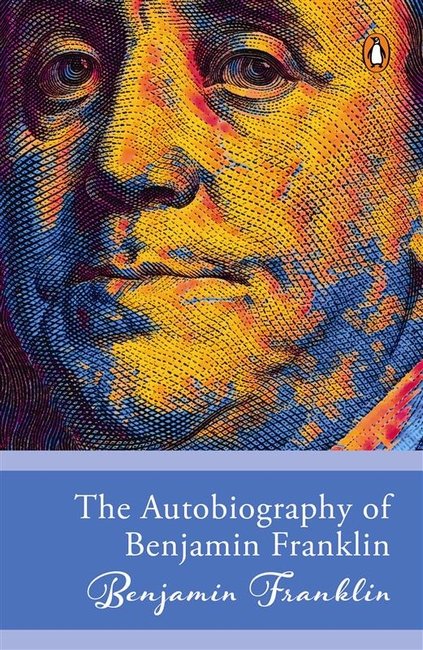
More important than the actions of those who achieve greatness is understanding the minds behind their success. The Autobiography of Benjamin Franklin offers a unique glimpse into the remarkable life and intellect of one of America’s most influential Founding Fathers.
In this fascinating narrative, Franklin recounts his journey from a humble childhood in Boston to becoming a leading figure in American society. From his early struggles as a printer to his rise as a statesman, philosopher, and inventor, Franklin’s life is a testament to the power of self-improvement, hard work, and a strong value system.
Within these pages, readers will discover:
- Franklin’s personal philosophies, including his commitment to frugality, industriousness, and moral integrity.
- Anecdotes filled with wit and wisdom, offering timeless lessons on leadership, perseverance, and character.
- Self-reliance and self-improvement as essential components of Franklin’s approach to life, providing inspiration for both personal and professional growth.
Whether you’re an aspiring leader, history enthusiast, or someone seeking motivation to achieve their full potential, The Autobiography of Benjamin Franklin is a must-read classic that continues to inspire readers today.
Perfect as a gift for history lovers, students, and anyone striving for success, this edition offers both a captivating story and profound lessons.

More important than the actions of those who achieve greatness is understanding the minds behind their success. The Autobiography of Benjamin Franklin offers a unique glimpse into the remarkable life and intellect of one of America’s most influential Founding Fathers.
In this fascinating narrative, Franklin recounts his journey from a humble childhood in Boston to becoming a leading figure in American society. From his early struggles as a printer to his rise as a statesman, philosopher, and inventor, Franklin’s life is a testament to the power of self-improvement, hard work, and a strong value system.
Within these pages, readers will discover:
- Franklin’s personal philosophies, including his commitment to frugality, industriousness, and moral integrity.
- Anecdotes filled with wit and wisdom, offering timeless lessons on leadership, perseverance, and character.
- Self-reliance and self-improvement as essential components of Franklin’s approach to life, providing inspiration for both personal and professional growth.
Whether you’re an aspiring leader, history enthusiast, or someone seeking motivation to achieve their full potential, The Autobiography of Benjamin Franklin is a must-read classic that continues to inspire readers today.
Perfect as a gift for history lovers, students, and anyone striving for success, this edition offers both a captivating story and profound lessons.
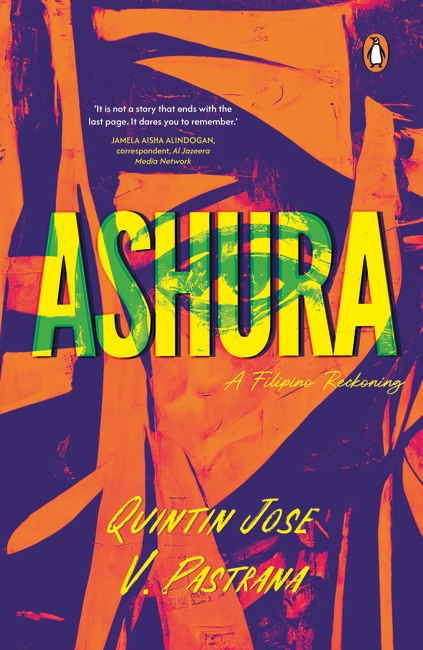
In a country riven by death and corruption, unlikely companions come together and risk everything to find a little girl with a secret that can bring down the murderers hiding in plain sight. This is a story of three lives, intertwined by fate and circumstance to speak truth to power amidst the growing stain of extrajudicial killings in modern-day Philippines.
Spanning 3 continents, 7 cities, and 12 months, Ashura weaves together a story of interrupted youth, shared identity amidst brazen politics, and the elusive search for justice. The novel traces the invisible thread that binds a growing kinship, navigating between the precipice of death and the threshold of history and love.
The reader is immersed in separate, inner journeys that come together in the bloodstained streets of Metro Manila and Mindanao, the changing corridors of power in Washington, DC, and the darker recesses of Barcelona that lead to an uncertain fate at the International Criminal Court in the Hague. All told, Ashura becomes a shared, unfinished legacy of a benighted nation in search of itself.

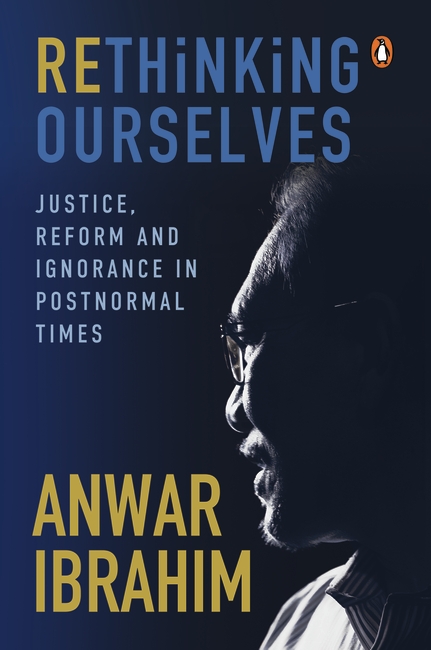
Change has run amok! Technological advancement measures its frequency in minutes. Much of what we think we know about the world is fading in front of our eyes. How we are, how we know, and how we live our daily lives is changing quicker than we can cope with. We find ourselves in a confusing, uncertain, and volatile age.
Anwar Ibrahim, Malaysia’s tenth Prime Minister, asks how we might rethink ourselves to adjust to accelerating change, and to shape more just and sustainable futures. His passion for truth and justice is rooted in his own experience: He has been behind bars for over a decade through three separate miscarriages of justice, from his days as a student activist to his time as Leader of the Opposition.
Woven through the reflections on his time in prison are critical investigations into justice, post-colonialism, Islamophobia, democracy, and world order. Anwar brings together the ideas of scholars and other thinkers from the East and West, North and South, to explore how we can create a new inclusive synthesis—one that genuinely promotes good society and a just and sustainable world order. Vividly told, expertly dissected, this is a timely book for our turbulent age.
Anwar Ibrahim, Malaysia’s Prime Minister, is a public intellectual and founder of the People’s Justice Party, who endured a decade of imprisonment for his staunch anti-corruption and reformist politics. Formerly based at the University of Oxford, and Georgetown and Johns Hopkins Universities, he is the author of The Asian Renaissance.
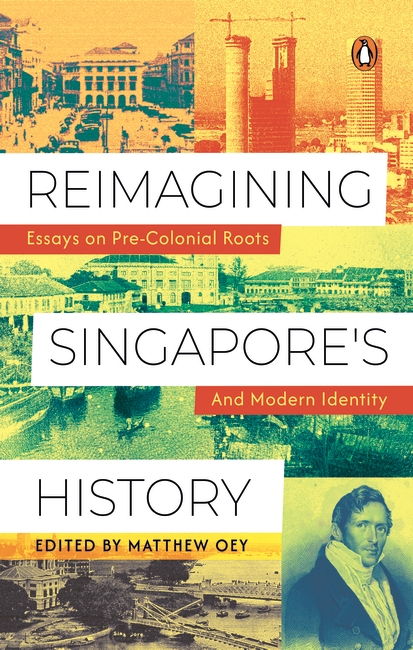
What is history? How is it made? And why does it matter? Reimagining Singapore’s History brings together leading historians to discuss these questions within the context of the decades-long project to rediscover pre-colonial Singapore.
2019 was a milestone in Singapore’s history as it marked the 200th anniversary of Stamford Raffles’ landing in 1819. However, in a powerful turn of events, government-sponsored celebrations used the occasion to highlight Singapore’s longer pre-colonial story, in the process officially pushing back the modern country’s origins to the 14th-century trading post of Temasek.
Contrary to popular belief, Singapore was not a forgotten land between Temasek and Raffles; it remained a rich crossroads of trade, culture, religion, and merchant empires (both Asian and European). The discovery of this pre-1819 period has led to Singapore’s ‘new history’, also known as its ‘700-year narrative’.
While this narrative has long been common knowledge among academics, it was only in the past decade that it began to make its way into the public consciousness. Why and how did these changes come about? Where did they come from? Why did it take so long to bridge academic and public knowledge? And what is pre-colonial Singapore’s relevance for us in the 21st century?
Surveying topics from archaeology to post-colonial theory, this essay collection explores the above questions and introduces the sources, discoveries, and ideas that led to the literal re-writing of Singapore’s official historical narratives over the past decades.
Contributors include renowned National University of Singapore professors and public historians:
- Professor Wang Gungwu – recognized as ‘one of Asia’s most important public intellectuals’.
- Professor Peter Borschberg – pioneer of using non-English European archives to study pre-colonial Singapore.
- Professor Kwa Chong Guan – leading proponent of the long-cycles, 700-year approach to Singapore’s history.
- Professor Syed Farid Alatas – sociologist and among Singapore’s top postcolonial theorists.
- Chris Hale – documentary filmmaker and non-fiction writer, author of A Brief History of Singapore and Malaysia.
- Tim Hannigan – travel writer and author of numerous books on Southeast Asia, including Raffles and the British Invasion of Java.

“The free development of each is the condition for the free development of all.”
The Communist Manifesto, a philosophical document, through its engaging story-like narrative explains the rise of industrial capitalism and sheds light on the capitalistic system’s effect on society.
Arguing that throughout history, societies have been marked by class struggles, where the bourgeoisie (capitalist class) has oppressed the proletariat (working class) for the pursuit of more profits.
More importantly, it urges people to question and think about norms and administrations that are not genuinely working for everyone’s quality of life, asking citizens to live with an open and thinking mind.
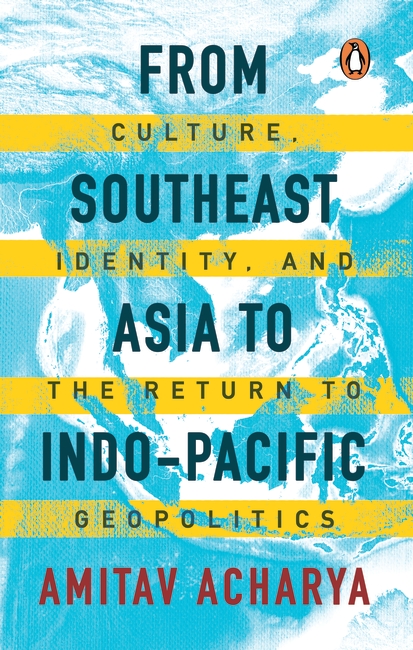
Southeast Asia was created by geopolitics, and it might die with it.
An era of great power rivalry made the rise of Southeast Asia possible. It stimulated common purpose and unity among nations and led to the creation and consolidation of ASEAN.
The question now is, will the return of geopolitics have a similar impact? This is no means assured. In fact, the opposite could happen. The new geopolitics is, after all, quite different from the old.
Developments affecting Southeast Asia’s reputation and appeal might destroy ‘Southeast Asia’ not just as a distinct idea, but also as pawns in the hands of great powers.
The fate of the region looks increasingly uncertain; the question arises: has Southeast Asia passed its
‘use by date’?
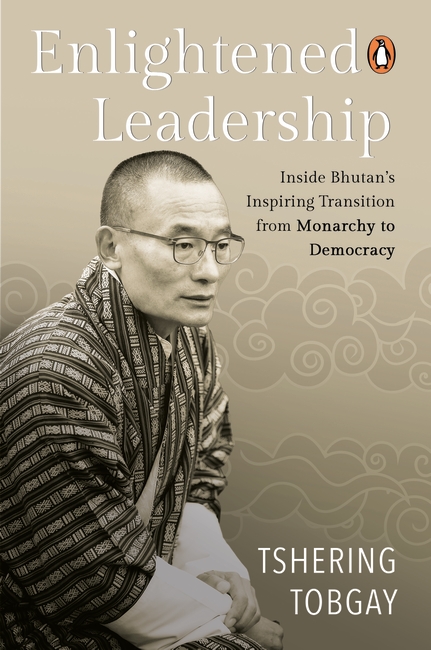
Discover the transformative power of wisdom, courage, and compassion in Enlightened Leadership by Tshering Tobgay, Bhutan’s esteemed Prime Minister and TED Talks sensation. Through Bhutan’s unique approach to climate change, its peaceful transition to democracy and its administration based on Gross National Happiness, you’ll learn from his firsthand experience how these traditional qualities unlock the potential for positive change, unity and powerful action.
This book offers invaluable insights into leadership that combines ancient wisdom and modern best practices, blending timeless guidance from the past with today’s principles for effective governance. By emphasising the role of selfless service, it vividly recounts how these qualities foster enlightened leadership, and how they have seen Bhutan through a tumultuous past and a present defined by the uncertainty of climate change—a process that continues to be selflessly led with wisdom, courage and compassion by its revered Kings.
As he takes you through his personal experiences growing up and entering the civil service and political arena, his clear and impassioned storytelling will open up the wondrous land of Bhutan to readers. You’ll witness a country deeply rooted in tradition yet boldly preparing for the future, offering profound lessons on leadership, change and resilience.