



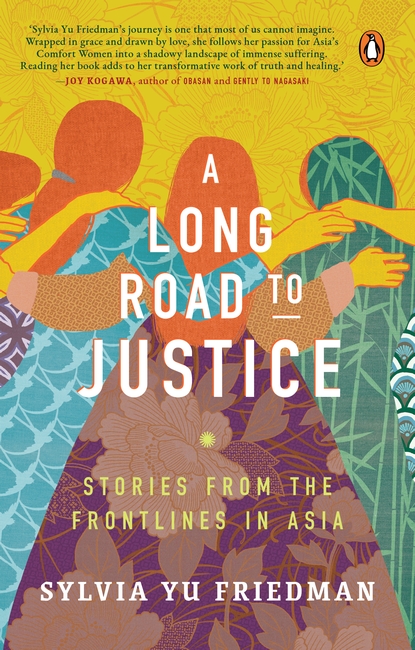
A constant stream of impoverished women and girls have been, and are being, enslaved and abused in the Asia Pacific region. Slavery is not a historical issue – it’s happening today. History is repeating itself.
Through Sylvia Yu Friedman’s work in journalism, counter-trafficking and philanthropy, she has had rare and incredible access to victims of sex trafficking and modern slavery in China, Thailand, Cambodia, North Korea, South Korea, Myanmar and Indonesia.
Amid this terrible human suffering, she has seen frontline workers carrying a great light that has overcome the darkness in some of the most frightening places on Earth. This memoir describes her personal journey in the fight against slavery through supporting philanthropic initiatives and raising awareness through writing articles and producing films. She shares her personal setbacks, and how her awakening to the plight of the victims of Imperial Japanese sex slavery during World War II helped her come to terms with her identity issues over her Korean heritage. She writes about the lessons – the good, the bad, and the ugly – and the people and events that have shaped her along the way.
Catagory: Society & Social Sciences
Born To Die

This is a key text to understand the processes of urban violence in Colombia. It reveals the world of the young people who formed gangs and shook up Colombia with their recklessness. The book also explores the cultural and historical roots of a generation that got caught up in the drug-trafficking phenomenon and created a subculture with odd forms of religiousness, irreverent languages and a defiant attitude towards death. This book is short and entertaining, yet hard to swallow, as the reader is thrust into realities that only a few people live and understand, and many of us want to change.
Young Mongols
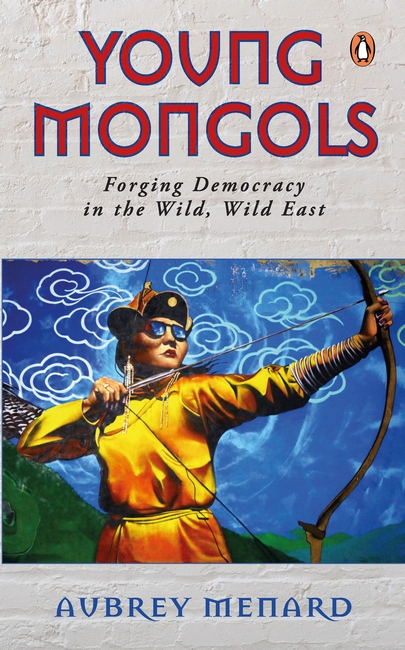
In 1990, Mongolia’s youth-led revolution threw off the Soviet yoke, ushering in multi¬party democracy. Thirty years later, the country’s youth are still leading Mongolia’s democratic development.
This powerful, inclusive book introduces readers to modern Mongolia through the stories of young leaders fighting to make their country a better, more democratic place. Its intersectional perspective explores the complexity of Mongolia today: the urban planning and pollution issues that plague the capital city of Ulaanbaatar; the struggles of women, the LGBTQIA+ population, people with disabilities, and ethnic minorities to claim their equitable places in society; the challenge of providing education in the world’s least densely populated country to prepare the workforce of tomorrow; and how to fairly divide the spoils of the country’s vast mineral resource wealth.
This rising generation of Mongolians is already wielding real power and shaping their country’s future. Their work will determine whether the country is able to overcome its development and democratization challenges, its relationship to the world, and who the winners (and losers) will be in Mongolian society.
The Gurkhas
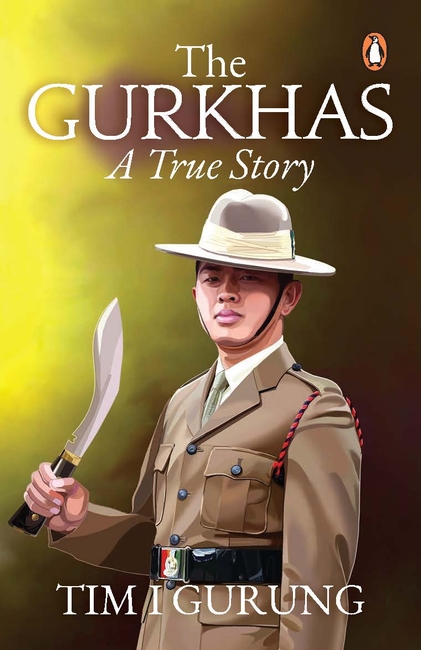
The Gurkhas – A True Story is a complete book for, to and by a Gurkha. It covers their story from the start to the very present. The book not only documents the Gurkhas’ history but also their influence in the community and the nation as a whole.
Immersed in a 200-year-old history, the Gurkhas is an institution and are known to be the bravest of the braves.
The Gurkhas fought in many countries like Malaysia, Singapore, Borneo, East Timor, Hong Kong, Cyprus, the Falklands, Iraq, Afghanistan and Kosovo for the British. Their famous kukri had no peers in both WWI and WWII, and they are probably the only such force in the world that had won wars by name alone.
An institution that lasted for more than two centuries cannot survive by bravery alone. Outside factors such as political, social, religious, racial, and traditional affected their community. Their inherited virtues such as loyalty, devotion, tenacity, hardworking, adaptability as well as being able to face difficulty with a smile made them tough from the inside. Above all, their upbringing taught them to respect their elders and their masters who made them into a perfect soldier.