‘The fundamental difference between a great boss and a horrible boss is how they project their energy onto others. Everything else is born from that energy’
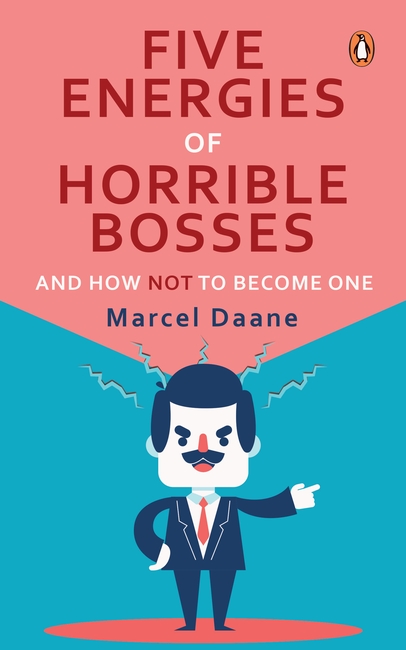
Five Energies of Horrible Bosses…And How Not To Become One is a Leadership Book like you have never read before. This book offers a holistic framework using a powerful blend of Ancient Asian Energy Practices and Modern Western Science that helps leaders and teams master their energy projection for better influence, connectedness, communication, and collaboration.
Born from an early adult life of repeated failures, managing clinical depression, alcoholism, and finally becoming a horrible boss himself, Marcel Daane tells a compelling story how he finally found direction through his practice of Martial Arts, combined with Meditation and Energy Healing.
Citing real-life examples while working with leaders and teams as a Professional Certified Coach and Neuroscientist, Marcel shares his powerful system that not only helps you assess for yourself whether the type of energy you are generating and projecting is serving you as a leader or boss, but it also teaches you how to become a master of all five energies so you can ensure you will never ever become a horrible boss yourself.

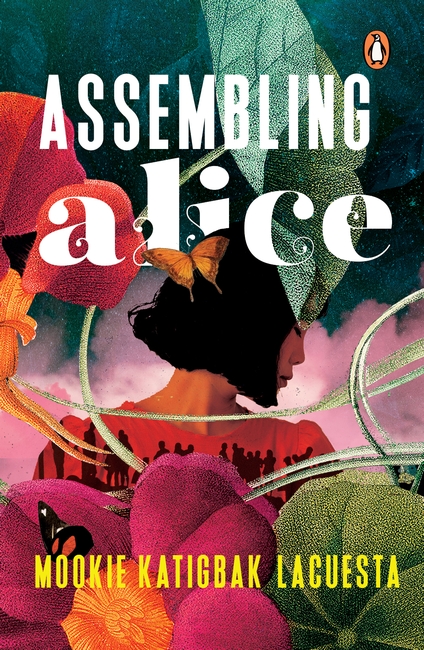
Before and after the Battle of Manila, a Japanese spy and an American soldier have one thing in common: they both fall in love with Alice Feria, a pianist who would later become one of the first women journalists in the Philippines. Both would prove to be instrumental to her survival during the Japanese occupation and the liberation of Manila.
Assembling Alice is a portrait of a woman as much as it is a portrait of the times she lived in. She came of age during the commonwealth period, survived both the occupation and the war, and did not write of her experiences as much as she spoke of them to those in her inner circle. Her experiences were sublimated into editorials she wrote for a small magazine called The Filipino Home Companion where she wrote of nation-building and what it meant or should mean to be a Filipino after the second world war.
Inside these pages are the stories she told, and have been told about her.
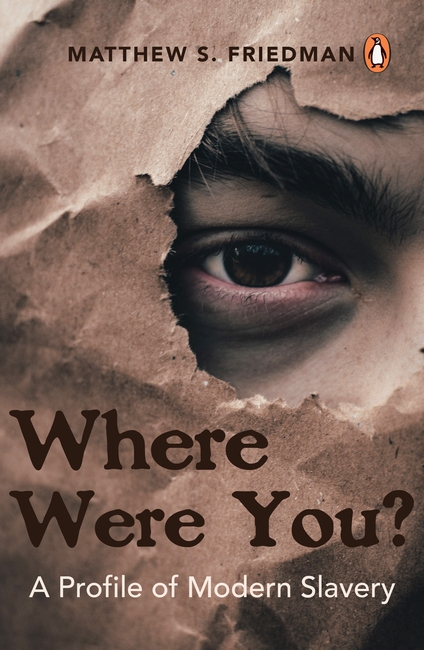
There are more slaves in the world today than any other time in history.
Enter the world of human trafficking and explore what we can do together to end this global crime. Where Were You?: A Profile of Modern Slavery by Matthew Friedman provides an up-to-date overview of human trafficking, a largely ignored present-day evil, and recounts true stories of enslavement in Asia today. Former United Nations and USAID expert Matthew Friedman obtained in-depth first-hand knowledge with boots-on-the-ground work over 30 years throughout Asia. Human trafficking exists in nearly every nation on earth and Friedman has personally interviewed hundreds of freed slaves and imprisoned traffickers throughout South and Southeast Asia.
The modern slave trade operates in brothels, fisheries, clothing and chocolate industries, as well as a myriad of other manufacturing jobs and is a billion dollar business that continues to grow unchecked.
Even with the collective response of governments, the UN and civil society partners, less than 0.2 percent of the victims are assisted.
“We’re not winning the fight against human slavery. Relying solely on the anti-slavery community around the world to tackle the scourge of modern slavery and the criminals behind it simply is not working. Unless something drastic changes, this trend will continue unabated,” writes Friedman.
This book not only reveals the plight of human trafficking victims, Friedman also offers valuable advice and guidance related to his own personal experiences working in the counter-trafficking and development world. He offers valuable lessons for those thinking about entering this field.

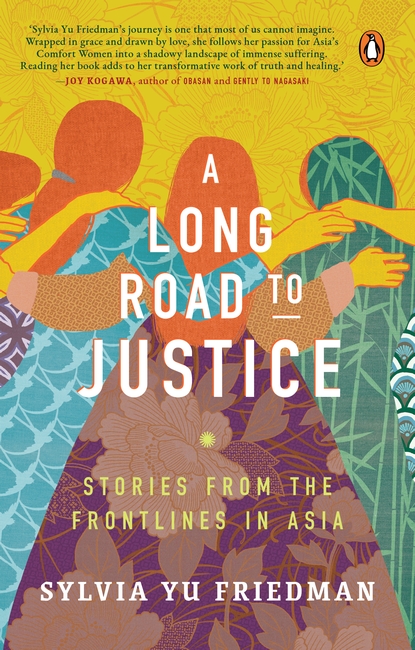
A constant stream of impoverished women and girls have been, and are being, enslaved and abused in the Asia Pacific region. Slavery is not a historical issue – it’s happening today. History is repeating itself.
Through Sylvia Yu Friedman’s work in journalism, counter-trafficking and philanthropy, she has had rare and incredible access to victims of sex trafficking and modern slavery in China, Thailand, Cambodia, North Korea, South Korea, Myanmar and Indonesia.
Amid this terrible human suffering, she has seen frontline workers carrying a great light that has overcome the darkness in some of the most frightening places on Earth. This memoir describes her personal journey in the fight against slavery through supporting philanthropic initiatives and raising awareness through writing articles and producing films. She shares her personal setbacks, and how her awakening to the plight of the victims of Imperial Japanese sex slavery during World War II helped her come to terms with her identity issues over her Korean heritage. She writes about the lessons – the good, the bad, and the ugly – and the people and events that have shaped her along the way.

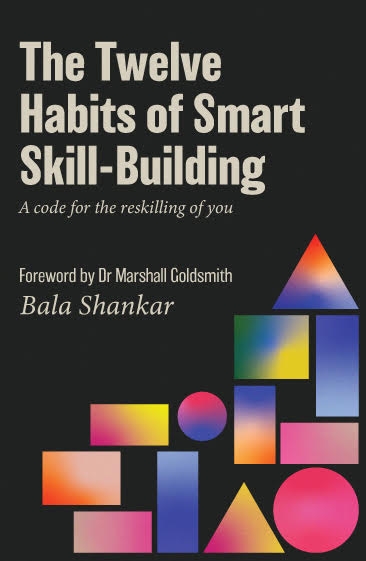
Human improvements have always been the backbone of inventions that advanced mankind. These were based on both knowledge and skills that we gained from time to time. Never before in the past decades has the topic of skills received as widespread attention and debate as now, with dominant opinion equating success with upskilling or reskilling – and failure with stagnant skillsets.
The concept of lifelong learning is challenging the old school maxim of frontloading all education. It is therefore intriguing to understand how people can take their core skills to new areas of work. What is the morphing mantra? How do people reshape their skillsets even when they are out of school? As knowledge and skill become increasingly crucial in the human versus machine competition, should we be analysing how we use old skills to do new tasks? And develop new skills with old abilities? What habit patterns helped successful people embrace skill-learning and build it as a second nature?

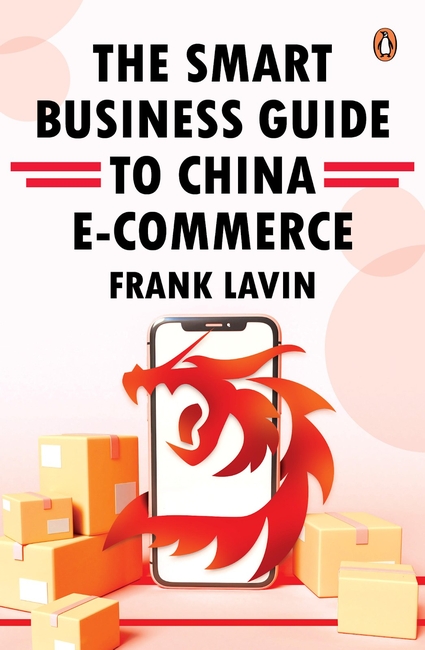
‘The Smart Business Guide to China E-Commerce is for any business that is thinking about a China strategy or how to approach international e-commerce. China has perhaps one of the most advanced e-commerce ecosystems in the world, and every retail brand needs a China e-commerce strategy. This book tells you how to make the most of this for your company.’
— Vamsi Mohan Thati, President, Coca-Cola Greater China & Mongolia
China is the largest e-commerce market in the world and the most digital of the major economies. At the same time, many international brands are intimidated by the China market given their lack of familiarity and the significant cultural and language differences.
The Smart Business Guide helps bridge this gap by providing a how-to approach to the China e-commerce ecosystem. E-commerce provides a powerful tool for brands to reach consumers and offers the predictability and statistical feedback that dramatically reduces the costs of a brand to enter the China market.
A quick, punchy read, The Smart Business Guide is a useful book for consumer brands, retailers, and entrepreneurs. It covers critical areas such as:
— How any brand can be a pure-play e-commerce brand in China
— How Chinese consumers are different from U.S. consumers
— The main platforms and social media channels
— Case studies of success and failure in China
— How to deal with market entry challenges, trademark registration, and product approval
— How to compete and win in the most challenging — and most promising — retail market in the world

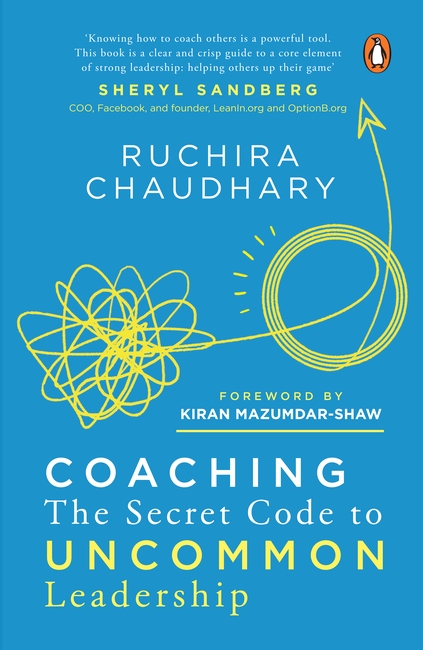
This book lucidly illustrates how a leader can bring out the very best in people by coaching them, and how coaching can unleash creativity as well as innovation while inspiring teams to play to their potential. It also examines how coaching helps leaders maintain a fine balance between managing and guiding, and between appraising and supporting their teammates. While many excellent books have been written about leadership, talent and coaching, this is a rare book that stands boldly at the intersection of leadership and coaching.
This is a book for our times. Businesses are facing a new reality, characterized by a VUCA (volatile, uncertain, complex and ambiguous) world. This new reality has forced organizations to depart from conventional command-and-control practices to a completely new model – a model in which leaders support and guide, rather than instruct and control, their team members. Exploring some of the key ingredients of impactful leadership, Coaching offers tips
and tricks, backed by research and incisive insights, on how to become an effective leader-coach. Peppered with interesting anecdotes and analogies, drawn from sports, performing arts and other walks of life, the book is a breezy read. Interviews with corporate leaders and academics further enrich the narrative. Guaranteed to make for a very interesting read, the book will be useful to leaders, aspiring leaders and especially those that wish to transition from being just good leaders to extraordinary ones.
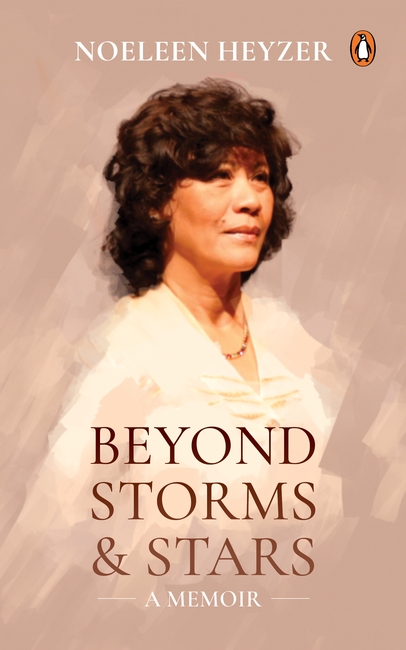
How did a young girl who rose from underprivileged circumstances in post-war Singapore become a trailblazer of women’s global leadership at the United Nations? Noeleen Heyzer was the first woman from outside North America to be appointed as Executive Director of the United Nations Development Fund for Women (UNIFEM) and the first woman Executive Secretary of the Economic and Social Commission for Asia and the Pacific (UNESCAP). In these memoirs, Noeleen Heyzer reflects on her remarkable journey – from the challenges of her childhood and youth, her intellectual development at the University of Singapore and the University of Cambridge, to her groundbreaking work on women’s empowerment and her meteoric rise to the position of Under-Secretary-General of the United Nations. It is a book that celebrates the resilience of the human spirit and the courage of individuals, communities, and societies to transform structures of discrimination and injustice.

As a British teenager, I meet a beautiful Burmese girl on the school bus. Her family self-exiled in 1964, soon after the military coup, to start a new life in England. My fascination is fired for this far-off land.
How did Burma, with such a regal past, swathed in natural beauty and populated by a people of unmistakable poise and serenity slide into repression and obscurity? How can the up-beat memories of April’s parents be reconciled with Myanmar’s current malaise?
Over 16 years I recorded the oral history, anecdotes and reminiscences of her family who were eye witnesses to momentous events in mid-century Burma. These together with more recent conversations – with Aung San Suu Kyi and a range of Burmese millennials – provide a unique portrait of Myanmar stretching back to April’s great, great grandfather in 1852.
For all the woes of this country, whispers of hope can be heard.

This story is inspired by real events.
It was a chilly September evening when the body of a young pro-democracy protester surfaced in Hong Kong’s eastern Yau Tong Bay. The local police quickly concluded his death as accidental drowning but fellow protesters believe it was part of a dark ploy by the authorities to quash the political movement.
James Lai, the Han Herald’s senior reporter, is assigned to investigate the mysterious death. Unbeknownst to him, the assignment is a front created by his editors to shift the narrative against leaders in Beijing, unnerved by the intensified public opinion. As he digs deeper, he finds himself coming to close brush with the forces of a power struggle among the Party’s top brass. His pursuit of the truth challenges his personal and professional integrity at every step of the way. Faced with a politically-pressured media environment in Hong Kong and the Herald newsroom that has declined from a once globally respected publication to a propaganda mouthpiece, James can only trust his own journalistic beliefs and dogged reporting to piece together the mystery and bring the story to life.
Nonetheless, the answers he uncovers of the conspiracy are more sinister than he could have imagined.