



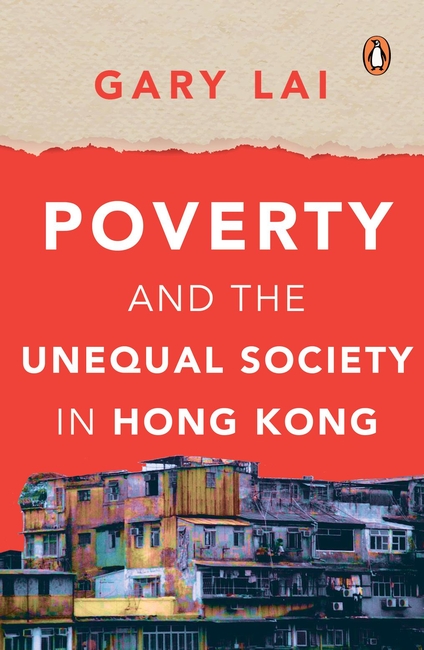
Hong Kong is a dynamic city. But the contrast between the well-off and the poor is stark. In the 1980s and 1990s, and to a lesser extent in this century, Luxury brand bag-toting women can often be seen walking past beggars on the sidewalks of busy streets. Poverty has always existed in the city. Where else can we find it
there and is it getting worse? Does it matter? Inequality has been steadily increasing from 1976. Poverty makes people more vulnerable and corruptible, whether to choosing bad leaders or undertaking terrorist activities. The motivation of this book is to ascertain the extent of poverty in Hong Kong in the context of the experiences in other parts of the world. The meditations in this book are not meant to be encyclopaedic. They are a sample of the unique challenges that exist in different parts of the world. This book does not take a stand on the current political protests against the diminishing freedom and autonomy imposed by Beijing in Hong Kong, although it proffers underlying causes for the demonstrations. Inequality is a recurring theme, so are the social chasms that the wealth, education, and digital gaps created. And only by grasping the facts of Hong Kong’s destitute can one help them.
Catagory: Non Fiction
A Consequence of Sequence
After suffering strokes, general practitioner Dr. Idayu Maarof underwent major surgery to remove a heart valve tumour believed to have caused the strokes. Unfortunately, what seemed to be the end of a journey was only the beginning of an even more arduous one. Her symptoms evolved to multiple episodes of daily seizures. To control the seizures, she was put in a medically induced coma. A mysterious brain lesion became the prime suspect, but no one was certain. She later underwent two surgeries to remove what appeared to be a brain tumour. Dr. Idayu Maarof contextually concludes how a sequence of events and decisions led to a particular consequence. This is not an account about being ill. This is story of acceptance, gratitude, and the struggle for a life worth living.
IQ EQ DQ
Do you know that 60% of children around the world have experienced at least one cyber-risk such as cyber-bullying, technology addiction, misinformation, online sexual exploitation, and others? The COVID-19 pandemic is accelerating the digitalization of global society. Cyber-risks among children, digital skill gaps and societal instability due to fake news and cyber-threats, are rapidly increasing and widening inequality. Amidst these challenges, how can we move forward to realize a better future?
This book is about Park’s social impact journey to develop DQ (Digital Intelligence) as the global standard for digital literacy, digital skills, and digital readiness with the belief that ‘technology is only meaningful when it enhances humanness’. This book shares over a decade of her experiences and insights on the empowerment of individuals across more than 80 countries with digital citizenship, which constitutes the core life skills that are needed in the digital age to minimize cyber-risks and maximize human potential. The story invites all people to envision how DQ can help to reshape technology, education, and well-being in the digital age.
Depth of Field
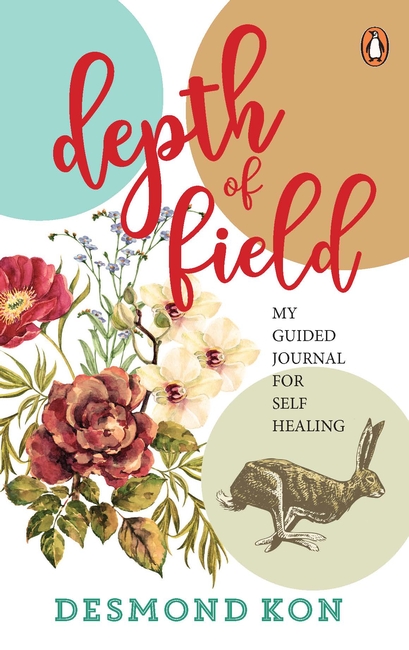
Depth of Field, deftly combines the self-help book with the activity book. Prefaced by epigraphs from Freud, Jung and Lacan, this book comprises 37 creative exercises, which may also be read as prompts or riddles. Accompanied with illustrations for ekphrastic inspiration, this book premises its ethos on the idea of writing as witness, investigating how people engage with their personal history through writing, and render particular experiences through the fine act of deeply felt writing.
The collaborative engagement approaches writing as a powerful means of healing, in excavating buried emotions and expressing them in such purposeful intimation. Depth of Field excellently spans a wide-ranging demographic of reader, from the adolescent to young adult, mature reader to retired elderly. The exercises work with such thoughtful complexity, so much so that they come across at once accessible and intellectual. These are easy to read, yet compelling in their introspective scope.
Depth of Field, a guided journal is also a reminiscent of activity books during childhood, filled with games and puzzles that encourage meaningful, self-initiated activities. In the same manner in which such books kept us occupied and entertained, Depth of Field is meant to be immersive, allowing readers to interact with the various prompts. Each prompt helps the reader to explore some aspect of the self, mining deep memories, emotions and values. Through the fine process of writing-this can cross genres to include nonfiction, poetry and fiction-readers reacquaint with their inner selves, developing a deeper sense of where they are in their life journey.
Engaging Millennials
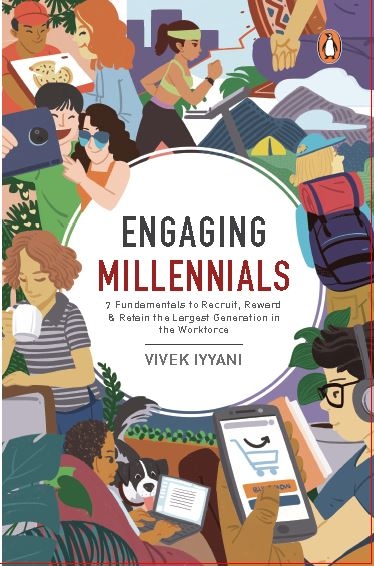
By 2025, Millennials will form 75% of the global workforce and more than half of them (58% of global Millennials) are living in Asia! As this huge demographic surges towards becoming a substantial contributor to Asia’s workforce, organisations continue to face engagement and retention challenges while balancing the need to stay relevant in a volatile, uncertain, complex and ambiguous world.
Archaic methods of management do not deliver success with the new breed of employees. Instead, the outdated model leaves Millennials uninspired and unmotivated to produce results. Like any generation of workers, performance lies in management-if you’re not getting what you need from your Millennials, it’s time to learn how to lead them the way they need to be led. To get the best out of Millennials, it is imperative for leaders to modify their current management style.
While the pop culture narrative would have us believe that Millennials are entitled, lazy, spoiled brats- Millennials are the generation of change: highly adaptive, bright, and quick to take on a challenge. If the different generations can learn how to collaborate in a way that capitalises on their strengths and compensates for their weaknesses, it will inspire a knowledge sharing inevitably encourages the crosspollination of ideas which can spark major innovation
Best practices and proven strategies from Google, Netflix, LinkedIn, and other top employers provide real-world models for effective management, and new research on first-wave versus second-wave Millennials helps you parse the difference between your new hires and more experienced workers. You’ll learn why flex time, social media, dress code, and organizational structure are shifting, and answer the all-important question: How do we engage Millennials?
Millennials are the product of a different time, with different values, different motivations, and different wants. This book shows you how to bring out their best and discover just how much they’re really capable of.
16 Swipes
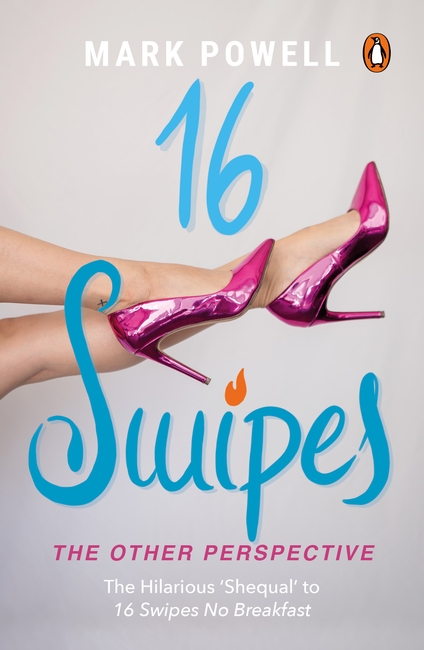
After reading this book, sixteen very red faced men should give up online dating. Your dates have now spoken.
16 Swipes: The Other Perspective takes you on a journey of discovery through a rinse cycle of Tinder dates, personal encounters, and struggles, as women navigate the sea of online profiles in search of a soulmate. Through a fair number of swipes, you’ll smile, split your sides laughing and be thankful to have dodged these yourself. Beyond the humour, you will gain insights into the relationships to avoid, situations to extract and the men you should never get serious with. Mistakes are shared so you gain valuable dating lessons.
Grandma’s Gangsta Chicken Curry and Gangsta Stories from My Hippie Sixties
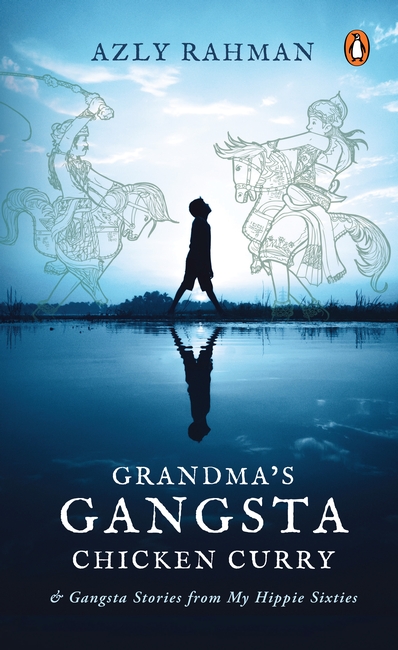
He is no longer him, today. At ten, he saw a chicken beheaded in his backyard, he too, an accomplice. He roamed his village, sometimes barefoot, wading through streams, backyards of his neighbors’ houses where young men were high, smoking ganja. He once saw a group of men in red headbands with Arabic words on them, ready to march to the capital city to slaughter many.
He fought demons, wept when the family dog died battling a cobra. He saw men in a trance, munching on broken glasses and hibiscus petals, high on Javanese trance-dance music, turning into horses. A spaceship landed on the school field. He thought he died, shot by Martians.
He was saved from being a Taliban. Saved by the music of the American Hippies. He confronted a boy in a green robe and white turban, preaching jihad against Western music. He chased the young mullah out of the school.
His story told in the language of the Sixties. Of Beat poetry. Of rap, joyfully, he now narrates with melancholy.
Around the World in 68 Days
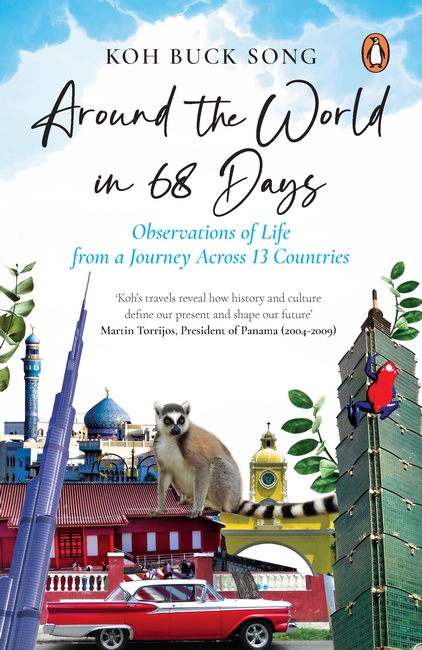
Around The World In 68 Days is a travelogue with a big difference – not about how to get there, what to see or where to dine, but instead, seeking to glean insights into the meaning of life and the true nature of human societies, using the lens of the brand attributes of each territory to look more clearly into the kaleidoscope of humanity. In a time of a global pandemic, this is also a type of memoir, a tribute to travel, of a pre-Covid-19 world. This is like a 68-day extravaganza of ichigo ichie, the Japanese concept of cherishing every worthwhile
moment.
Singaporean writer Koh Buck Song – author and editor of more than 30 books – distils the quintessential brand essence of very different cultures in 13 countries across four continents. He draws from his experience and perspectives as a country brand adviser, advocate of liveable and sustainable cities, and commentator on society and public policy. Koh, also a poet and artist, opens each chapter with his own haiga artwork of a haiku poem with an ink sketch. These artworks complement this book’s effort to capture and interpret shared humanity across the globe – what makes each of us unique, what we share, and how, in the end, perhaps we’re all really chasing ultimately similar dreams.
#HAPPYxCOOL
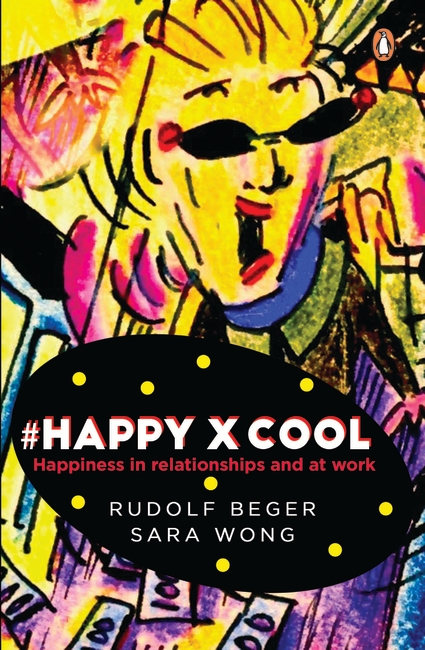
#HAPPYxCOOL is not one of the usual guidebooks that pretends to know the ultimate way to happiness. The work is not fixated on the personal gathering of as many feelings of happiness as possible and does not deal with happiness or the way to happiness per se. In contrast to the conventional guidebook literature, the authors rather concentrate pragmatically on the many subjective and objective obstacles that usually stand in the way of happiness. They want to motivate and assist the reader to work actively and pro-actively on themselves.
In #HAPPYxCOOL the authors don’t shy away from discussing many unconventional topics such as the important issue of sexuality and happiness, adultery, bad or no sex, or a partner’s obsession with pornographic movies. In a separate section, another influential aspects is discussed in some detail: the conditions at a person’s workplace. This includes, amongst others, career unhappiness, unhappiness caused by toxic co-workers or a disliked boss, excessive work burden, a lack of recognition and being underpaid.
The authors give great importance to the “freedom of mind” and the concept of “being cool”, thus inspiring the reader to free themselves from the constraints of happiness in a way that could be called “cool”.
The Votive Pen: Writings on Edwin Thumboo
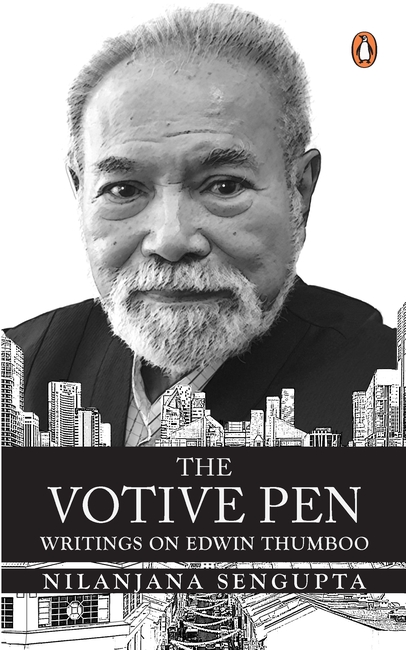
Born of Tamil and Teochew parents, Edwin Thumboo embraced the Protestant faith late in his life. He has a self-confessed fetish for Yeats and Pound and yet completed his doctoral thesis on post-colonial African poetry. He taught himself the Ramayana and I-Ching but found traces of the Odysseus in the shadows of the Merlion. He is brusquely vocal about poetry with a purpose and yet appears a hopeless romantic in his poems about his wife. What happens when a mind which is such a melting pot of brilliant ideas and contrary emotions tries to unscramble
the identity of a country like Singapore which is complex, multiracial, has known a fierce economic growth that has often elbowed aside everything else? The Votive Pen sets out to see Edwin Thumboo’s poetry-steadily and see it whole-without the intervening static of earlier critical writing and with
an intense alertness to the text.