



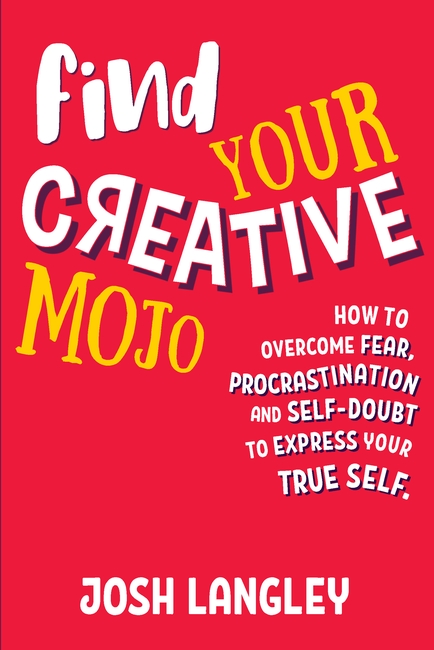
Josh Langley, knows how important it is to find your voice and explore your passions. When he did, his life changed!
In this soul rattling manifesto, he delivers the untold truth about why it’s so important to express yourself. This is the perfect call to arms for anyone wanting to unleash their creative spirit, or simply find the confidence to do something different.
A humorous and quirky mix of anecdotes, insights, illustrations and inspirational quotes, Find Your Creative Mojo is the perfect companion for any aspiring creative soul. This is the book that people will want to pick up again and again to inspire them to find their creative voice, or even just to take that first brave step.
Catagory: Non Fiction
Battulga: Up Close and Personal
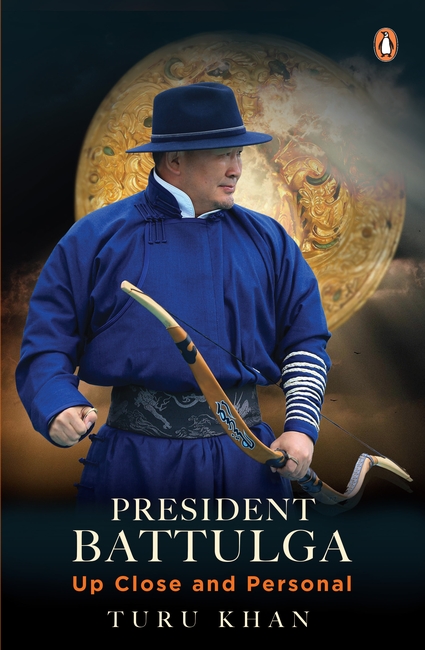
is is the authorised biography of the current President of Mongolia, Khaltmaa Battulga.
Battulga and the author studied together in college. At that time, Tulgaa, as his friends fondly called him, was sewing jeans, selling records and merchandizing. Then he went on to participate in sports and won the world championship in Sambo wrestling and became World Champion, while working at the branch of the city’s Craftsmen’s Committee.
He went on to wear many hats of accomplishments in his life. He started a business that expanded into the Yellow Taxi Service, organised a lottery called Millionaire, opened a disco club and the first ever supermarket in Mongolia. With the advent of privatisation, he obtained big ventures like the Bread and Candy Factory, the Meat Company Impex and the Bayan Gol Hotel and matured into a major businessman known throughout the country. Since then, he was elected into the parliament three times, where he served as Minister for Road and Transportation as well as Minister for Industry and Agriculture, led the Mongolian Democratic Union and became President of the Mongolian Judo Wrestling Association. He exerted substantive effort to become the first World Judo Champion born in Mongolia.
Despite his successsful ventures, he has always been a secretive person. It is difficult to hear even a few words from his mouth. Who is Khaltmaa Battulga actually? He has numerous followers and just as many fierce critics and has always been in the attention of journalists who have sometimes turned him into a subject of controversy on mass media. What does he really want? What has he so consistently been fighting for?
Based on exclusive interviews with the man himself, enriched by objective facts and events that the author has witnessed, read on as the author attempts to give the readers a better understanding of the character of the man who built the gigantic statue of Chinggis Khan on horseback and initiated an eco-town named Great Maitra, and shares what he has been up to recently.
On Meditation
In today’s challenging and busy world, don’t you wish you knew how to quieten your mind and focus on yourself? In On Meditation, renowned spiritual leader, Sri M, answers all your questions on the practice and benefits of meditation. With his knowledge of all the various schools of practice and the ancient texts, he breaks down the complicated practice into a simple and easy method that any working man or woman, young or old, can practice in their everyday lives.
How to Ride a Train to Ulaanbaatar and Other Essays
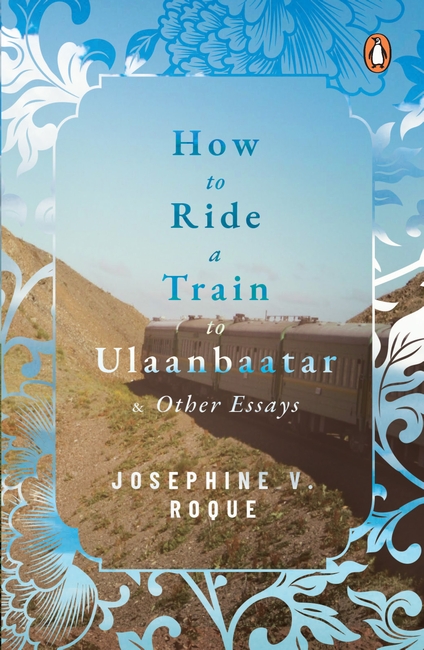
How to Ride a Train to Ulaanbaatar and Other Essays is a coming-of-age story of a woman who leaves home to work in Shanghai following the death of her mother. In a collection of ten travel essays, she writes about living in another culture to learn another language and the experiences that shaped her view on what it means to be her own person, a daughter, a friend, a lover and a citizen of the world.
Who Killed The King of Bagan?
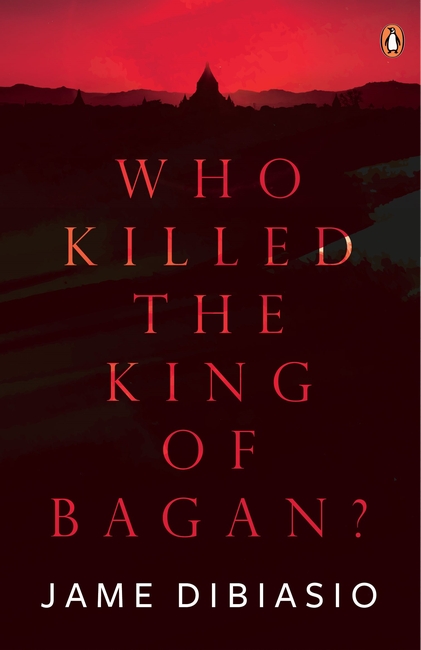
He created an empire. When his enemies ambushed him, they left no trace of his body.
The Chronicles sang of his glory and his merit. His capital, Bagan, left behind thousands of breathtaking Buddhist temples – a unique legacy, a gift to the world. Bagan has another aspect to its heritage: the story of a struggle for power and the forging of a nation that we know today as Myanmar or Burma.
Like a whodunnit, unravelling the suspects behind the assassination discloses a deeper story about this great civilization a thousand years ago. The people, their beliefs, their arts, their desires. Their achievements and their defeats.
The mystery of who killed the king of Bagan is a gateway to exploring the puzzle of how Bagan came to be. Why its people filled a parched land with pagodas. Why their story deserves to be told.
Don’t mess with my Professionalism
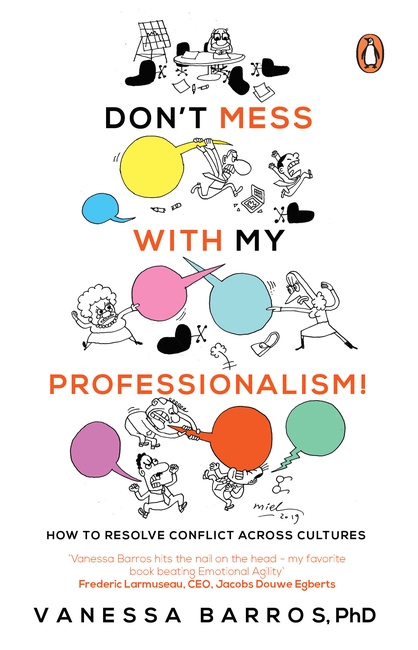
Questioning others’ professionalism is an immediate negative reaction that many international executives have when they are facing a behavior, which is culturally different from theirs and which they don’t understand in the workplace. ‘Professionalism’ becomes the alibi for ethnocentrism, which in turn, jeopardizes relationships at work and reduces chances of success in the evergrowing multicultural business world.
In this book, Vanessa Barros goes beyond individual views of ‘professionalism’ to provide effective strategies to resolve intercultural conflict.
Young Mongols
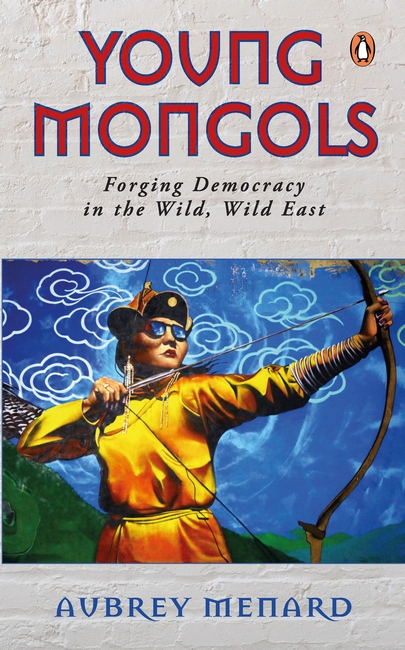
In 1990, Mongolia’s youth-led revolution threw off the Soviet yoke, ushering in multi¬party democracy. Thirty years later, the country’s youth are still leading Mongolia’s democratic development.
This powerful, inclusive book introduces readers to modern Mongolia through the stories of young leaders fighting to make their country a better, more democratic place. Its intersectional perspective explores the complexity of Mongolia today: the urban planning and pollution issues that plague the capital city of Ulaanbaatar; the struggles of women, the LGBTQIA+ population, people with disabilities, and ethnic minorities to claim their equitable places in society; the challenge of providing education in the world’s least densely populated country to prepare the workforce of tomorrow; and how to fairly divide the spoils of the country’s vast mineral resource wealth.
This rising generation of Mongolians is already wielding real power and shaping their country’s future. Their work will determine whether the country is able to overcome its development and democratization challenges, its relationship to the world, and who the winners (and losers) will be in Mongolian society.
Born To Die

This is a key text to understand the processes of urban violence in Colombia. It reveals the world of the young people who formed gangs and shook up Colombia with their recklessness. The book also explores the cultural and historical roots of a generation that got caught up in the drug-trafficking phenomenon and created a subculture with odd forms of religiousness, irreverent languages and a defiant attitude towards death. This book is short and entertaining, yet hard to swallow, as the reader is thrust into realities that only a few people live and understand, and many of us want to change.
The Gurkhas
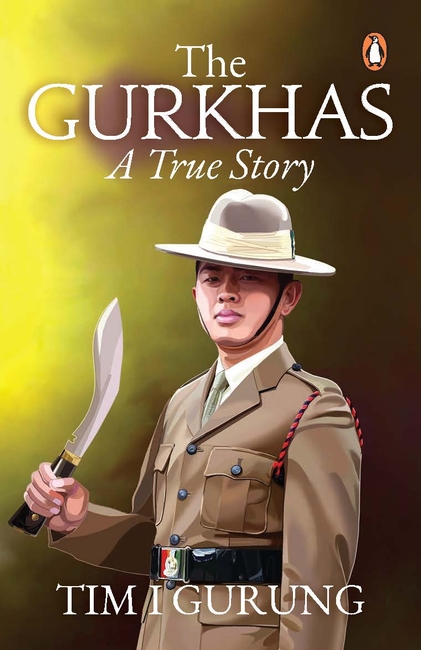
The Gurkhas – A True Story is a complete book for, to and by a Gurkha. It covers their story from the start to the very present. The book not only documents the Gurkhas’ history but also their influence in the community and the nation as a whole.
Immersed in a 200-year-old history, the Gurkhas is an institution and are known to be the bravest of the braves.
The Gurkhas fought in many countries like Malaysia, Singapore, Borneo, East Timor, Hong Kong, Cyprus, the Falklands, Iraq, Afghanistan and Kosovo for the British. Their famous kukri had no peers in both WWI and WWII, and they are probably the only such force in the world that had won wars by name alone.
An institution that lasted for more than two centuries cannot survive by bravery alone. Outside factors such as political, social, religious, racial, and traditional affected their community. Their inherited virtues such as loyalty, devotion, tenacity, hardworking, adaptability as well as being able to face difficulty with a smile made them tough from the inside. Above all, their upbringing taught them to respect their elders and their masters who made them into a perfect soldier.
Erotic Poems from the Sanskrit

Classical Sanskrit literature boasts an exquisite canon of poetry devoted to erotic love. In Erotic Poems from the Sanskrit, noted translator and scholar R. Parthasarathy curates a selection in a new verse translation that introduces readers to Sanskrit poetry in a modern English vernacular. The volume features works by seventy-two poets, including seven women poets and thirty-five anonymous poets, primarily composed between the fourth and seventeenth centuries. It includes a detailed introduction that guides readers through Sanskrit poetic forms and explains how to read and appreciate the poems in English.
Erotic Poems from the Sanskrit seeks to represent the breadth of Sanskrit poetry through the ages and to present a cohesive, thematically unified selection when read as a whole. The works in this volume depict licit and illicit love, speaking to the joys
and sorrows of consummation and separation and a broader cultural celebration of the pleasures of the flesh. Often sexually explicit, they are replete with recurrent scenarios and striking tactile, visual, and olfactory images, whose resonance and
use as motifs across eras are expertly explained. Parthasarathy shows that Sanskrit poets are our contemporaries despite the centuries that separate us, as they speak simply and passionately to a wide range of human experience. Erotic Poems from the Sanskrit offers English-speaking readers an enticing and tantalizing initiation into the riches and beauty of this venerable poetic tradition.